 English
 中文简体
 русский
 Français
 Español
 عربى
 Indonesia

Street Light HS-FF19A: A Practical Guide to High-Performance LED Roadway Illumination
Introduction
Modern road infrastructure requires lighting that is efficient, durable, visually comfortable, and adaptable to different urban and industrial environments. A street light is no longer judged only by its ability to produce brightness. Project owners, engineers, municipalities, contractors, and distributors also evaluate energy consumption, optical control, maintenance requirements, mechanical reliability, environmental protection, installation flexibility, and long-term operating cost.
The HS-FF19A street light is designed for these practical requirements. It belongs to a professional outdoor lighting portfolio that serves roads, public areas, industrial facilities, residential developments, municipal projects, and other applications where reliable nighttime visibility is essential. Its design approach combines LED technology, precision metal manufacturing, controlled optical performance, efficient thermal management, and flexible project customization.
Compared with conventional outdoor luminaires, an advanced LED street light can provide better energy utilization, longer service life, more consistent light distribution, and reduced maintenance activity. However, these advantages depend on more than the LED chips alone. The complete luminaire must be designed as a coordinated system in which the light source, optical elements, housing, driver, heat dissipation structure, sealing components, and mounting arrangement work together.
This article examines the HS-FF19A street light from a product and manufacturing perspective. It explains its principal advantages, potential applications, engineering considerations, production capabilities, quality-control approach, customization options, and suitability for international projects. Because final specifications may vary according to the selected configuration, project stakeholders should confirm power, optical distribution, color temperature, protection rating, control interface, dimensions, and certification requirements before ordering.
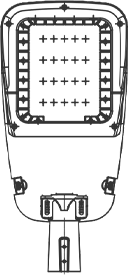
Street Light-副本-副本
1. Product Overview
The HS-FF19A is an LED street lighting product developed for outdoor roadway and area illumination. Its primary purpose is to deliver stable, controlled light over roads, streets, access lanes, parking areas, public spaces, and similar outdoor environments. The fixture can be evaluated as part of a complete lighting system rather than as an isolated lamp because roadway performance depends on the relationship between luminaire output, pole height, pole spacing, road width, mounting angle, surface reflectance, and required lighting levels.
A modern street light normally consists of several key assemblies. These include an external housing, LED light source, optical lens or reflector system, driver, heat-dissipation structure, mounting arm or adjustable bracket, gasket system, electrical compartment, and service-access components. The HS-FF19A concept is based on integrating these assemblies into a practical outdoor luminaire intended for professional installation and long-term use.
For municipal and commercial users, a street light must support predictable project planning. The product should be compatible with common pole arrangements, accessible for installation, and suitable for use with lighting calculations. It should also allow the project designer to select an optical distribution that matches the application instead of simply directing uncontrolled light in every direction.
The product is particularly relevant to buyers seeking a replacement for older high-pressure sodium, metal-halide, mercury, or basic floodlighting systems. LED technology allows the luminaire to provide useful illumination with lower energy demand, while an engineered housing can protect internal components against rain, dust, vibration, temperature changes, and routine outdoor exposure.
Core Product Objectives
The main objectives of the HS-FF19A street light are efficient roadway illumination, reliable mechanical protection, effective heat management, controlled glare, installation convenience, and adaptable configuration. These objectives are important because a luminaire that performs well in one area but poorly in another may create higher total project costs.
For example, a very bright luminaire with poor optical control can produce excessive glare, uneven road illumination, and unwanted light spill. Similarly, a low-cost fixture with inadequate thermal design may experience accelerated component aging. A product with a strong housing but difficult maintenance access can increase labor costs over its operating life. A balanced design therefore provides greater practical value than a product evaluated only by initial price or nominal wattage.
2. Advantages of LED Street Lighting
Energy Efficiency
LED street lighting converts electrical energy into useful illumination more efficiently than many legacy light sources. In a conventional replacement project, the energy-saving result depends on the original lamp type, the existing lighting level, operating schedule, control strategy, and selected LED configuration. Nevertheless, LED technology provides an important opportunity to reduce electricity consumption while maintaining or improving useful visibility.
The HS-FF19A can be specified according to the lighting needs of a particular road or area. Rather than using one excessive output level for every installation, a project can select a suitable power range and optical distribution. This approach helps avoid over-lighting and supports more responsible energy management.
Energy efficiency also includes the ability to direct light where it is needed. A well-designed optical system reduces wasted upward light and limits unnecessary illumination beyond the target area. When optical efficiency, proper mounting, and suitable controls are combined, the project can achieve a more favorable balance between visibility and energy use.
Long-Term Operating Value
Street lights are installed in locations that may be difficult or expensive to access. Maintenance often requires a lift vehicle, traffic control, trained personnel, and temporary disruption to the road or public area. A durable LED luminaire can reduce the frequency of replacement work compared with older lamps that require regular lamp changes.
The value of an LED street light should therefore be measured over its complete operating period. Important factors include energy consumption, maintenance frequency, driver replacement requirements, cleaning needs, installation labor, and expected performance stability. A dependable housing and well-managed internal temperature can help protect the LED modules and driver, supporting consistent operation over time.
Instant Start and Control Compatibility
LED luminaires reach usable illumination almost immediately after power is applied. This characteristic is useful for roads, entrances, parking areas, and security-sensitive locations. LED systems can also support scheduled operation, dimming, photocell control, motion-based control, or centralized management when compatible components are selected.
The final control solution should be confirmed during the design stage. Not every project requires an advanced control network, but the luminaire should be evaluated for compatibility with the intended control method. Projects with long operating hours may benefit from dimming schedules, while areas with changing activity levels may benefit from intelligent control.
Improved Light Quality
LED light sources are available in a range of color temperatures and color-rendering options. For roadway applications, a suitable color temperature can improve visual recognition of road markings, vehicles, pedestrians, and obstacles. The correct selection depends on local regulations, environmental conditions, user expectations, and the character of the surrounding area.
Compared with some older light sources, LED technology can provide more consistent color and better control of light distribution. This helps create a clearer and more uniform nighttime environment, especially when the luminaire is supported by a professional photometric design.
3. Product Design and Engineering Features
Outdoor Housing
The housing is the first line of protection for the internal components. It must withstand rain, dust, sunlight, temperature variation, wind loading, vibration, and occasional impact associated with installation and maintenance. A properly designed housing also supports the alignment of the optical and electrical assemblies.
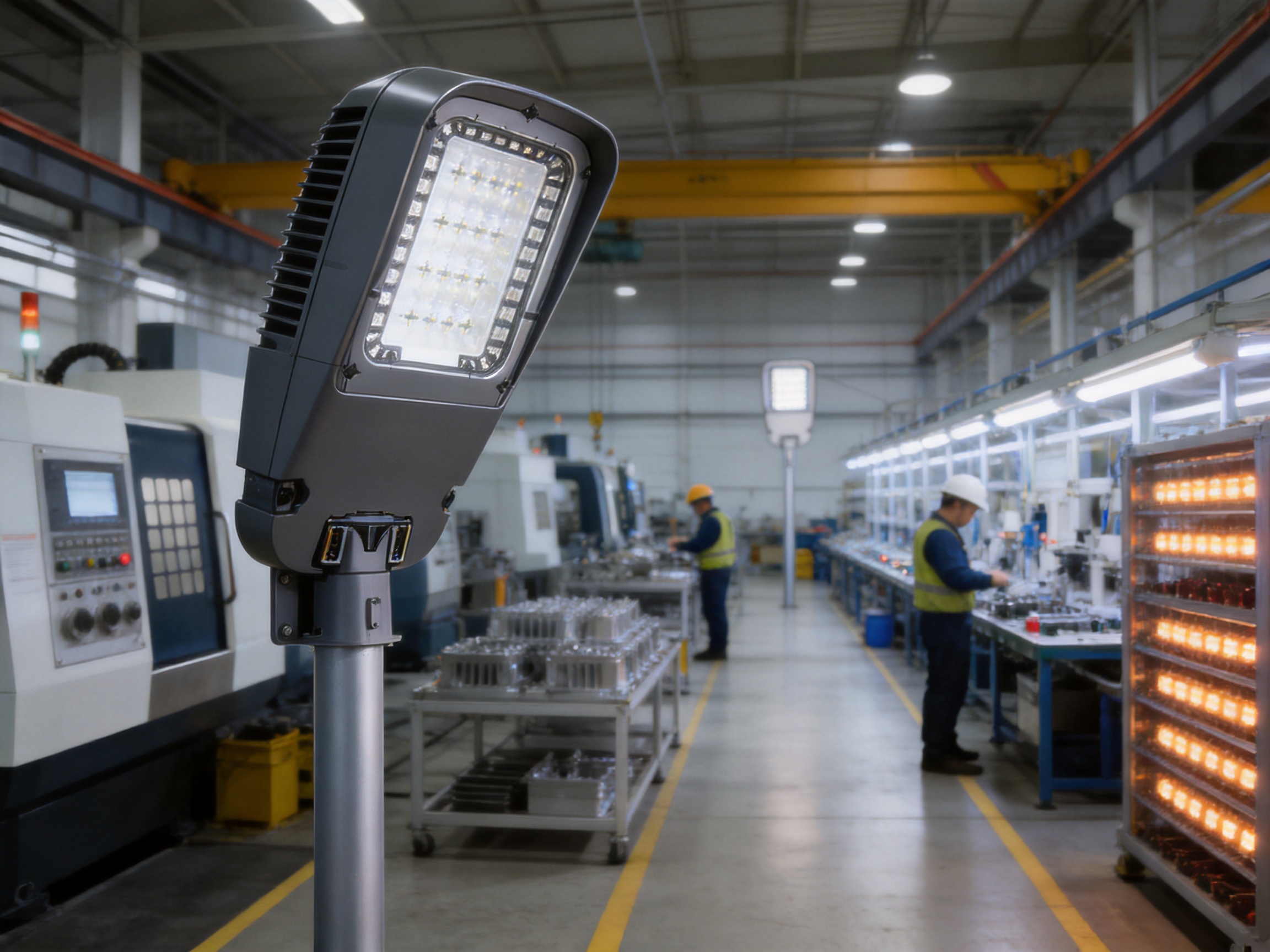
The HS-FF19A is produced within a manufacturing environment that includes die-casting and CNC machining capabilities. This combination is valuable because die-casting can create a strong, repeatable structural body, while CNC machining can refine mounting interfaces, fastening points, openings, and other precision surfaces. Consistent mechanical geometry helps reduce assembly variation and supports dependable installation.
Heat Management
Heat is one of the most important considerations in LED luminaire design. Excessive temperature can accelerate the aging of LED packages, drivers, seals, and electrical components. A reliable street light must transfer heat away from the light source and maintain a suitable operating environment for the internal assemblies.
The housing and heat-dissipation structure should be designed to provide a practical thermal path from the LED board to the external body. Surface area, material selection, fin geometry, airflow, mounting orientation, and environmental conditions all influence thermal performance. The use of metal construction and precision manufacturing can support a stable relationship between the LED assembly and the heat-dissipation body.
Thermal design is especially important in warm climates, locations with limited airflow, and applications where the luminaire operates throughout the night. Proper project evaluation should consider ambient temperature, installation height, operating hours, and enclosure configuration rather than relying only on laboratory assumptions.
Optical Distribution
Street lighting requires controlled distribution because roads are long, relatively narrow spaces with specific visual tasks. The luminaire should distribute light along the roadway and across the required width while limiting excessive light behind the pole, toward buildings, or into the sky.
Optical performance can be adjusted through lens selection, LED arrangement, mounting angle, pole spacing, and luminaire orientation. Different roads may require different distributions. A narrow road, a broad avenue, a pedestrian pathway, a parking lot, and an industrial access route should not automatically use the same optical pattern.
Photometric files and lighting calculations are essential during project design. A qualified lighting team can use the luminaire data to model illuminance, uniformity, glare, and power density. The manufacturer’s ability to support DIALux designs provides an additional service advantage for buyers who need assistance converting product data into a practical lighting layout.
Mechanical Mounting
A street light must connect securely to a pole arm or bracket. The mounting system should accommodate the pole diameter and project requirements while maintaining the correct luminaire angle. A stable mounting interface helps protect the fixture from vibration and reduces the risk of movement after installation.
Some projects require horizontal installation, while others use a tilted arrangement to direct light toward the road. The selected mounting configuration should be agreed upon before production. The angle of the fixture affects the photometric result, glare, light trespass, and actual illumination on the road surface.
Electrical Compartment
The driver and electrical connections must be protected from outdoor conditions. A well-organized electrical compartment makes inspection and service more practical and helps reduce the chance of loose wiring or incorrect assembly. Gaskets, covers, cable entries, fasteners, and grounding arrangements all contribute to electrical safety and environmental protection.
The driver should be selected according to the desired power, input voltage, operating temperature, dimming method, and local electrical standards. International projects may require different input ranges, surge protection levels, connectors, or control interfaces. These requirements should be included in the technical specification before mass production begins.
4. Manufacturing Strengths
Integrated Production Capability
One of the strongest advantages of a professional lighting manufacturer is the ability to coordinate product design, metal processing, assembly, testing, and export preparation under one management system. This reduces dependence on unrelated suppliers and improves control over product consistency.
The manufacturing capabilities associated with the product include die-casting machines, CNC machines, aging lines, and goniophotometers. Each of these resources contributes to a different part of the product-development and quality-control process.
Die-Casting and Structural Consistency
Die-casting is widely used for aluminum lighting housings because it can produce complex shapes with repeatable dimensions and good structural strength. It supports the creation of integrated bodies that can include mounting areas, reinforcement structures, heat-dissipation features, and service-access geometry.
A consistent die-cast housing can improve assembly efficiency and help ensure that covers, gaskets, optical components, and mounting elements fit correctly. It also allows the manufacturer to develop a product-specific body rather than adapting a generic enclosure that may not meet the desired thermal or mechanical objectives.
Die-casting quality depends on mold design, alloy selection, injection parameters, cooling, trimming, surface treatment, and inspection. The manufacturer’s ability to provide mold design and die-casting-related services is therefore relevant to buyers seeking custom housings or private-label product development.
CNC Machining
CNC machining provides controlled finishing for surfaces and interfaces that require higher dimensional accuracy. Mounting holes, threaded areas, cable openings, sealing surfaces, and connection points may benefit from precision machining after casting.
The combination of casting and CNC processing can offer a useful balance between production efficiency and mechanical precision. It is suitable for both standard products and customized versions where the buyer requires a modified bracket, housing interface, mounting structure, or electrical compartment.
Aging and Reliability Processes
LED luminaires contain electrical components that should be checked under operating conditions before shipment. Aging or burn-in lines allow products to operate for a controlled period so that certain early-stage defects, unstable connections, or assembly problems can be identified before delivery.
Aging does not replace formal testing or field evaluation, but it adds a practical layer of production control. When combined with visual inspection, electrical testing, driver checks, sealing inspection, and final functional testing, it helps improve shipment reliability.
For large projects, consistent aging procedures are particularly important. If hundreds or thousands of fixtures are shipped together, a standardized production and inspection process can reduce variation between batches and support more predictable installation outcomes.
Photometric Measurement
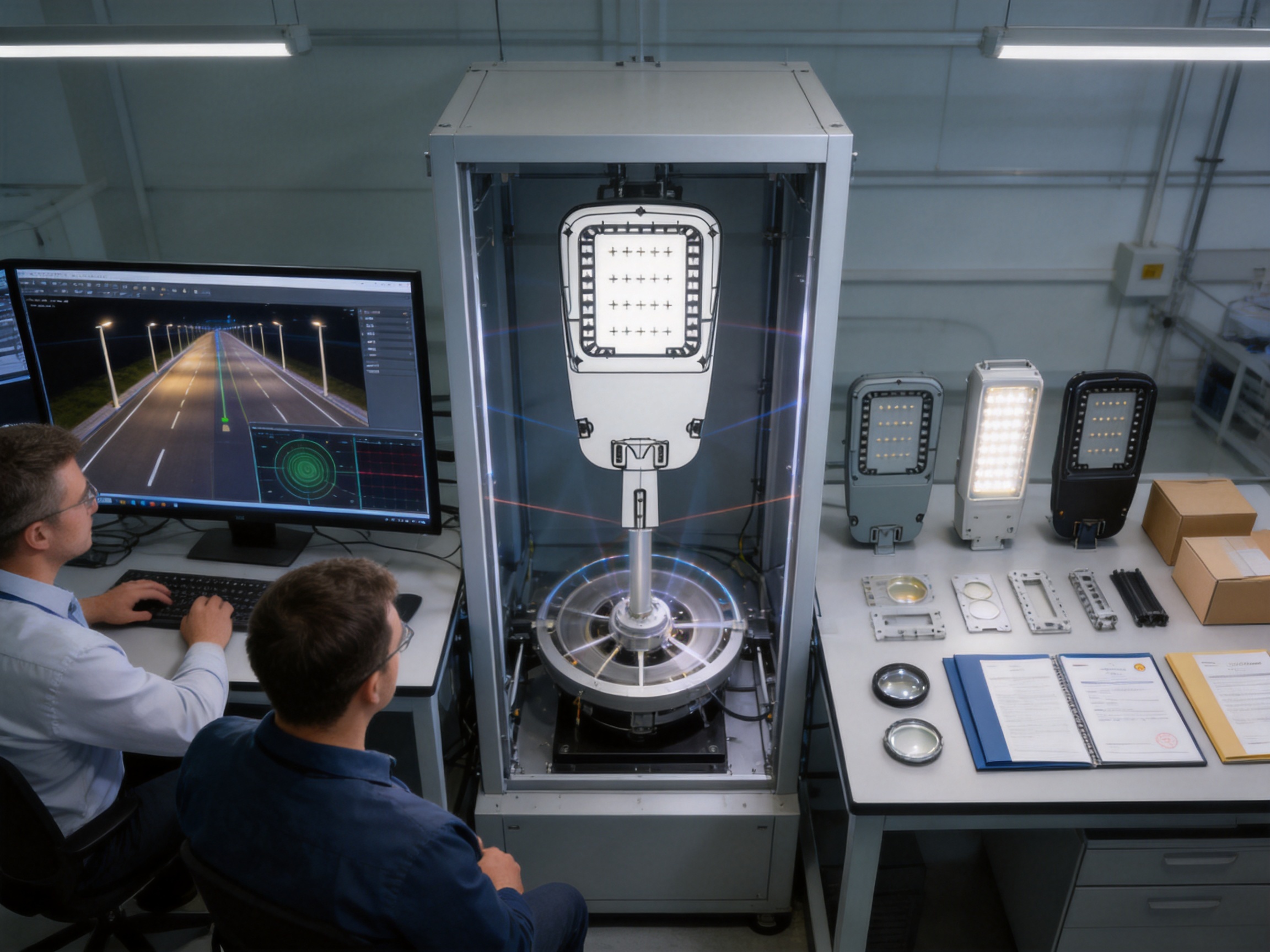
A goniophotometer is used to measure the light distribution of a luminaire. The resulting data can support photometric files, lighting calculations, beam distribution analysis, and compliance documentation. This capability is valuable because a street light should be selected according to actual optical performance rather than appearance alone.
Photometric measurement can help verify luminous distribution, intensity patterns, beam angles, and other performance characteristics. It also supports the preparation of project-specific DIALux simulations. For road projects, this information helps determine pole spacing, mounting height, orientation, and the number of luminaires required.
Quality Management
The company operates with ISO 9001, ISO 14001, and ISO 45001 certifications. ISO 9001 relates to quality-management processes, ISO 14001 addresses environmental management, and ISO 45001 concerns occupational health and safety. These systems indicate a structured approach to production management, environmental responsibility, and workplace safety.
Certification alone does not guarantee that every individual project will be successful, but it provides a framework for documented procedures, responsibilities, corrective actions, and continuous improvement. Buyers should still review product-specific test reports, inspection records, warranty conditions, and technical documentation.
5. Competitive Advantages
More Than a Basic Low-Cost Fixture
Many street lights appear similar from a distance, but their long-term value can differ significantly. A basic low-cost fixture may use a thin housing, limited thermal design, generic optics, or minimal production testing. These choices can reduce the initial purchase price but may create higher risks related to premature failure, inconsistent light distribution, water ingress, or difficult maintenance.
The HS-FF19A is positioned as part of a professional manufacturing system rather than as an unverified commodity product. Its competitive value comes from the combination of engineered housing production, optical measurement, thermal consideration, customization support, and controlled assembly.
Customization for Different Projects
Roadway projects vary widely. A city street may have different requirements from a private industrial road. A residential development may prioritize visual comfort and appearance, while a logistics facility may prioritize uniformity, operating reliability, and control integration. Export markets may also use different pole dimensions, voltage standards, regulations, and documentation requirements.
The manufacturer offers OEM and ODM services, as well as SKD and CKD customization. These options allow buyers to select the most suitable level of cooperation. OEM production may focus on branding and defined product specifications. ODM cooperation may involve changes to design, optics, housing, or functionality. SKD and CKD arrangements may support local assembly or market-specific production strategies.
One-Stop Lighting Support
A lighting project involves more than purchasing fixtures. It may require product selection, photometric calculations, pole compatibility checks, mold development, packaging, certification, delivery coordination, and technical support. A manufacturer that can provide one-stop assistance may reduce communication gaps between different suppliers.
The company’s product portfolio covers street lights, tunnel lights, high-bay lights, linear lights, garden lights, solar lights, grow lights, explosion-proof lights, and other LED products. This broad experience can be useful for projects containing multiple lighting zones, such as industrial parks, transportation facilities, residential communities, and municipal developments.
International Certification Experience
Relevant products are certified by CB and CE according to the supplied company information. These certifications are important for many international markets, although the exact requirements depend on the destination country, product configuration, voltage, control system, and applicable standards.
Project buyers should request the applicable certificates and confirm that the tested model corresponds to the ordered configuration. Documentation should ideally cover electrical safety, electromagnetic compatibility, photobiological safety where relevant, environmental protection, and other market-specific requirements.
Environmental Responsibility
LED street lights can support environmental objectives by reducing electricity consumption and lowering the frequency of lamp replacement. The company’s ISO 14001 environmental-management certification further indicates that environmental factors are incorporated into its management system.
Environmental performance should be considered across the product life cycle. This includes material selection, manufacturing energy use, packaging, transport, operating consumption, maintenance activity, and end-of-life handling. An efficient luminaire that operates reliably for many years may reduce the environmental burden associated with repeated replacements.
6. Application Areas
Urban Roads
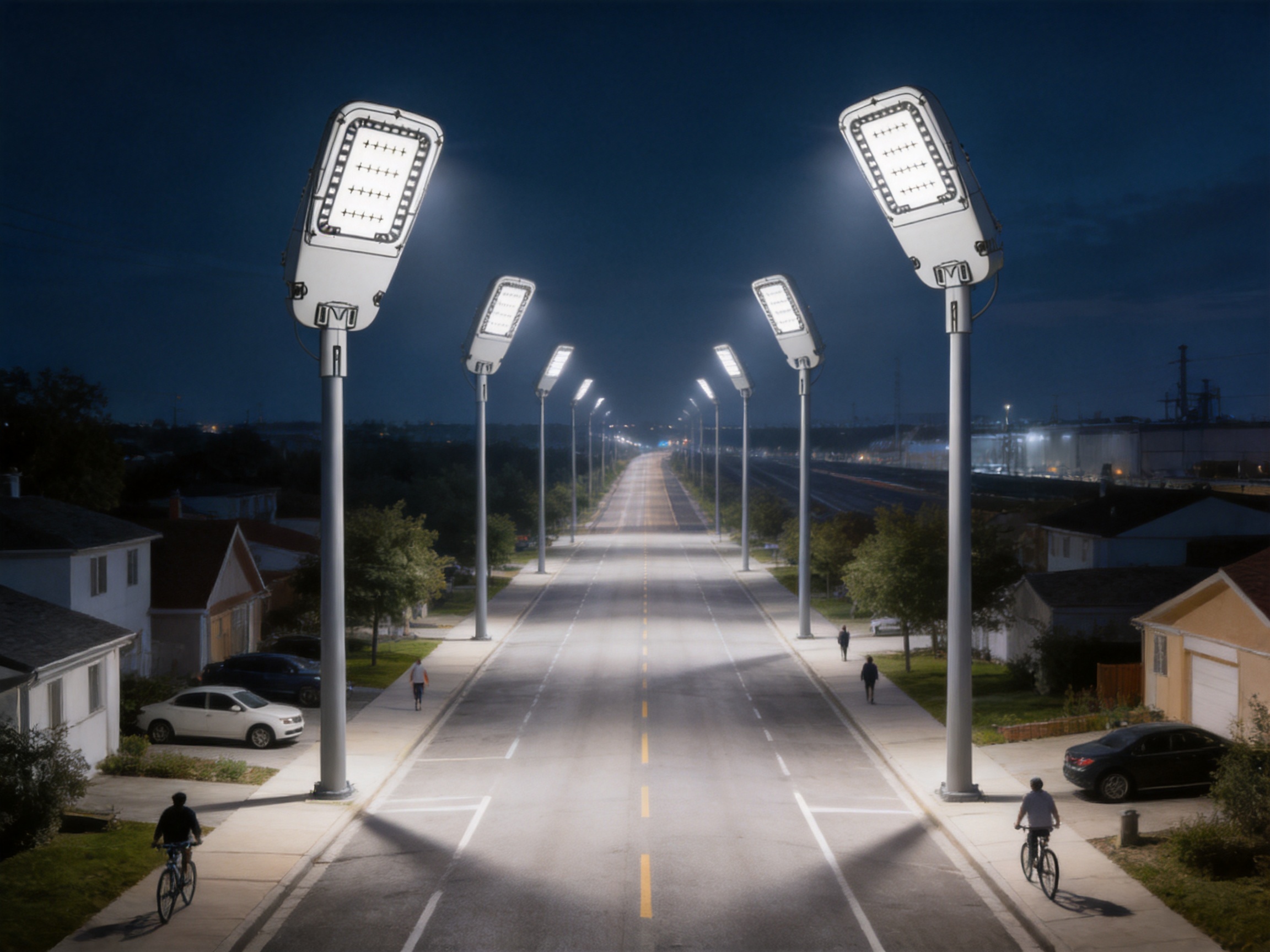
Urban roads require lighting that supports drivers, cyclists, pedestrians, and nearby residents. The fixture should provide sufficient uniformity while controlling glare and minimizing light intrusion into homes and adjacent properties. Optical selection and spacing are especially important in these environments.
The HS-FF19A can be considered for local streets, collector roads, intersections, public access routes, and other municipal applications. The final arrangement should be based on road classification, traffic volume, pole height, speed environment, local lighting standards, and the presence of sidewalks or cycle lanes.
Residential Communities
Residential areas generally require comfortable, moderate illumination rather than excessive brightness. Light distribution should support pedestrians and vehicles without creating unnecessary glare for residents. A suitable color temperature and carefully selected mounting angle can improve the visual character of the community.
In residential developments, appearance may also be important. The housing form, finish, pole arrangement, and scale of the luminaire should complement the surrounding architecture and landscaping. Custom finishes or mounting adaptations may be considered when the project has specific aesthetic requirements.
Industrial Parks and Factory Roads
Industrial facilities often operate throughout the night and may include heavy vehicles, loading areas, storage yards, internal roads, and pedestrian routes. Reliable outdoor lighting is important for safety, logistics, security, and routine operations.
The HS-FF19A can form part of a broader industrial lighting plan that also includes high-bay lighting for indoor spaces, floodlights for yards, tunnel lights for enclosed passages, and explosion-proof fixtures for hazardous areas where required. The product selection should reflect the risk profile and environmental conditions of each zone.
Parking Areas
Parking areas need good horizontal illumination, clear visibility between vehicles, and a comfortable visual environment for drivers and pedestrians. Pole height and spacing often differ from roadway installations, so optical distribution must be recalculated rather than copied directly from a street application.
Energy-saving controls may be particularly useful in parking areas with changing occupancy. Scheduled dimming or sensor-based operation can reduce consumption during low-activity periods, provided the control system is compatible with the selected driver and project requirements.
Municipal and Public Infrastructure
Public infrastructure projects often require detailed documentation, consistent batches, reliable delivery, and compliance with tender specifications. The manufacturer’s experience with international export, product certification, and project-based lighting support can help address these needs.
Municipal buyers should establish a clear technical schedule before placing an order. The schedule may include wattage, input voltage, power factor, surge protection, LED brand, driver brand, color temperature, color rendering, optical distribution, housing material, corrosion protection, ingress protection, impact resistance, mounting diameter, control interface, warranty, and test documentation.
7. Manufacturing and Quality-Control Workflow
Product Development
A professional product workflow begins with a clear understanding of the application. Engineers consider target road width, mounting height, optical needs, thermal conditions, electrical requirements, installation method, and expected environmental exposure. These inputs influence the housing, lens, driver, bracket, sealing structure, and production tooling.
For a customized project, the process may include initial drawings, three-dimensional modeling, mold-flow considerations, prototype casting, CNC finishing, sample assembly, photometric testing, thermal evaluation, and customer approval. This process helps identify design issues before mass production.
Material and Component Selection
Materials used in an outdoor luminaire must be selected for strength, thermal performance, corrosion resistance, and compatibility with manufacturing processes. The LED board, optical lens, driver, gaskets, fasteners, connectors, and protective coatings should all be selected according to the intended environment.
Component selection also affects supply stability. For long-term projects, buyers may need consistency across multiple production batches. A structured purchasing and quality system helps reduce variation in critical components and supports repeat orders.
Housing Production
After mold preparation, the housing can be formed through die-casting, trimmed, inspected, and machined where necessary. Surface treatment may be applied to improve appearance and resistance to outdoor exposure. Inspection should verify dimensions, mounting interfaces, surface condition, and potential casting defects.
Precision at this stage is important because small errors in mounting or sealing surfaces can create installation difficulties or reduce environmental protection. A controlled process also supports interchangeability between replacement fixtures and original units.
Assembly
During assembly, the LED modules, optical elements, driver, wiring, seals, covers, and mounting components are installed according to documented procedures. Proper torque, cable routing, grounding, insulation, and gasket placement are necessary for safe and reliable operation.
Assembly workers should follow product-specific instructions rather than relying solely on general experience. Standardized procedures help reduce errors, especially when the factory produces multiple product families with different housings, drivers, and optical systems.
Testing
Testing may include electrical safety checks, power and current measurement, visual inspection, functional operation, aging, sealing verification, and photometric measurement. The exact test program depends on the product configuration and customer requirements.
For a major road project, the buyer may request a pre-shipment inspection, sample approval, production inspection, or third-party verification. These steps can provide additional confidence that the delivered product matches the approved technical specification.
8. Project Selection Considerations
Wattage and Road Requirements
Wattage should not be selected simply because a higher number appears safer. Excessive power can increase operating costs, glare, and light trespass. The correct wattage depends on pole spacing, mounting height, road width, surface reflectance, required illuminance, uniformity, and optical distribution.
A professional lighting design should calculate the required performance before the final model is selected. The HS-FF19A can then be configured or specified according to the project’s actual requirements.
Color Temperature
Color temperature affects the appearance of the environment and the visual comfort of users. Cooler light may appear crisp and bright, while warmer light may create a softer visual atmosphere. The correct choice depends on local regulations, environmental policy, safety considerations, and the character of the area.
Buyers should define color temperature consistently across the project. Mixing different color temperatures without a design reason can create an uneven appearance and make maintenance more difficult.
Ingress and Impact Protection
Outdoor fixtures must be protected against water and dust. The appropriate ingress-protection level depends on the installation environment, rainfall, humidity, cleaning method, and exposure to airborne contaminants. Industrial sites may also require additional protection against chemicals, salt, or dust.
Impact resistance may be relevant in public areas, sports facilities, industrial locations, or low-mounted installations. The required rating should be confirmed through product documentation and testing relevant to the ordered configuration.
Surge Protection
Roadway luminaires may be exposed to electrical surges caused by lightning, switching events, or unstable power networks. Surge-protection requirements vary by region and installation type. The luminaire, pole, grounding system, and electrical distribution should be considered together.
Where the project is located in an area with frequent storms or overhead power lines, the buyer should specify the desired surge-protection level and confirm the test method. Additional protection at the distribution panel may also be necessary.
Maintenance Access
Even a long-life LED fixture may eventually require driver replacement, cleaning, inspection, or electrical repair. The service-access design should be evaluated before installation. A practical maintenance structure can reduce the time required for future work and minimize disruption to traffic.
Maintenance teams should also receive installation instructions, wiring diagrams, product labels, and replacement-part information. Clear documentation is particularly valuable for municipal projects that remain in operation for many years and may involve different maintenance contractors over time.
9. Customization and OEM/ODM Services
Lighting distributors and project contractors may require a product that differs from the standard configuration. Customization can involve power, optical distribution, color temperature, driver, control function, mounting arrangement, housing finish, label, packaging, connector, or cable length.
OEM cooperation is suitable for buyers who have their own brand identity, packaging requirements, and established technical specification. ODM cooperation is more suitable when the buyer wants the manufacturer to participate in product development or adapt an existing design to a new application.
SKD and CKD options may support customers who want to perform partial or complete assembly in their local market. Such arrangements can be useful when local regulations, import duties, workforce capabilities, or government procurement policies favor regional assembly. Technical responsibilities, testing procedures, component packaging, and quality ownership should be defined clearly before production.
For custom projects, the most efficient process is to provide complete information at the beginning. This may include drawings, pole dimensions, road layouts, environmental conditions, voltage, control requirements, target standards, expected annual quantity, delivery schedule, branding needs, and packaging specifications.
10. Installation Recommendations
Before installation, the contractor should inspect the luminaires, mounting accessories, cables, and documentation. The product model, power, voltage, optical distribution, and mounting dimensions should match the approved design. Any visible transport damage should be recorded before the fixture is installed.
The pole or bracket must have sufficient mechanical strength and the correct mounting diameter. Fasteners should be tightened according to the manufacturer’s instructions. The luminaire should be aligned with the road and set to the designed angle. Incorrect orientation can reduce uniformity and increase glare even when the fixture itself is functioning correctly.
Electrical connections should be completed by qualified personnel. The supply voltage must match the driver specification, and grounding should be completed according to local electrical regulations. Cable entries and covers must be sealed correctly to preserve environmental protection.
After installation, the project team should conduct a nighttime inspection. This inspection can identify incorrect aiming, dark areas, excessive brightness, unwanted spill, or control-system problems. If necessary, the mounting angle or control schedule can be adjusted after comparing actual conditions with the lighting design.
11. Comparison with Conventional Lighting
| Evaluation Factor | Traditional Discharge Lighting | HS-FF19A LED Street Light |
|---|---|---|
| Energy use | Generally higher for comparable useful roadway illumination | Designed to improve energy efficiency through LED technology and controlled optics |
| Startup behavior | May require warm-up or restrike time | Provides rapid startup and immediate usable illumination |
| Optical control | Often dependent on reflector geometry and lamp position | Can use dedicated LED lenses and photometric distributions |
| Maintenance | Periodic lamp and ballast replacement may be required | Long-life LED and driver system can reduce routine replacement activity |
| Control potential | May have limited dimming or control flexibility | Can be configured for compatible dimming and intelligent control systems |
| Manufacturing flexibility | Often based on standardized lamp compartments | Can support customized housing, optics, mounting, driver, and branding requirements |
| Project support | May require separate design and fixture suppliers | Can be supported by photometric design, mold development, OEM/ODM, and export services |
The comparison should not be interpreted as a guarantee of a specific energy-saving percentage or operating life. Actual results depend on the selected configuration, installation conditions, operating schedule, electrical quality, maintenance practices, and local environment. The main advantage is that an integrated LED platform provides more opportunities to optimize the complete lighting system.
12. Why Manufacturing Location and Supply Experience Matter
The product is manufactured by a company located in Cixi, Ningbo, Zhejiang Province, China. Ningbo is an important manufacturing and export region with access to industrial supply chains, ports, engineering resources, and international logistics services. This location can support efficient procurement of components, production scheduling, container loading, and overseas delivery.
Export experience is important because international lighting projects involve more than manufacturing. Packaging must protect the fixtures during long-distance transport. Product labels and manuals may need to be adapted to different languages and regulations. Electrical configurations may vary between countries. Documentation, inspection, customs preparation, and delivery coordination must be managed carefully.
A supplier with experience serving global clients can help identify common project risks before production. These may include incorrect pole dimensions, incomplete certification requirements, unsuitable control systems, insufficient packaging, or a mismatch between the photometric file and the delivered product.
13. Business and Technical Cooperation
Potential buyers can approach cooperation in several ways. A distributor may purchase a standard product for regular stock. A contractor may request a project-specific configuration and photometric calculation. A municipal buyer may require tender documentation and compliance evidence. An original equipment customer may need a customized housing and branded packaging.
In each case, communication should cover technical, commercial, and after-sales requirements. Technical discussions should address the product configuration and testing. Commercial discussions should address quantity, lead time, packaging, payment, and delivery terms. After-sales discussions should define warranty conditions, spare parts, troubleshooting procedures, and communication channels.
The company provides contact channels including telephone, email, WhatsApp, and social media platforms. For professional procurement, the most important information should be exchanged in formal technical documents and purchase-order records so that the final production standard is clear and traceable.
14. Questions and Answers
Q1: What is the HS-FF19A street light designed for?
The HS-FF19A is designed for outdoor roadway and area illumination. Potential applications include urban roads, residential streets, industrial parks, access roads, parking areas, municipal projects, and other locations requiring dependable nighttime lighting.
Q2: Can the product be used to replace older street lights?
It can be considered for replacement projects involving older discharge lamps or inefficient outdoor fixtures. The replacement should be based on a new lighting calculation rather than a simple watt-for-watt substitution. Pole spacing, mounting height, optical distribution, road width, and required uniformity must be reviewed.
Q3: Is the street light suitable for international projects?
The manufacturer exports products worldwide and has experience with international cooperation. Relevant products are certified by CB and CE according to the supplied company information. Buyers should confirm the exact certificates, voltage configuration, standards, and documentation required in the destination market.
Q4: Can the product be customized?
Yes. The company provides OEM, ODM, SKD, and CKD services. Possible customization areas may include power, optics, color temperature, driver, control system, mounting interface, finish, branding, packaging, and assembly method. The final possibilities should be confirmed through a technical review.
Q5: How does the manufacturer support lighting design?
The company provides efficient lighting solutions and DIALux design support. Photometric data from goniophotometer testing can be used to model illumination, uniformity, mounting arrangements, and spacing. The customer should provide a road layout or project plan whenever a detailed simulation is required.
Q6: What manufacturing equipment supports the product?
The manufacturing environment includes die-casting machines, CNC machines, aging lines, and goniophotometers. These resources support structural housing production, precision machining, burn-in testing, and photometric measurement.
Q7: Why is die-casting important for a street light?
Die-casting can produce a strong and repeatable metal housing with integrated structural features. It can support heat dissipation, mounting strength, component protection, and efficient production. The final performance still depends on mold design, material, processing, surface treatment, and inspection.
Q8: Does LED technology eliminate all maintenance?
No. LED technology can reduce routine lamp replacement, but fixtures still require inspection, cleaning, electrical checks, and possible driver or component service. Correct installation and periodic maintenance remain important for long-term performance.
Q9: What information should be provided for a quotation?
Useful information includes application type, quantity, road or area dimensions, pole height, pole spacing, mounting diameter, input voltage, desired power, color temperature, control method, environmental conditions, certification requirements, delivery location, packaging needs, and branding requirements.
Q10: Can one product configuration be used for every road?
Not always. Different roads and areas require different optical distributions and power levels. A professional design should evaluate each application. The HS-FF19A may be configured or specified differently according to the project’s geometry, lighting standards, and operating conditions.
Q11: What should be checked before mass production?
Before mass production, the buyer should approve the technical specification, drawings, sample, optical data, electrical configuration, mounting dimensions, color, labels, packaging, certificates, and inspection plan. This reduces the risk of differences between the quotation, sample, and final shipment.
Q12: Why should buyers review photometric files?
Photometric files show how light is distributed. They allow engineers to calculate illuminance and uniformity, select pole spacing, evaluate glare, and determine whether the product is suitable for a particular road. Appearance alone cannot confirm roadway performance.
15. Recommended Procurement Checklist
Before ordering the HS-FF19A, the buyer should confirm the exact product name and revision, selected wattage, input voltage, frequency, driver specification, power factor, surge protection, LED color temperature, color-rendering requirement, optical distribution, housing material, finish, mounting diameter, cable arrangement, ingress protection, impact protection, control interface, and certification documents.
The buyer should also request a product drawing showing the overall dimensions, net weight, mounting position, center of gravity where relevant, and installation method. These details help the structural engineer verify pole loading and enable the contractor to prepare suitable tools and accessories.
For larger projects, a sample installation is recommended. The sample should be tested during nighttime operation under representative conditions. The project team can then confirm light distribution, appearance, glare, color, mounting angle, and compatibility with the control system before approving full deployment.
Packaging and logistics should also be discussed. Outdoor luminaires may be shipped in cartons, pallets, or customized protective packaging depending on quantity and transport method. The packaging design should protect optical surfaces, mounting components, electrical connectors, and painted or coated areas from impact and moisture.
16. Overall Assessment
The HS-FF19A street light represents a practical LED solution for projects seeking energy-efficient outdoor illumination, controlled optical performance, reliable mechanical construction, and flexible supply support. Its value is strengthened by the manufacturer’s integrated capabilities in die-casting, CNC machining, aging, photometric measurement, mold development, OEM/ODM cooperation, and international delivery.
Its advantages over basic competing products are not limited to LED technology. The more important distinction is the ability to coordinate the full product system: housing, thermal path, optical distribution, driver, sealing, mounting, assembly, testing, documentation, and project service. This coordinated approach can help reduce design uncertainty and improve the long-term value of a roadway lighting installation.
For buyers, the best results will come from treating the HS-FF19A as part of a professionally designed lighting system. Correct wattage, optical selection, pole arrangement, control strategy, installation angle, environmental protection, and maintenance planning are all essential. When these factors are addressed together, the product can support safer, clearer, and more efficient nighttime environments across municipal, residential, industrial, and commercial applications.
Companies evaluating this product should request a complete technical package and discuss the intended application with the manufacturer. The final specification should be based on project requirements and confirmed through drawings, photometric data, samples, certifications, and inspection procedures. This process allows the product’s manufacturing strengths and customization capabilities to be used effectively.
References
1. International Electrotechnical Commission, standards and guidance relating to LED luminaires, roadway lighting equipment, electrical safety, and electromagnetic compatibility.
2. International Organization for Standardization, ISO 9001 Quality Management Systems: Requirements.
3. International Organization for Standardization, ISO 14001 Environmental Management Systems: Requirements with Guidance for Use.
4. International Organization for Standardization, ISO 45001 Occupational Health and Safety Management Systems: Requirements with Guidance for Use.
5. Commission Internationale de l’Éclairage, guidance on road lighting, photometric measurement, glare evaluation, and visual performance.
6. International Dark-Sky Association, principles concerning responsible outdoor lighting, glare reduction, light trespass, and upward-light control.
7. DIALux lighting-design documentation and professional guidance for roadway illumination calculations.
8. General engineering practice for LED luminaire thermal management, ingress protection, surge protection, installation, and maintenance planning.
Product: Street Light-副本-副本
YQF Group - World Leading One-Stop Lighting & Solar For the Global Partners
Custom & OEM Solutions for Global Lighting Brands
Copyright © Cixi HuaSheng Lighting Co., Ltd. All Rights Reserved.
Die-Casting Mould Supplier
