 English
 中文简体
 русский
 Français
 Español
 عربى
 Indonesia

High-Performance LED Garden Light JD-1064: Efficient, Durable, and Customizable Outdoor Illumination
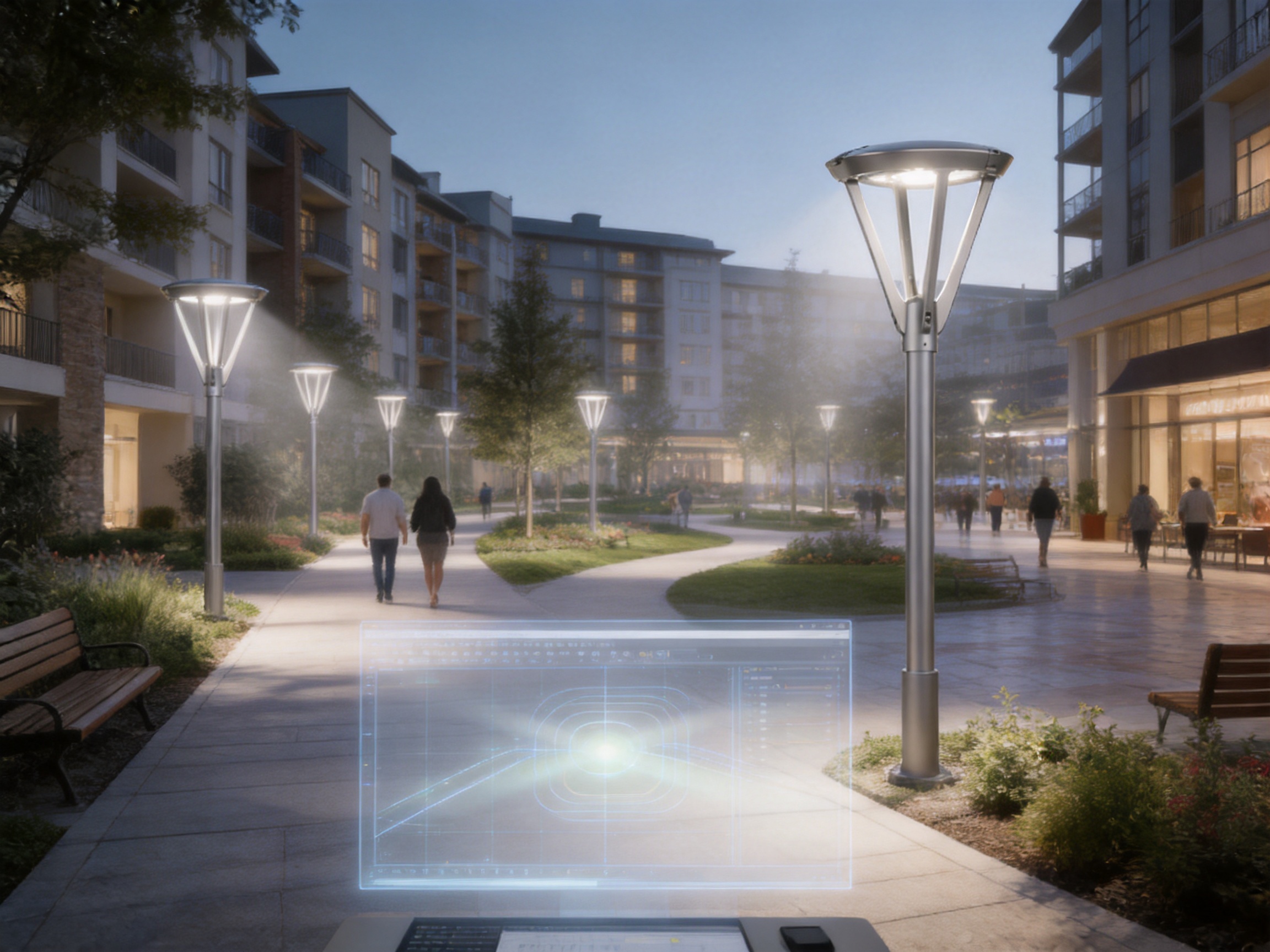
Outdoor lighting plays an essential role in the appearance, safety, and usability of residential landscapes, public spaces, commercial developments, hospitality projects, and municipal environments. A well-designed garden light must do more than provide basic illumination. It must deliver comfortable brightness, maintain a balanced appearance during the day, withstand changing outdoor conditions, support efficient operation, and integrate smoothly into a broader lighting plan. The High Performance LED Garden Light JD-1064 is designed around these practical requirements, offering a flexible solution for landscape and outdoor area illumination.
The JD-1064 supports a power range of 30-100W and uses 3030 or 5050 LED packages. With a stated efficacy of 130-160Lm/W, the fixture is suitable for projects seeking a strong balance between energy efficiency and reliable light output. Its 480x470x590mm dimensions provide a substantial presence for garden paths, courtyards, residential developments, parks, hotel grounds, public walkways, and other outdoor areas where lighting must be functional while also contributing to the visual character of the site.
Unlike a basic decorative lamp designed primarily for appearance, the JD-1064 is positioned as a project-oriented lighting fixture. Its design allows suppliers, contractors, distributors, and developers to consider power selection, LED configuration, housing customization, driver arrangements, and light distribution as part of an integrated solution. This flexibility is particularly valuable for OEM and ODM projects in which the final product must reflect the requirements of a specific application, regional market, or lighting design.
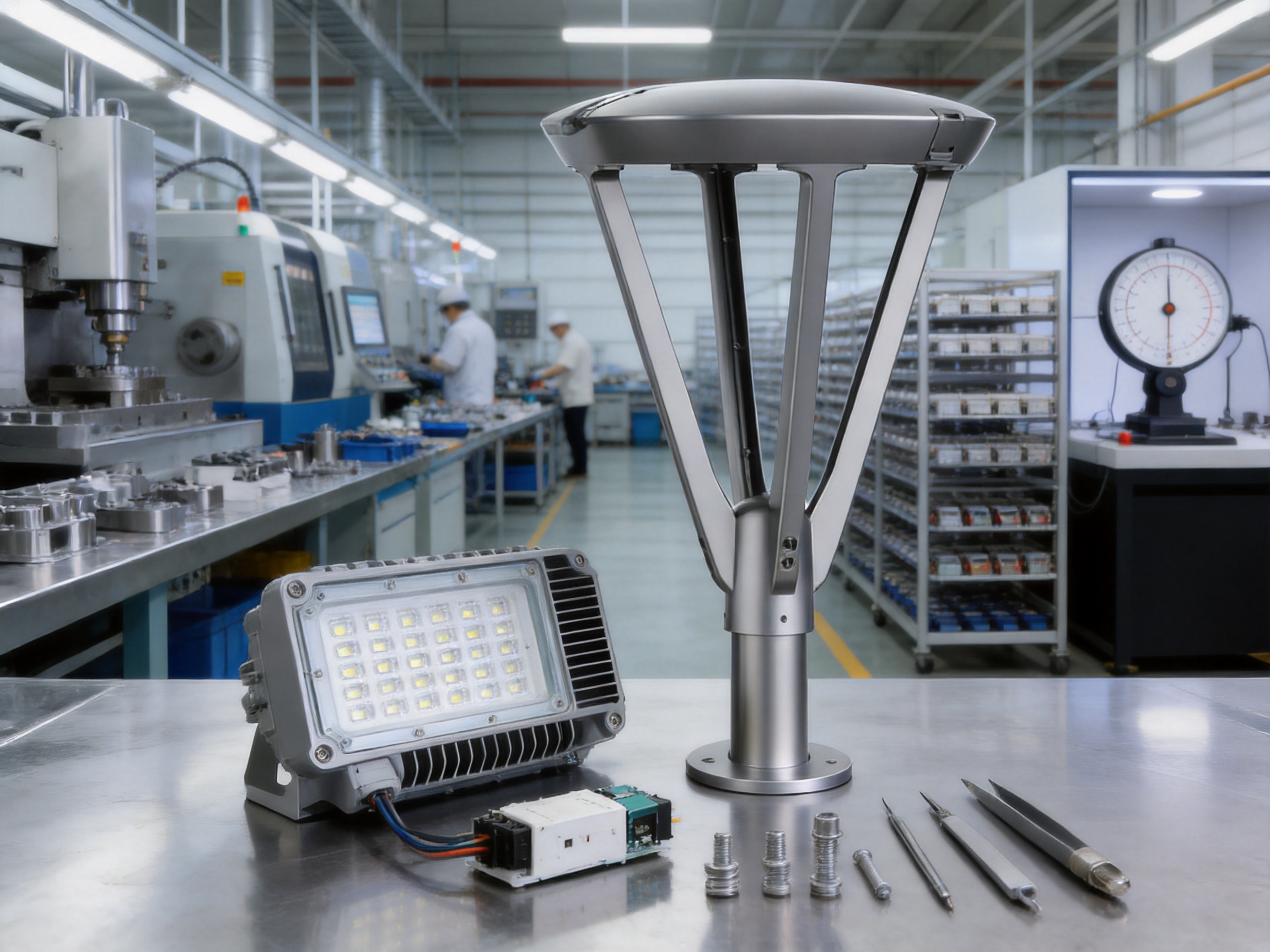
Manufactured by Cixi HuaSheng Lighting Co., Ltd., the JD-1064 benefits from a production environment that includes die-casting and CNC machining equipment, aging lines, photometric testing equipment, and professional lighting design capabilities. These resources support more consistent manufacturing and allow the supplier to provide services extending beyond a standard catalog product. The company also offers mold design, OEM/ODM development, SKD/CKD customization, DIALux lighting designs, and delivery support for international projects.
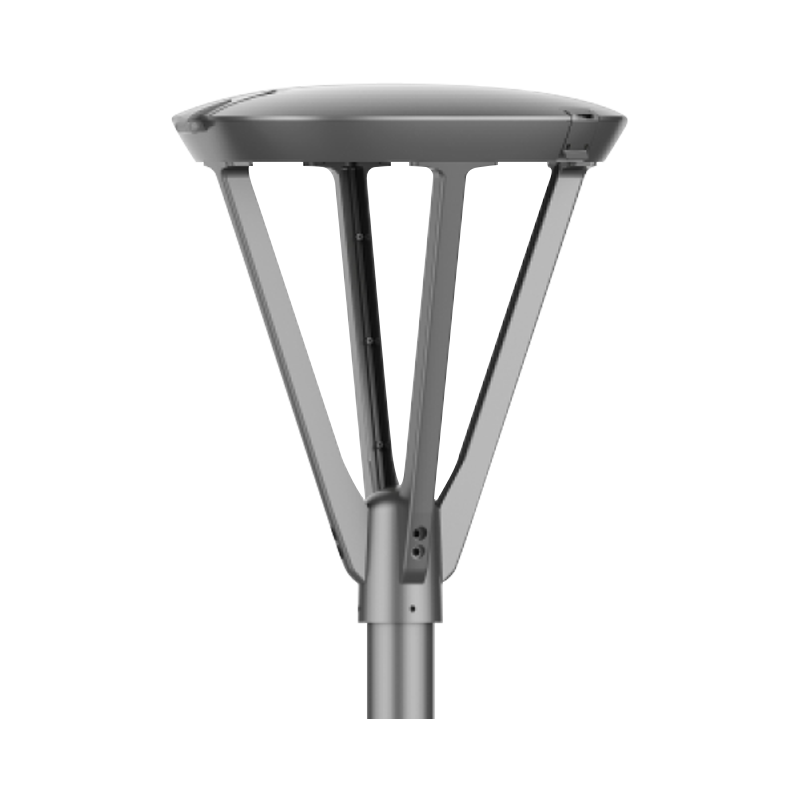
High Performance LED Garden Light JD-1064
1. Product Overview and Design Purpose
The High Performance LED Garden Light JD-1064 is a decorative outdoor lighting fixture developed for landscape and area illumination. It is intended to provide a comfortable and uniform lighting effect while maintaining a refined appearance suitable for architectural and environmental settings. The fixture can be used in locations where pedestrians, residents, guests, or visitors need clear and pleasant illumination without the harsh visual effect often associated with poorly designed high-output lamps.
Garden lighting is frequently installed in environments that combine functional and aesthetic objectives. A residential community may require lighting for walkways and entrances while also protecting the appearance of its landscape design. A hotel or resort may need illumination that guides guests through outdoor areas without interfering with the atmosphere. A municipal park may need dependable operation, economical energy consumption, and a housing design that can withstand frequent exposure to rain, dust, temperature changes, and maintenance activity.
The JD-1064 addresses these requirements through a combination of adaptable power, efficient LED technology, a durable structure, and a format suitable for professional project planning. The fixture is not limited to a single lighting output. Its 30-100W range gives project suppliers greater freedom to match the product to mounting height, pathway width, spacing, required illuminance, and local energy objectives.
The product description identifies the JD-1064 as a high-performance LED garden light rather than a simple ornamental fixture. This distinction is important for buyers comparing products in the same market. A garden light intended for professional use must be evaluated according to more than appearance. Optical performance, electrical stability, heat management, manufacturing consistency, installation compatibility, and long-term service requirements all influence the total value of an outdoor lighting product.
1.1 Main Technical Specifications
| Item | Specification | Project Relevance |
|---|---|---|
| Product | High Performance LED Garden Light JD-1064 | Decorative and functional outdoor illumination |
| Power | 30-100W | Supports different site sizes and lighting levels |
| LED Type | 3030/5050 | Provides configuration flexibility for project requirements |
| Efficacy | 130-160Lm/W | Supports efficient energy use and reduced operating costs |
| Dimensions | 480x470x590mm | Suitable for visible landscape and area-lighting applications |
| Customization | Housing, power, and light distribution options | Supports OEM and ODM development |
| Manufacturer Services | Lighting design, mold design, OEM/ODM, SKD/CKD | Helps simplify project sourcing and product adaptation |
The specifications show that the JD-1064 is designed for flexibility rather than a single standardized installation condition. The selectable power range can help reduce the risk of oversizing a fixture for a small garden or undersizing it for a large public space. Similarly, the availability of 3030 and 5050 LED options gives suppliers a basis for selecting a configuration according to output, optical requirements, procurement preferences, and target-market expectations.
2. Efficient Illumination for Outdoor Areas
Energy efficiency is one of the most important considerations in modern outdoor lighting. Garden lights may operate for many hours each evening, and a project may include dozens or hundreds of fixtures. Even a modest difference in fixture efficacy can have a meaningful effect on annual electricity consumption when multiplied across a large installation and a long operating period.
With an efficacy range of 130-160Lm/W, the JD-1064 is designed to produce substantial light output from a comparatively controlled electrical input. Efficacy expresses the amount of luminous output generated per watt of power. A higher efficacy can help project planners achieve required brightness with lower installed wattage, or obtain more light from a similar power budget. The practical result may include reduced energy consumption, lower operating expenses, and a stronger business case for replacing older conventional fixtures.
Energy efficiency also supports sustainability objectives. Many property owners, municipalities, developers, and industrial organizations are seeking lighting products that reduce unnecessary energy use while preserving safety and visual quality. A well-selected LED garden light can contribute to these objectives by combining efficient light sources with suitable optics, intelligent power selection, and careful spacing in the lighting design.
The JD-1064 should be evaluated as part of a complete lighting plan rather than as an isolated wattage figure. Actual performance depends on mounting height, spacing, surface reflectance, optical distribution, maintenance conditions, and the required illuminance level. Huasheng’s DIALux design service can help suppliers and project customers assess these factors before installation. A digital lighting simulation may identify overly bright zones, dark areas, unnecessary fixture quantities, or opportunities to adjust the selected power level.
2.1 Benefits of Selecting the Correct Power
The 30-100W range creates several practical advantages for project planning. A 30W configuration may be appropriate for smaller paths, low mounting positions, courtyards, or locations where decorative illumination is the primary objective. Higher power configurations can be considered for larger open areas, broader pathways, entrances, public plazas, or installations requiring greater mounting height and spacing.
Flexible power selection can also support phased development. A property may initially require lighting for a small garden or entrance area and later expand to additional paths, parking-adjacent zones, or landscape sections. Using a product family with a broad power range can help maintain a consistent design language while adapting output to each area.
Correct power selection is also important for visual comfort. The brightest possible fixture is not always the best fixture. Excessive brightness can create glare, uncomfortable contrasts, and light spill into nearby homes or natural areas. By choosing a suitable output and combining it with an appropriate optical arrangement, project designers can pursue a more balanced and pleasant nighttime environment.
3. LED 3030 and 5050 Configuration Flexibility
The JD-1064 supports 3030 and 5050 LED configurations. These LED package choices give project suppliers additional flexibility when defining a product specification. Different LED packages may be selected according to the required light output, board layout, thermal design, optical structure, sourcing plan, and market positioning.
For an OEM or ODM customer, configuration flexibility is especially useful. A distributor serving different regions may need multiple performance versions under a shared housing design. A landscape contractor may require one configuration for a pedestrian walkway and another for a wider public area. A municipal project may prioritize efficiency and long-term operating cost, while a hospitality project may place greater emphasis on visual uniformity and the appearance of the fixture.
The availability of alternative LED configurations allows these requirements to be discussed during product development rather than treated as limitations after production has begun. The housing, power system, LED arrangement, thermal path, and light distribution can be reviewed as connected elements. This approach is more effective than selecting a generic lamp first and attempting to modify it after installation problems appear.
LED selection must always be considered together with thermal management and driver performance. A high-output LED system needs a suitable route for heat dissipation, stable electrical control, and appropriate testing. Huasheng’s manufacturing capabilities in die-casting, CNC processing, assembly, aging, and photometric evaluation provide a foundation for controlling these related factors during production.
4. Uniform Brightness and Visual Comfort
Outdoor lighting quality is not determined only by the number of lumens produced. The way light is distributed across the ground and surrounding surfaces is equally important. A fixture that creates severe bright spots directly beneath the lamp and deep shadows between fixtures may technically produce high output but still deliver an uncomfortable or ineffective environment.
The JD-1064 is intended to provide uniform brightness for outdoor areas. Uniform illumination helps pedestrians identify paths, steps, changes in surface level, landscaping features, and potential obstacles. It can also improve the perceived quality of a development by reducing distracting variations in brightness.
For decorative applications, uniformity is particularly valuable because the fixture must complement the landscape rather than dominate it. Even light can reveal planting beds, architectural textures, paving materials, and public spaces in a more controlled way. In hospitality and residential settings, this may contribute to a welcoming atmosphere. In municipal and commercial applications, it may support wayfinding and improve the perceived safety of the environment.
Uniformity depends on more than the LED package. Optical design, fixture height, pole spacing, mounting orientation, surrounding surfaces, and selected power all influence the final result. A professional supplier should therefore consider photometric data and project simulations when specifying the product. The availability of goniophotometers and DIALux design support gives Huasheng the ability to approach these requirements through measurement and analysis rather than relying only on visual estimation.
5. Structural Design and Outdoor Reliability
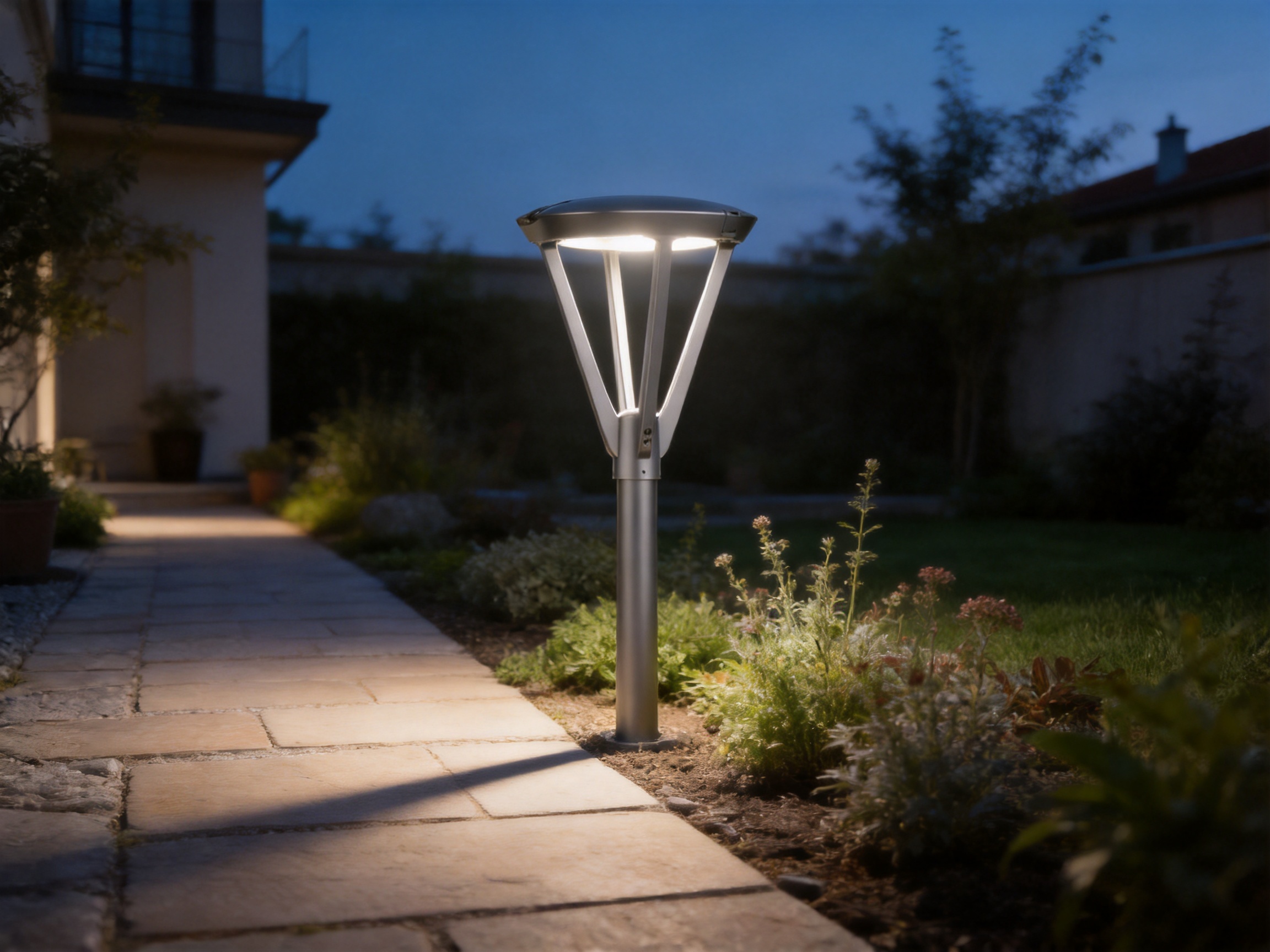
Outdoor fixtures operate under conditions that are more demanding than those found indoors. Rain, humidity, airborne dust, ultraviolet exposure, temperature fluctuations, wind, accidental impact, and repeated maintenance activity can all influence product life. A garden light must therefore combine an attractive design with a structure capable of supporting dependable long-term use.
The JD-1064 has a substantial 480x470x590mm format that is suitable for a visible landscape lighting role. Its structure is designed to house the LED system, electrical components, thermal elements, and optical parts in a coordinated assembly. A well-integrated housing can support mechanical stability while also contributing to heat dissipation and protection of internal components.
Huasheng’s use of die-casting equipment is an important manufacturing advantage for products requiring shaped metal housings and repeatable dimensions. Die-casting can produce complex forms with a high degree of consistency when molds, process conditions, and inspection procedures are properly controlled. It can also support efficient production of housings with integrated ribs, mounting features, and structural details that would be difficult or costly to create through simpler methods.
CNC machining adds another level of dimensional control. After casting, selected surfaces or connection points may require precise machining to achieve accurate assembly, fastening, or interface dimensions. Consistent machining can reduce variation between units and support smoother installation for project customers.
These manufacturing processes provide advantages over products made with loosely controlled fabrication methods. Inconsistent housing dimensions can create assembly difficulties, poor sealing interfaces, uneven appearance, or increased maintenance needs. A controlled die-casting and CNC workflow helps reduce these risks and creates a more dependable basis for large-volume production.
5.1 Thermal Management
Heat management is central to LED performance and service reliability. LEDs are more efficient than many traditional light sources, but they still generate heat that must be transferred away from the LED board and sensitive electrical components. Excessive operating temperature can accelerate component aging, reduce light output, and affect long-term stability.
The housing of the JD-1064 can be considered part of the thermal system rather than merely an exterior shell. Metal construction and engineered contact surfaces can help move heat from the LED assembly toward the surrounding air. The effectiveness of this process depends on material, surface area, interface quality, ambient temperature, installation position, and the chosen power configuration.
Because the product supports up to 100W, thermal design and validation are especially important when selecting high-output versions. Production testing, aging procedures, and engineering review help confirm that the chosen configuration performs consistently before products are shipped to customers. These steps can contribute to more stable operation and reduce the likelihood of early performance variation.
6. Manufacturing Quality and Process Control
A lighting product’s real value is determined not only by its design but also by how consistently that design is reproduced. Two fixtures may have similar specifications on paper while offering different practical results because of variations in materials, assembly, soldering, driver integration, sealing, testing, or final inspection.
Cixi HuaSheng Lighting Co., Ltd. operates as a professional lighting manufacturer in Ningbo, China, with production capabilities covering multiple categories of LED lighting. Its manufacturing resources include die-casting machines, CNC equipment, aging lines, and goniophotometers. This combination supports the development and production of products such as street lights, tunnel lights, high-bay lights, linear lights, garden lights, solar lights, grow lights, explosion-proof lights, and other specialized fixtures.
The breadth of this product experience can be valuable when developing an outdoor garden light. Different lighting categories require knowledge of thermal behavior, optical control, electrical systems, mechanical construction, installation conditions, and compliance considerations. A manufacturer working across these applications may be better positioned to transfer relevant engineering experience into a project-specific design.
Aging lines are particularly relevant to production quality. An aging process subjects assembled products to controlled operation for a defined period, helping identify certain early-stage defects or unstable components before shipment. Although aging does not replace every form of quality testing, it is a useful part of a broader process-control system. It can help reduce the risk that a customer receives products with faults that could have been detected during factory evaluation.
Goniophotometers support accurate measurement of light distribution. This equipment can help manufacturers evaluate luminous intensity at different angles and generate photometric information for lighting calculations. Such data is useful for project suppliers who need to model the JD-1064 in professional lighting software or compare expected performance across different configurations.
6.1 Certifications and Management Systems
Huasheng is identified as holding ISO 9001, ISO 14001, and ISO 45001 certifications. These management systems correspond to quality management, environmental management, and occupational health and safety. For international buyers, such certifications can provide additional confidence that the manufacturer has established formal processes in these areas.
The company also states that relevant products are certified by CB and CE. Certification requirements should always be confirmed for the exact product configuration, target country, electrical system, and project application. Nevertheless, the presence of recognized certification experience can simplify discussions with importers, distributors, consultants, and procurement departments.
ISO 9001 is relevant to documented quality processes, corrective actions, supplier management, and continuous improvement. ISO 14001 reflects attention to environmental management practices, while ISO 45001 addresses workplace health and safety. Together, these systems indicate a manufacturing organization that considers product quality alongside environmental responsibility and safe operations.
7. Advantages Over Basic or Less Flexible Competitor Products
When comparing the JD-1064 with other garden lights, buyers should look beyond initial purchase price. The most economical product at the quotation stage may not provide the best overall value if it requires more energy, creates uneven illumination, is difficult to customize, or produces inconsistent results from one batch to another.
One important advantage of the JD-1064 is its broad power range. Many basic products are offered in only one fixed wattage, which can force project designers to use too many fixtures in some areas or accept insufficient light in others. The 30-100W range gives the JD-1064 greater adaptability for different site conditions and reduces the need to source several unrelated product designs.
A second advantage is the combination of efficient LED performance and project-oriented design. The stated 130-160Lm/W efficacy provides a strong basis for energy-conscious applications. When supported by suitable optical planning, this can help customers reduce energy use without sacrificing required illumination.
A third advantage is customization. The ability to discuss housing, power, and light distribution modifications is valuable for customers who need a distinctive appearance, a specific mounting arrangement, a particular driver configuration, or a product adapted to local regulations. Generic competitor products may offer limited options once the catalog design has been established.
A fourth advantage is the manufacturer’s ability to provide several services under one supply relationship. Mold design, die-casting, CNC processing, assembly, aging, photometric evaluation, DIALux planning, OEM/ODM development, and SKD/CKD solutions can be coordinated through one experienced supplier. This may reduce communication gaps between separate design, tooling, manufacturing, and lighting-engineering providers.
A fifth advantage is suitability for international project supply. Certifications, established manufacturing systems, export experience, and global delivery support are important when products must be supplied across borders. A supplier familiar with international documentation and project coordination can help reduce avoidable delays during procurement and delivery.
7.1 Total Cost of Ownership
Total cost of ownership includes the purchase price, installation expense, electricity consumption, maintenance, replacement frequency, spare parts, and potential disruption caused by failures. An efficient and well-manufactured LED garden light may offer better long-term value even when its initial price is not the lowest available.
The JD-1064 can support lower operating costs through efficient LED performance and power selection. If the lighting design uses the correct wattage and spacing, the project may avoid unnecessary energy consumption. A durable housing and controlled manufacturing process can also help reduce maintenance requirements, although actual service life depends on installation conditions, electrical quality, environmental exposure, and maintenance practices.
For contractors and distributors, product consistency has a financial value as well. Uniform products are easier to install, document, replace, and support. A stable supply of repeatable fixtures can reduce the administrative burden associated with handling multiple variations from different suppliers.
8. OEM and ODM Customization Opportunities
Many lighting buyers are not looking for an off-the-shelf product alone. They may need a product that reflects their brand identity, complies with a local standard, fits a particular pole or foundation, matches an existing lighting family, or meets a defined project specification. The JD-1064 platform is suitable for these discussions because the manufacturer offers OEM and ODM services.
Housing customization may include adjustments to appearance, mounting interfaces, dimensions, surface treatment, access panels, or structural details. These changes should be assessed carefully because even a small housing modification can influence heat dissipation, weight, wind loading, sealing, and assembly time.
Power customization allows customers to select an output appropriate to their application. A project may require a low-power version for a narrow path, a medium configuration for a residential garden, or a higher-output version for a large public area. The manufacturer can discuss the relationship between selected wattage, LED arrangement, driver specification, thermal behavior, and expected optical performance.
Light distribution customization is another important opportunity. Different sites benefit from different beam patterns. A narrow path, a broad plaza, and a landscaped driveway do not necessarily need the same optical arrangement. Adjusting the distribution can help improve uniformity, reduce wasted light, and limit unwanted spill into neighboring properties or natural areas.
OEM and ODM development should include a clear technical brief, drawings, performance targets, sample approval, testing requirements, certification needs, packaging specifications, and production quantities. Huasheng’s mold design and manufacturing capabilities can help customers move from concept to production with fewer external interfaces.
8.1 SKD and CKD Supply Options
Some international customers require semi-knocked-down or completely knocked-down supply arrangements. SKD and CKD models can support local assembly, regional production strategies, customs planning, or market-specific finishing operations. The suitability of either approach depends on local regulations, assembly capability, labor costs, logistics, and quality-control requirements.
A manufacturer with experience in both finished-product export and customized component supply can help evaluate which model is most practical. The JD-1064’s housing, LED assembly, driver, fasteners, and other components may be reviewed as part of a structured supply plan. Clear documentation and quality standards are essential when products are assembled outside the main factory.
9. Applications for the JD-1064
The JD-1064 can be used in a broad range of outdoor environments where decorative appearance and practical illumination must work together. Its application should be selected according to the required light level, mounting arrangement, environmental conditions, and local design standards.
9.1 Residential Communities
Residential developments often use garden lights along internal roads, pedestrian paths, entrances, shared courtyards, green spaces, and recreational areas. The JD-1064 can help create a consistent visual identity throughout a community while providing illumination for residents moving between buildings and outdoor facilities.
The adjustable power range is useful in residential projects because different zones may require different output levels. A narrow footpath may not need the same wattage as a central entrance or shared plaza. Careful selection can improve comfort while limiting unnecessary brightness near apartment windows and private outdoor areas.
9.2 Hotels and Resorts
Hotels, resorts, and hospitality properties depend heavily on the nighttime appearance of outdoor spaces. Lighting may be used to guide guests, emphasize landscape features, illuminate walkways, and create a calm sense of arrival. A well-designed garden light can support these objectives without making the environment appear overly industrial.
The JD-1064’s decorative format and flexible configuration make it suitable for pathways, gardens, courtyards, poolside surroundings, outdoor dining areas, and entrances. Project designers may combine fixture spacing, power selection, and light distribution to create different atmospheres in different parts of the property.
9.3 Parks and Public Landscapes
Municipal parks and public landscape projects require practical illumination, energy control, and reliable operation. Fixtures may be installed along walking routes, near benches, around planting areas, at park entrances, and in open gathering spaces. The product’s efficient LED platform can support public energy objectives, while photometric planning can help improve consistency across larger areas.
For public projects, maintainability and supply continuity are also important. A manufacturer capable of repeat production, technical documentation, and replacement support can offer benefits throughout the project lifecycle.
9.4 Commercial Developments
Shopping centers, office campuses, business parks, and mixed-use developments frequently require exterior lighting that is both attractive and dependable. Garden lights can help define pedestrian areas, connect building entrances, and improve the appearance of landscaped zones. The JD-1064 can be included in a coordinated lighting plan alongside street lights, wall lights, linear fixtures, and other outdoor products.
9.5 Institutional and Industrial Campuses
Schools, hospitals, factories, research campuses, and administrative compounds may require lighting around walkways, landscaped zones, visitor entrances, and internal circulation routes. These sites often have large areas and varied operating schedules, making efficient output and suitable power selection valuable considerations.
10. Installation and Project Planning Considerations
A successful garden-lighting installation begins with site analysis. The project team should review pathway width, fixture mounting height, expected pedestrian movement, landscaping, nearby buildings, tree growth, road access, existing electrical infrastructure, and local environmental conditions. These factors influence fixture spacing, orientation, wattage, and light distribution.
The JD-1064 should be installed according to approved technical documentation and the requirements of the selected configuration. Electrical connections must be completed by qualified personnel, with attention to grounding, cable protection, voltage compatibility, circuit loading, and weather-resistant connection methods.
Fixture spacing should not be determined solely by visual preference. Photometric data and lighting simulations can provide a clearer understanding of average illuminance, minimum illuminance, uniformity, and potential glare. Huasheng’s DIALux design support can help customers assess these criteria before ordering or installing large quantities.
Landscape growth should also be considered. Trees and shrubs may eventually block or redirect light. The design should allow appropriate clearance and provide reasonable access for cleaning, inspection, and maintenance. In areas with heavy seasonal weather, the project team should review wind exposure, drainage, and the protection of electrical components.
10.1 Maintenance Planning
LED garden lights generally require less frequent maintenance than many older lighting technologies, but they are not maintenance-free. Dust, pollen, insects, moisture, plant growth, accidental damage, and electrical irregularities can affect performance. Periodic inspection can help preserve light output and identify problems before they become more serious.
Maintenance teams should check the housing, mounting points, electrical connections, lens or optical surfaces, and surrounding vegetation. Cleaning procedures should be appropriate for the housing finish and optical components. If a fixture is replaced, the replacement should match the original power, LED configuration, optical distribution, and electrical characteristics unless a revised lighting calculation has been completed.
Clear product records are useful for long-term support. Project owners should retain model information, selected wattage, LED type, installation date, order details, and any customized specifications. This information can make future replacement and expansion more efficient.
11. Sustainability and Environmental Considerations
Outdoor lighting contributes to a project’s environmental performance through energy use, materials, operating life, maintenance, and end-of-life management. The JD-1064’s efficient LED platform can help reduce electricity consumption compared with less efficient lighting solutions when it is correctly specified and operated.
Energy savings are strongest when the project avoids over-lighting. A high-efficacy fixture installed at an unsuitable power level may still waste energy if the site receives more light than necessary. For this reason, the combination of accurate photometric data, suitable optics, and careful design is as important as the nominal efficacy figure.
Environmental responsibility also involves manufacturing. Huasheng’s ISO 14001 certification indicates the use of an environmental management framework. Such a framework can support systematic attention to resource use, waste management, process impacts, and continuous environmental improvement.
Longer-lasting products can reduce the frequency of replacement and the material associated with manufacturing, packaging, transport, and disposal. Durable housings, repeatable production, and accessible technical support can therefore contribute to a more sustainable product lifecycle.
12. Why Manufacturer Capability Matters
Outdoor lighting projects often fail to achieve their expected results because the product and the supplier are evaluated separately. A technically attractive fixture may become difficult to manage if the manufacturer cannot provide stable production, accurate documentation, custom engineering, testing, or responsive project support.
Huasheng’s manufacturing profile combines product development, metal processing, lighting assembly, testing, and project services. This integrated structure can help reduce the number of separate suppliers involved in a customized lighting program. It may also improve communication between the customer’s requirements and the final production details.
The company’s experience across street lighting, tunnel lighting, high-bay lighting, linear lighting, garden lighting, solar lighting, grow lighting, and explosion-proof lighting provides a broad technical background. These product categories involve different challenges, including optical control, thermal management, environmental protection, electrical safety, structural design, and application-specific certification.
International customers may also benefit from the company’s export orientation and strategic partnerships. Global projects require more than manufacturing capacity. They require attention to packaging, delivery schedules, documentation, product consistency, communication, and the ability to support different technical expectations.
For customers evaluating the JD-1064, the key question is not simply whether the fixture meets a listed wattage or efficacy. The more important question is whether the complete supply system can deliver the required product configuration repeatedly, with the appropriate testing, documentation, and technical support. The available manufacturing and engineering resources provide a useful foundation for that evaluation.
13. Product Selection Guide for Buyers
Before placing an order, buyers should define the intended application, installation environment, target light level, expected operating hours, quantity, electrical system, and preferred product appearance. They should also determine whether a standard configuration is sufficient or whether customization is required.
For standard projects, the buyer should confirm the selected wattage, LED type, dimensions, driver arrangement, mounting method, optical distribution, color temperature, and required certification. These details should appear clearly in the quotation and technical documentation.
For customized projects, the buyer should provide drawings, reference images, site information, performance targets, branding requirements, packaging instructions, and regulatory expectations. The manufacturer should then confirm the feasibility of the design and identify any effects on tooling, cost, schedule, testing, or minimum order quantity.
Sample approval is recommended for major projects. A sample allows the customer to inspect appearance, dimensions, finish, illumination, mounting compatibility, and overall quality before mass production. For larger installations, photometric verification and a trial installation may also be valuable.
Buyers should request information about quality control, aging, test reports, certification, packaging, spare parts, warranty conditions, and technical support. These documents help establish clear responsibilities and reduce uncertainty during procurement and after delivery.
14. Frequently Asked Questions
14.1 What type of product is the JD-1064?
The JD-1064 is a high-performance LED garden light designed for decorative and functional outdoor area illumination. It is suitable for landscapes, pathways, courtyards, gardens, residential developments, hospitality properties, parks, commercial sites, and institutional or industrial campuses.
14.2 What power range does the product support?
The product supports 30-100W. This range allows project suppliers to select an output appropriate to the size of the area, mounting height, spacing, required illuminance, and visual comfort objectives.
14.3 Which LED packages are available?
The JD-1064 supports 3030 and 5050 LED configurations. The preferred option can be discussed according to output, optical design, thermal requirements, procurement needs, and the technical requirements of the project.
14.4 What is the stated efficacy of the fixture?
The stated efficacy is 130-160Lm/W. Actual system performance should be confirmed for the selected LED configuration, power level, driver, optical arrangement, and operating conditions.
14.5 What are the product dimensions?
The listed dimensions are 480x470x590mm. Customers should confirm mounting interfaces and installation details for the exact product version before finalizing the site design.
14.6 Can the JD-1064 be customized?
Yes. The manufacturer offers OEM and ODM services and can discuss customization of housing, power, and light distribution. Mold design, SKD/CKD solutions, and other project-specific services are also available.
14.7 How can buyers evaluate lighting uniformity?
Uniformity should be evaluated using photometric data, site dimensions, fixture spacing, mounting height, and a professional lighting simulation. Huasheng provides DIALux design support and uses goniophotometric equipment for light-distribution measurement.
14.8 What manufacturing capabilities support the product?
The manufacturer has die-casting and CNC machines, aging lines, and photometric testing equipment. These resources support structural production, dimensional consistency, early fault detection, and verification of light distribution.
14.9 Is the product suitable for international projects?
The manufacturer exports lighting products worldwide and has experience with international project supply. Huasheng states that it holds ISO 9001, ISO 14001, and ISO 45001 certifications, while relevant products have CB and CE certifications. Exact compliance should be confirmed for the selected configuration and destination market.
14.10 Does a high efficacy value eliminate the need for lighting design?
No. Efficacy indicates how much light is produced per watt, but it does not determine whether light is distributed correctly across a site. Mounting height, spacing, optical design, surface reflectance, glare control, and required illuminance must also be considered.
14.11 What are the main advantages over a basic fixed-wattage garden light?
The main advantages include a wider 30-100W power range, efficient LED performance, 3030/5050 configuration flexibility, project-oriented customization, professional photometric support, and access to integrated manufacturing and engineering services.
14.12 What information should be included in a project inquiry?
A project inquiry should include the application, quantity, site location, mounting method, desired wattage, voltage, LED configuration, color requirements, optical needs, certifications, delivery schedule, packaging requirements, and any housing or branding customization.
15. Conclusion
The High Performance LED Garden Light JD-1064 is designed to meet the practical and visual requirements of modern outdoor lighting projects. Its 30-100W power range supports flexible planning, while the 3030/5050 LED options provide additional configuration freedom. With a stated efficacy of 130-160Lm/W, the fixture offers a strong foundation for energy-efficient illumination when combined with suitable optical design and correct site planning.
The product’s value extends beyond its basic specifications. Its 480x470x590mm format, durable construction concept, uniform-lighting objective, and customization potential make it suitable for residential, commercial, hospitality, municipal, institutional, and industrial landscape applications. Customers can consider adjustments to housing, power, and light distribution instead of accepting the limitations of a fixed catalog product.
The manufacturing capabilities of Cixi HuaSheng Lighting Co., Ltd. further support the product’s project potential. Die-casting, CNC machining, aging lines, goniophotometric measurement, DIALux design, mold development, OEM/ODM services, and SKD/CKD options create an integrated platform for international lighting buyers. The company’s ISO management certifications and stated CB and CE product certification experience add further support for quality, environmental management, occupational safety, and market access discussions.
For buyers comparing outdoor garden lights, the JD-1064 should be assessed through total project value rather than purchase price alone. Efficient operation, flexible configuration, consistent manufacturing, professional lighting design, and long-term supplier support can influence the success of an installation. When appropriately specified and professionally installed, the JD-1064 can provide comfortable, dependable, and visually coordinated illumination for a wide variety of outdoor environments.
References
1. Cixi HuaSheng Lighting Co., Ltd. Product information for the High Performance LED Garden Light JD-1064.
2. Cixi HuaSheng Lighting Co., Ltd. Manufacturing and company information concerning die-casting, CNC machining, aging lines, photometric testing, and lighting design services.
3. International Organization for Standardization. ISO 9001: Quality Management Systems.
4. International Organization for Standardization. ISO 14001: Environmental Management Systems.
5. International Organization for Standardization. ISO 45001: Occupational Health and Safety Management Systems.
6. International Electrotechnical Commission. General principles for LED lighting performance, safety, and photometric evaluation.
7. Professional lighting-design practices for outdoor area illumination, pathway lighting, uniformity assessment, glare control, and energy-efficient installation planning.
Product: High Performance LED Garden Light JD-1064

YQF Group - World Leading One-Stop Lighting & Solar For the Global Partners
Custom & OEM Solutions for Global Lighting Brands
Copyright © Cixi HuaSheng Lighting Co., Ltd. All Rights Reserved.
Die-Casting Mould Supplier
