 English
 中文
中文 Pусский
 French
 Español
 عربى
عربى
Heavy-Duty Explosion-Proof LED Light Fixture for Demanding Industrial Environments
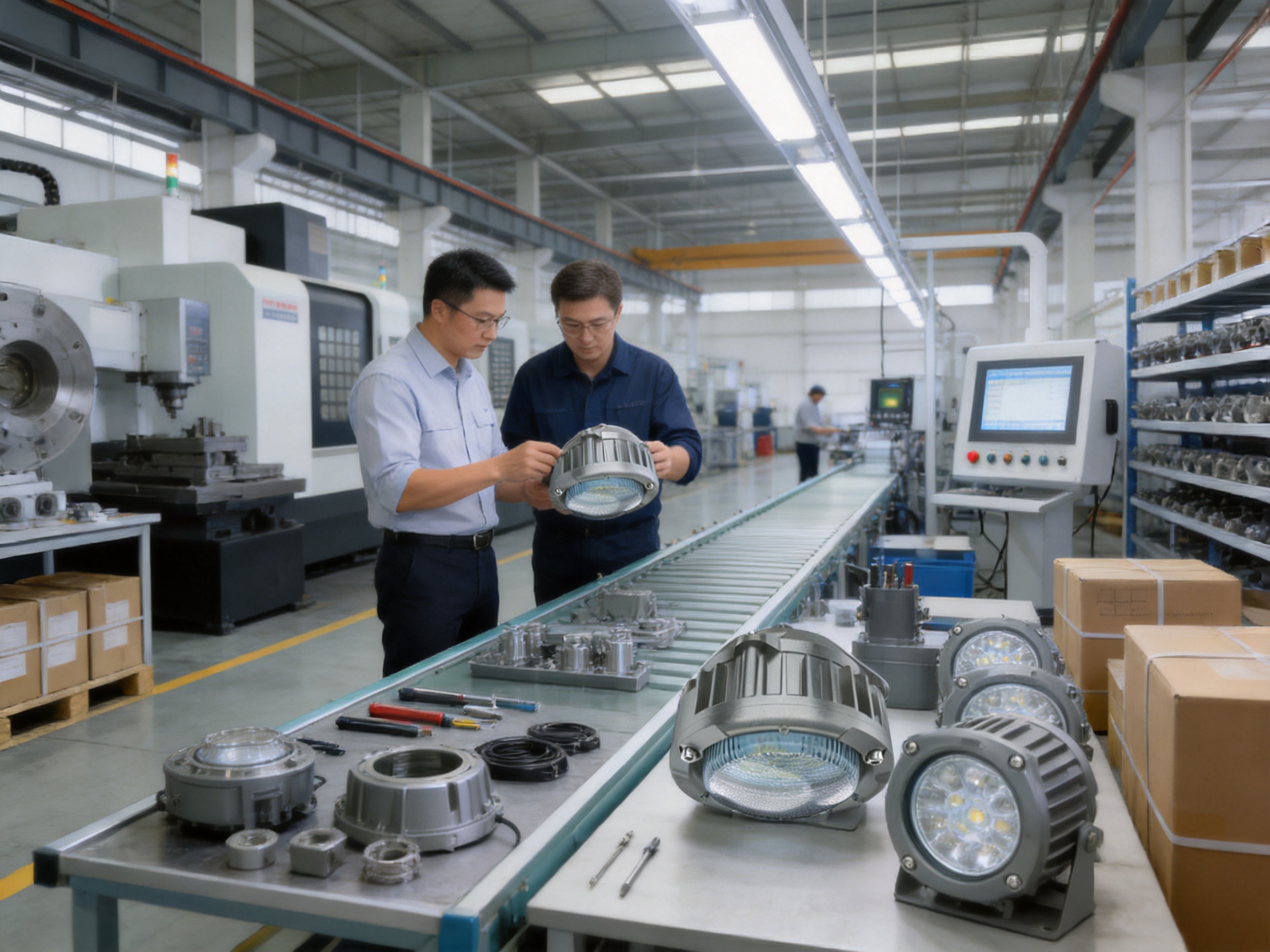
Industrial lighting must do far more than provide illumination. In hazardous locations, every luminaire must support safe operation, dependable visibility, mechanical endurance, efficient energy use, and straightforward maintenance. A lighting failure in a petroleum facility, chemical plant, steel workshop, aviation maintenance area, or large industrial zone can interrupt production, increase maintenance exposure, and create unacceptable safety risks. For these applications, a conventional commercial light is rarely sufficient. The fixture must be designed specifically for explosive atmospheres and severe working conditions.
The Heavy Duty Explosion-Proof LED Light Fixture is a rugged industrial luminaire developed for applications that require high mechanical strength and controlled explosion-proof performance. It combines a reinforced die-cast housing, high-efficiency LED technology, IP66 ingress protection, and a compact industrial design. Its rated power range of 10–30W makes it suitable for localized task lighting, equipment areas, access zones, process spaces, service corridors, and other locations where reliable light is required without installing a large high-power fixture.
Designed for Zone 1 and Zone 2 gas areas and IIA, IIB, and IIC environments, the fixture is available with an explosion-proof marking of Ex db IIC T6 Gb and Ex tb IIIC T80°C Db. These classifications indicate that the product is intended for carefully defined hazardous-location applications when selected, installed, and maintained according to the applicable regulations and project requirements. The luminaire is manufactured in compliance with national explosion-proof standards and is supported by official certification and test reports.
Behind the product is Cixi HuaSheng Lighting Co., Ltd., a Ningbo-based lighting manufacturer with capabilities covering product development, die casting, CNC machining, aging tests, photometric testing, mold design, OEM/ODM customization, and export-oriented production. This manufacturing foundation allows the company to provide more than a basic lighting fitting. It can support customers from initial lighting selection and structural customization through production, testing, delivery, and project service.
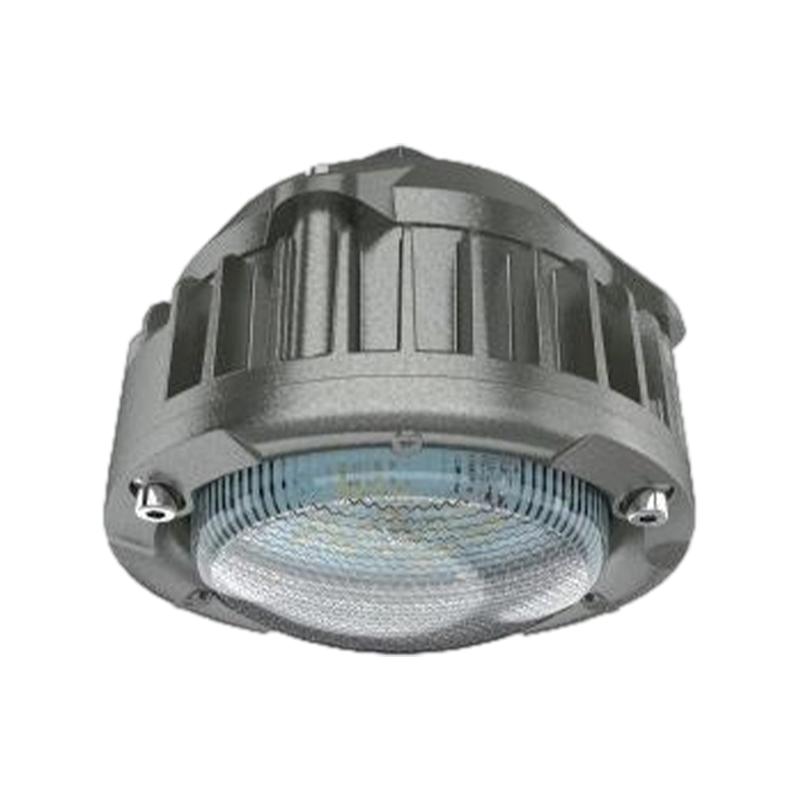
Heavy Duty Explosion-Proof LED Light Fixture
Why Heavy-Duty Explosion-Proof Lighting Matters
Hazardous industrial areas may contain flammable gases, vapors, mists, dust, or combustible particles. These substances can be released during normal processing, equipment maintenance, filling, transfer, storage, or accidental leakage. An ignition source may come from electrical arcs, hot surfaces, loose connections, damaged components, or unsuitable equipment. Consequently, lighting used in these areas must be evaluated as part of the overall explosion-prevention strategy.
An explosion-proof luminaire is not simply a waterproof light with a stronger enclosure. Its housing, joints, cable entries, electrical components, heat management system, and manufacturing tolerances must work together to prevent an internal ignition from causing a dangerous external event. The enclosure must also withstand the mechanical and thermal conditions expected in its classification. This is why hazardous-area lighting should be purchased from a manufacturer with specific explosion-proof design and testing capabilities rather than treated as an ordinary LED lighting product.
Industrial facilities also present physical challenges. Fixtures may be exposed to vibration, impact, dust, oil, moisture, temperature changes, corrosive atmospheres, and repeated maintenance activity. A fragile housing or poorly protected electrical compartment can reduce service life even when the light output is initially satisfactory. A heavy-duty construction helps preserve the integrity of the luminaire and reduces the risk of premature replacement.
The fixture is designed to address these conditions through a reinforced die-cast body and a compact, high-strength structure. Die casting supports consistent dimensional accuracy and produces a robust housing capable of protecting internal components. The resulting form is suitable for industrial installation while remaining compact enough for locations with limited mounting space.
Core Product Specifications
The following specifications define the standard configuration described for the Heavy Duty Explosion-Proof LED Light Fixture. Final product selection should always be confirmed against the project’s hazardous-area classification, voltage conditions, ambient temperature, mounting arrangement, and applicable local regulations.
| Specification | Standard Value |
|---|---|
| Product Type | Heavy-duty explosion-proof LED light fixture |
| Rated Power | 10–30W |
| Rated Voltage | AC220V, 50/60Hz |
| Color Temperature | 5700K |
| Luminous Efficacy | 110–130 lm/W |
| Enclosure Protection | IP66 |
| Explosion-Proof Marking | Ex db IIC T6 Gb; Ex tb IIIC T80°C Db |
| Dimensions | Diameter 145 × 130mm |
| Weight | 1.4kg |
The 10–30W power range provides flexibility for projects with different illumination requirements. Lower-power versions can be used for walkways, inspection points, small service areas, and local equipment lighting. Higher-power versions can support larger work zones or installations where the mounting height and spacing require additional output. The appropriate wattage should be selected through a lighting calculation rather than by wattage alone.
The AC220V, 50/60Hz input is compatible with common industrial electrical systems in many markets. However, voltage compatibility must be checked before ordering, particularly for international projects. OEM/ODM customization can include electrical configuration, power range, structural reinforcement, and installation details, subject to engineering review and production feasibility.
A 5700K color temperature produces a cool white appearance that is appropriate for many industrial environments. Cool white illumination can help create a clear visual atmosphere for inspection, equipment identification, maintenance, circulation, and operational tasks. The best color temperature depends on the application, existing lighting system, visual requirements, and customer preference.
Explosion-Proof Design and Hazardous-Area Suitability
The stated marking, Ex db IIC T6 Gb, relates to protection for gas atmospheres. The “db” protection concept is associated with flameproof enclosure construction, while IIC represents the highest gas group commonly used in this classification system. T6 indicates a maximum surface temperature category of 85°C under the relevant conditions. The Gb equipment protection level is associated with equipment intended for hazardous gas areas where an explosive gas atmosphere is likely to occur in normal operation.
The additional marking, Ex tb IIIC T80°C Db, relates to protection for combustible dust atmospheres. Group IIIC is used for conductive dust environments, and the T80°C designation identifies the specified maximum surface temperature. The Db equipment protection level is associated with equipment intended for dust areas presenting a defined level of hazard. These markings should be interpreted together with the complete certification documentation and the local classification system used for the project.
For gas applications, the product is described as suitable for Zone 1 and Zone 2 areas. Zone 1 generally refers to an area where an explosive gas atmosphere is likely to occur occasionally during normal operation, while Zone 2 generally refers to an area where such an atmosphere is not likely during normal operation but may exist for a short period if it occurs. The actual suitability depends on the certified product configuration, installation method, ambient conditions, and project documentation.
The fixture is also described for IIA, IIB, and IIC environments and T1–T6 temperature classes. This broad classification range supports use across many industrial applications, but it should not be interpreted as permission to install the light in every hazardous area without review. Plant engineers, safety professionals, and authorized electrical contractors should confirm that the marking matches the gas or dust group, temperature class, zone, equipment protection level, and environmental conditions.
Explosion-proof performance depends on the complete installation. Correct cable glands, certified conduit or cable systems, appropriate earthing, suitable fasteners, proper tightening torque, and protection from unauthorized modification are all important. Drilling, cutting, repainting, replacing components with unapproved parts, or altering the enclosure may invalidate the protection concept and certification. The fixture should therefore be installed and serviced only by qualified personnel using the manufacturer’s instructions.
Reinforced Die-Cast Housing
One of the principal advantages of the product is its reinforced die-cast housing. In industrial lighting, housing strength affects much more than appearance. The enclosure must protect the LED module, driver, terminals, seals, and other internal parts from impact and environmental exposure. A rigid housing also helps maintain the alignment of mating surfaces and the integrity of the flameproof structure.
Die casting offers several manufacturing benefits. It supports repeatable production of complex shapes, consistent wall thickness, accurate mounting features, and integrated structural details. Compared with a light-duty sheet-metal housing or a thin plastic enclosure, a reinforced die-cast body can provide a more substantial mechanical barrier. This is particularly valuable in workshops, processing plants, loading areas, and maintenance zones where tools, equipment, or moving materials may strike the luminaire.
The compact diameter of 145mm and height of 130mm provide a practical balance between mechanical strength and installation convenience. At approximately 1.4kg, the fixture is substantial enough for industrial service while remaining manageable during mounting and replacement. Its size makes it suitable for localized lighting applications and areas where a large floodlight or high-bay fitting would be unnecessary.
Housing design also influences heat dissipation. LED performance and driver life are affected by operating temperature. A properly engineered metal body can transfer heat away from internal components and release it into the surrounding environment. This supports stable operation and helps reduce the thermal stress that can shorten the service life of LEDs, drivers, seals, and electrical connections.
LED Efficiency and Operating Value
The specified luminous efficacy of 110–130 lm/W indicates that the fixture can produce substantial light output relative to its electrical consumption. This efficiency can help industrial users reduce energy use compared with older fluorescent, metal halide, high-pressure sodium, or incandescent technologies. Energy savings become particularly meaningful in facilities with long operating hours, multiple shifts, or continuous processes.
Lower energy consumption also reduces the amount of heat generated by the lighting system compared with less efficient technologies. In enclosed or temperature-sensitive areas, this can support a more manageable thermal environment. In addition, LED technology provides immediate illumination without the warm-up period associated with some traditional discharge lamps. This is useful for emergency response, inspection, equipment access, and intermittently occupied work areas.
LED fixtures generally have longer service expectations than conventional lamps and do not require frequent lamp replacement. In hazardous locations, reducing maintenance frequency has benefits beyond labor savings. Every maintenance visit may require isolation procedures, access equipment, gas testing, permits, and specialist personnel. A durable LED fixture can reduce the number of interventions and help lower the operational risk associated with working in a hazardous area.
Energy efficiency should be considered together with lighting quality. A luminaire with high efficacy is not automatically suitable if it produces glare, poor uniformity, insufficient vertical illumination, or excessive shadowing. For this reason, Cixi HuaSheng Lighting Co., Ltd. offers lighting solution support and DIALux design services. Photometric planning can help determine fixture quantity, spacing, mounting height, illumination levels, and uniformity before installation.
IP66 Protection for Industrial Conditions
The IP66 enclosure protection rating is an important feature for industrial applications. The first “6” indicates a high level of protection against dust ingress, while the second “6” indicates protection against powerful water jets from multiple directions. This makes the fixture appropriate for many dusty, wet, outdoor, and washdown-prone environments when the complete installation is correctly executed.
IP66 protection can help prevent dust accumulation and water penetration from damaging the LED system, driver, terminals, and internal connections. Dust and moisture are common causes of lighting failure in industrial facilities. Fine particles can obstruct heat transfer, contaminate electrical contacts, and form deposits on optical surfaces. Water can cause corrosion, insulation breakdown, short circuits, and premature component failure.
Although IP66 is highly useful, it does not mean that the product can be submerged or exposed to every chemical substance without limitation. Industrial users should evaluate the presence of salt spray, acidic vapors, alkaline solutions, solvents, cleaning agents, and other corrosive materials. The selected material, coating, gasket, cable gland, and mounting hardware must be compatible with the environment.
Regular inspection remains important even with a high IP rating. Seals may age, fasteners may loosen under vibration, cable glands may be damaged, and external impacts may compromise the enclosure. A preventive maintenance program should include visual inspection, cleaning with approved methods, checking of mounting hardware, and verification that the product remains in its certified configuration.
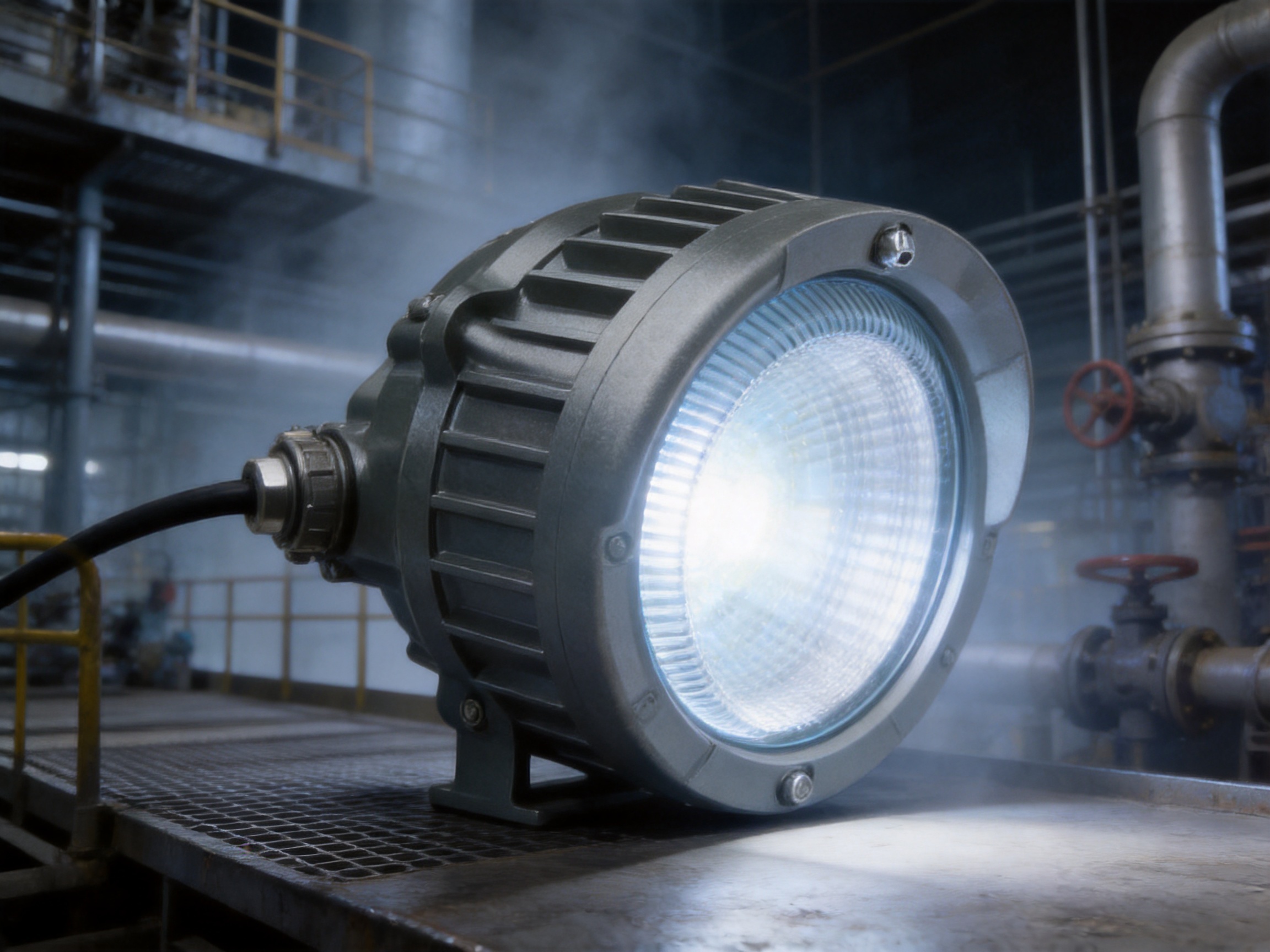
Advantages Compared with Conventional Industrial Fixtures
Lower Maintenance Exposure
Traditional lamp-based fixtures often require periodic replacement of lamps, starters, reflectors, or other wear components. In hazardous areas, each replacement can involve shutdown coordination, access equipment, permit procedures, and specialized labor. The LED design reduces dependence on replaceable lamps and can extend the interval between maintenance activities.
More Robust Construction
Some low-cost industrial luminaires use lightweight materials that may be adequate for commercial spaces but unsuitable for harsh plants. The reinforced die-cast body provides a stronger physical barrier and supports the product’s heavy-duty positioning. This can be an advantage in areas exposed to impact, vibration, and frequent equipment movement.
Improved Efficiency
With a stated efficacy of 110–130 lm/W, the fixture can deliver useful illumination using only 10–30W of rated power. Compared with older technologies, this may reduce electricity consumption and support the replacement of oversized or inefficient fixtures. The reduction in connected load can also benefit projects with limited electrical capacity.
Compact Installation
The 145 × 130mm form factor allows the luminaire to fit into smaller spaces than many large hazardous-area floodlights or high-bay fixtures. This is helpful for equipment skids, pipe racks, service platforms, inspection stations, access passages, and enclosed industrial rooms where installation space is limited.
Combined Gas and Dust Classification
The stated gas and dust markings allow the product to be considered for a range of industrial environments. Having both forms of classification documented can simplify preliminary product evaluation for facilities that contain different hazards in separate areas. Final selection must still be based on the certified configuration and the specific requirements of each location.
Customization Potential
Standard catalog products may not fully match a customer’s mounting arrangement, electrical system, mechanical space, or project specification. The manufacturer supports OEM/ODM requirements involving power range, structure reinforcement, and installation customization. This creates an opportunity to adapt the product for special projects while retaining a controlled manufacturing and testing process.
Manufacturing Capabilities Supporting Product Reliability
A reliable explosion-proof light begins with engineering and continues through every manufacturing stage. Dimensional control, material selection, machining accuracy, electrical assembly, sealing, testing, and final inspection all affect the finished product. Cixi HuaSheng Lighting Co., Ltd. has developed an integrated manufacturing base that includes die-casting equipment, CNC machines, aging lines, and goniophotometers.
Die-Casting Production
Die casting supports the production of strong and repeatable metal housings. The process uses a mold to form the basic enclosure geometry, which can include mounting points, reinforcing ribs, heat-dissipation features, and other structural details. Stable die-casting production helps reduce variation between units and provides a consistent foundation for subsequent machining and assembly.
Mold quality is especially important for explosion-proof products. Mating surfaces, threaded areas, mounting interfaces, and cable-entry features require appropriate dimensional control. The company’s die-casting and mold design capabilities allow it to manage more of these processes internally or through coordinated engineering resources. This can improve communication between product design and production teams.
CNC Machining
After die casting, selected surfaces and functional features can be processed using CNC equipment. Precision machining is useful for threads, mating surfaces, mounting holes, sealing locations, and other areas where accuracy is essential. Controlled machining helps ensure that components fit correctly and that the final enclosure maintains the intended design characteristics.
For customers requiring structural reinforcement or special mounting arrangements, CNC capability also supports development of customized parts. Rather than relying only on generic modifications, the manufacturer can evaluate the required geometry and produce components that are more appropriately integrated with the fixture structure.
Aging and Reliability Testing
LED luminaires may be subjected to aging procedures before shipment. Aging helps identify early failures in LED modules, drivers, wiring, terminals, and other electrical components. By operating products under controlled conditions for a defined period, the production team can screen certain defects that might otherwise appear after installation.
Aging is not a substitute for certification or long-term field maintenance, but it is a valuable part of a quality-control system. It demonstrates that the manufacturer treats reliability as a process rather than merely a specification printed on a product label.
Photometric Measurement
Goniophotometers are used to measure the optical performance of lighting products. Photometric testing can provide information about luminous flux, intensity distribution, beam characteristics, and other data required for lighting design. This information supports DIALux calculations and helps customers select the appropriate fixture arrangement for industrial spaces.
Photometric measurement is particularly important when replacing conventional lighting. A direct watt-for-watt replacement may not produce the same distribution or visual result. By evaluating actual optical data, designers can reduce unnecessary over-lighting, improve uniformity, and create a more efficient layout.
Integrated Production Control
Manufacturing capabilities such as die casting, CNC machining, aging, optical testing, and assembly provide a more connected quality-control chain. Engineering changes can be communicated more efficiently, and product requirements can be reviewed from both a design and production perspective. This is a competitive advantage over trading companies or suppliers that depend entirely on disconnected subcontractors.
For international buyers, integrated production can also simplify communication. Customers can discuss product dimensions, materials, performance requirements, certification documentation, packaging, and delivery with a manufacturer that understands the complete product rather than only the sales specification.
Quality Management and Certification Support
Cixi HuaSheng Lighting Co., Ltd. operates with ISO 9001, ISO 14001, and ISO 45001 management certifications. ISO 9001 relates to quality management, ISO 14001 to environmental management, and ISO 45001 to occupational health and safety management. These systems do not replace product certification, but they indicate an organizational approach that addresses quality, environmental responsibility, and workplace safety.
The company’s relevant products are also described as holding CB and CE certifications. Certification requirements vary according to product type, market, electrical system, hazardous-area classification, and intended application. Buyers should request the certification documents applicable to the exact model and configuration being purchased. Product markings should correspond to the supplied technical documentation.
For explosion-proof equipment, documentation is an essential part of the product. Buyers may need certificates, test reports, installation instructions, maintenance requirements, dimensional drawings, wiring information, and material details for internal approval or regulatory review. A professional manufacturer should be able to provide appropriate technical documents and clarify the limits of the certification.
It is also important to distinguish between a product being advertised as explosion-proof and a product supported by traceable certification and testing. Customers should verify the issuing body, certificate scope, model designation, marking, ambient temperature range, cable-entry requirements, and any special conditions of use. This verification protects both the project and the end users.
Applications Across Industrial Sectors
Petroleum and Petrochemical Facilities
Oil terminals, refineries, chemical storage areas, pumping stations, and process units may contain flammable gases and vapors. Lighting is required around valves, platforms, equipment access points, transfer systems, inspection areas, and service routes. The fixture’s gas-area classification, robust housing, and IP66 protection make it a candidate for selected locations after engineering review.
Steel Plants and Heavy Manufacturing
Steel plants expose equipment to dust, heat, vibration, impact, and continuous operation. Lighting may be installed near production lines, maintenance bays, conveyor systems, material handling areas, and inspection stations. The metal housing and compact dimensions help the fixture withstand demanding conditions while providing efficient localized illumination.
Aviation Maintenance
Aviation maintenance areas require clear visibility for inspection, servicing, and component handling. Depending on the materials, fuels, solvents, and processes present, certain zones may require hazardous-area equipment. The high color temperature and compact design can support maintenance lighting where the certified environmental conditions are suitable.
Industrial Zones and Utility Areas
Large industrial complexes often include compressor rooms, battery rooms, pump rooms, cable tunnels, loading zones, utility buildings, and outdoor service areas. These spaces may differ significantly in hazard classification and illumination needs. A flexible 10–30W explosion-proof product can help standardize lighting across selected local applications while allowing project-specific placement.
Warehousing and Process Storage
Warehouses storing chemicals, fuels, coatings, aerosols, powders, or other hazardous materials may require certified lighting. IP66 protection can help address dust and water exposure, while the explosion-proof construction supports use in classified areas. The final design should consider racking, aisle width, mounting height, forklift traffic, ventilation, and emergency access.
Lighting Design and Project Engineering
Choosing the correct explosion-proof fixture is only one part of a successful lighting project. The installation should be designed around the required illumination level, uniformity, glare control, mounting height, surface reflectance, equipment layout, maintenance access, and emergency procedures. A professional lighting calculation can show whether 10W, 20W, or 30W units are appropriate.
DIALux design services can assist with visualization and calculation. The design process may include a site plan, room dimensions, mounting locations, fixture photometric data, target illumination levels, and operating requirements. The result can help project owners compare alternative layouts and reduce the risk of purchasing too few or too many fixtures.
For outdoor installations, designers should also consider wind loading, rain direction, drainage, ambient temperature, corrosion, and cable routing. For indoor process areas, they should consider vapor accumulation, ventilation, hot surfaces, machinery movement, and access restrictions. An explosion-proof luminaire should never be selected solely from a product photograph or a nominal wattage.
Mounting accessories and installation methods may be customized through OEM/ODM service. Customers may request different brackets, connection arrangements, orientation options, or mechanical reinforcement. Any modification affecting the enclosure, electrical compartment, cable entries, or explosion-proof joints must be reviewed and approved through the manufacturer’s engineering and certification process.
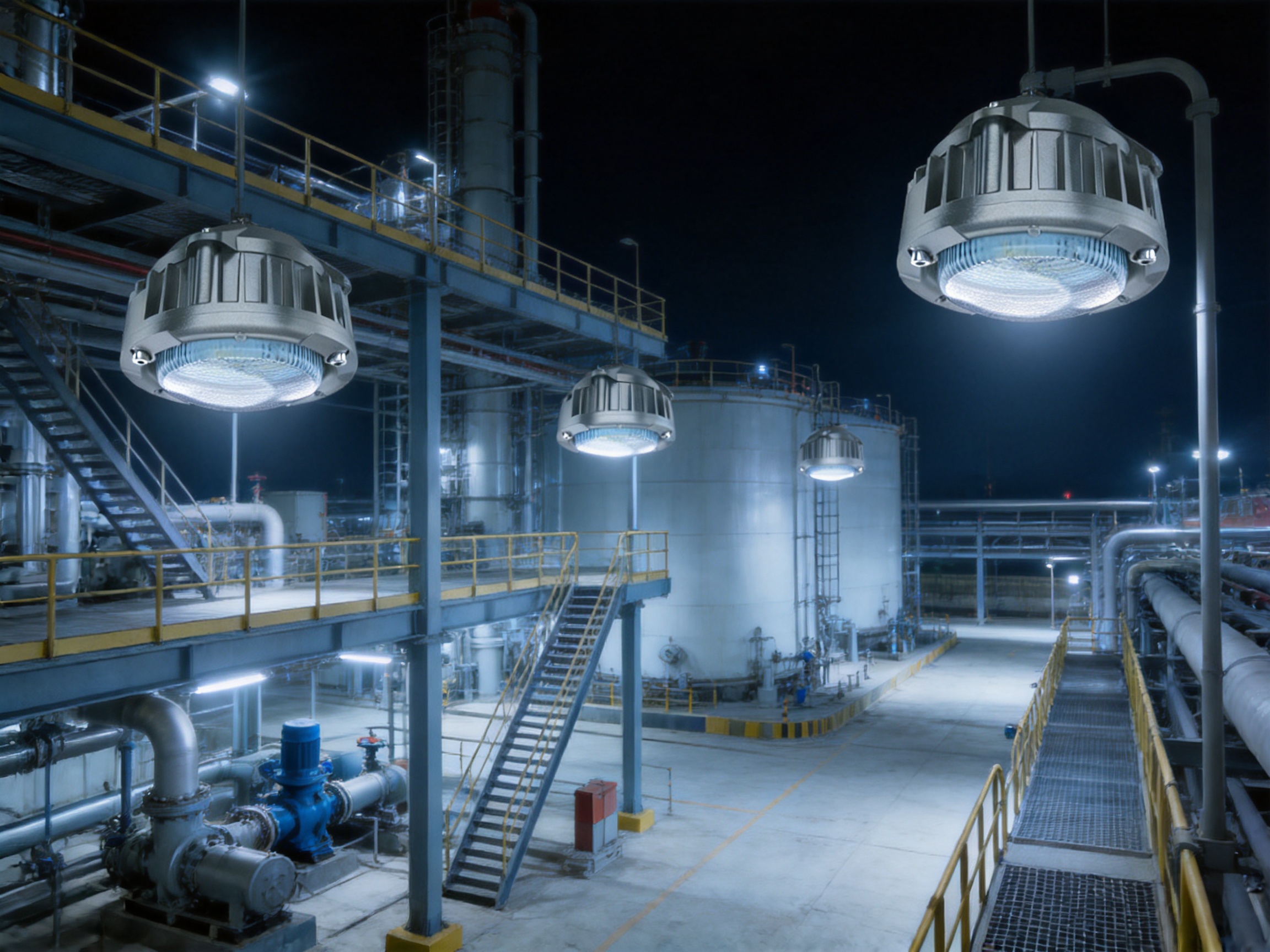
OEM and ODM Customization
Industrial lighting projects frequently involve special requirements. A standard fixture may need a different power level, mounting structure, cable-entry configuration, finish, connector, or packaging arrangement. The manufacturer supports OEM/ODM customization for power range, structure reinforcement, and installation requirements.
Power customization allows a customer to align the fixture with a specific illumination plan or energy target. The selected LED module, driver, thermal design, and enclosure must remain compatible with the required performance and certification. Increasing power without reviewing heat dissipation or electrical protection would be inappropriate, so customized configurations should be engineered rather than improvised.
Structural customization may include reinforced brackets, alternative mounting interfaces, modified fixing points, or additional protection for a high-vibration site. The company’s die-casting, CNC, and mold-design resources can support a more integrated solution. This is useful for original equipment manufacturers, project contractors, distributors, and industrial users who require a private-label or application-specific product.
Installation customization can help address limited space, unusual cable routing, replacement of an existing fixture, or compatibility with a customer’s standard hardware. Before production, the customer should provide drawings, installation photographs, electrical information, hazardous-area data, and environmental details. Clear technical communication reduces errors and helps ensure that the final product meets the intended application.
OEM/ODM projects should also define inspection standards, labeling, documentation, packaging, spare parts, sampling procedures, and after-sales responsibilities. A structured specification sheet is recommended so that all parties understand which features are standard and which are customized.
Maintenance, Inspection, and Service Life Considerations
The LED design and heavy-duty housing can reduce routine maintenance, but no industrial fixture is maintenance-free. A scheduled inspection program helps preserve safety and performance. Inspection intervals should be established according to the environment, operating hours, vibration, corrosion, dust level, and applicable regulations.
Personnel should check the enclosure for cracks, deformation, corrosion, impact marks, and unauthorized modifications. Cable glands and conduit connections should be examined for loosening or damage. Mounting hardware should remain secure, and the lens or optical cover should be cleaned using approved materials that do not scratch or chemically attack the surface.
Electrical isolation should be completed before opening any serviceable part of the fixture. In hazardous areas, additional gas testing, permit controls, and lockout procedures may be required. Only qualified personnel familiar with explosion-proof equipment should perform repairs or inspections that involve opening the enclosure or changing internal components.
Replacement parts should match the approved product configuration. Using an incompatible driver, seal, cable gland, fastener, or LED module may affect thermal performance and certification. Customers should consult the manufacturer before replacing internal components or modifying the wiring.
Service life is influenced by ambient temperature, operating duration, voltage stability, surge exposure, vibration, corrosive gases, installation quality, and cleaning practices. The product’s robust design provides a strong foundation, but correct application and maintenance remain essential to achieving long-term performance.
Environmental and Operational Benefits
LED technology can reduce energy consumption and the frequency of lamp disposal. This may support the environmental objectives of industrial users and contribute to lower operating emissions when electricity is generated from fossil fuels. The manufacturer’s ISO 14001 environmental management certification further reflects attention to environmental management within the organization.
Lower maintenance frequency can also reduce the consumption of replacement lamps, packaging, transport, and access equipment. When a fixture operates reliably for a longer period, the total cost of ownership may improve even if its initial purchase price is higher than that of a light-duty alternative.
The product’s compact size and relatively low weight may reduce material use compared with larger conventional hazardous-area fixtures. Efficient light distribution can further reduce the number of luminaires required when supported by an appropriate photometric design. These benefits should be evaluated through a complete life-cycle and project-cost analysis rather than through purchase price alone.
Procurement Guidance for International Buyers
When sourcing explosion-proof LED lighting, buyers should provide complete technical information at the inquiry stage. Important details include the hazardous-area zone, gas or dust group, temperature class, ambient temperature, voltage and frequency, mounting method, required illumination, operating hours, environmental contaminants, cable-entry arrangement, and project standards.
Buyers should request the exact model number, product drawing, certification documents, test reports, electrical specifications, installation instructions, and photometric files where required. If the project involves multiple countries, the buyer should identify the required national or regional approvals before finalizing the order.
Packaging should protect the die-cast housing, optical cover, mounting parts, and documentation during international transport. Export projects may also require neutral packaging, private-label cartons, barcode labels, spare parts, palletization, and specific shipping marks. Cixi HuaSheng Lighting Co., Ltd. provides export-oriented production and delivery services for global customers.
Samples can be valuable for evaluating dimensions, mounting, illumination, finish, documentation, and compatibility with existing equipment. For larger projects, customers may also request factory inspection, pre-shipment inspection, production photographs, or third-party testing. These steps can reduce uncertainty before mass delivery.
A supplier’s ability to provide one-stop service is particularly useful for contractors and distributors. In addition to the fixture, the manufacturer can support lighting solutions, DIALux designs, mold development, OEM/ODM, SKD/CKD customization, production coordination, and delivery. This can simplify project management and shorten communication cycles.
Company Manufacturing Strengths
Cixi HuaSheng Lighting Co., Ltd. is located in Cixi City, Ningbo, Zhejiang Province, China, and specializes in outdoor and industrial lighting products for international markets. Its product range includes LED street lights, tunnel lights, high-bay lights, linear lights, garden lights, solar lights, grow lights, explosion-proof lights, and other lighting products.
The company’s capabilities extend beyond the production of finished luminaires. Die-casting and CNC equipment support metal housing and precision component production. Aging lines support product screening, while goniophotometers support optical measurement. These resources are valuable for a product category in which mechanical strength, thermal behavior, electrical reliability, and photometric performance must be considered together.
The company also provides lighting design, DIALux calculations, mold design, OEM/ODM service, SKD/CKD customization, and delivery coordination. This combination allows it to serve industrial end users, engineering contractors, wholesalers, distributors, and equipment manufacturers with different levels of technical support.
Its ISO 9001, ISO 14001, and ISO 45001 certifications demonstrate a management framework covering quality, environmental performance, and occupational health and safety. Relevant product certifications, including CB and CE where applicable, provide additional support for international project evaluation. Customers should confirm the documents that apply to the exact explosion-proof fixture configuration.
Total Cost of Ownership
The purchase price of an industrial luminaire is only one element of its economic value. A complete evaluation should include energy consumption, installation labor, access equipment, downtime, replacement parts, inspection costs, disposal, and the consequences of lighting failure.
The fixture’s 10–30W LED platform can reduce electrical demand in comparison with inefficient legacy lighting. Its 110–130 lm/W efficacy supports a favorable energy profile, while the absence of frequent lamp replacement can reduce maintenance effort. The reinforced housing and IP66 protection may also help prevent early failures caused by impact, dust, or water exposure.
For hazardous facilities, maintenance avoidance may have a particularly strong financial effect. Shutting down a process, obtaining work permits, isolating equipment, and arranging specialist labor can cost considerably more than the replacement lamp itself. A reliable explosion-proof LED fixture can contribute to predictable maintenance planning and reduced operational interruption.
Project owners should compare products using equivalent criteria. These include certified hazardous-area performance, actual light output, photometric distribution, thermal management, enclosure protection, housing material, driver quality, warranty terms, documentation, spare-parts availability, and supplier support. A low initial price may not represent a lower total cost if the fixture requires frequent replacement or lacks complete technical documentation.
Safety and Responsible Use
Explosion-proof lighting should be considered part of a complete hazardous-area electrical system. The luminaire cannot compensate for incorrect cable selection, poor grounding, unsuitable switches, unsealed conduits, or improper installation. A qualified project team should verify the entire system before energization.
The product marking must match the classified location. The installer should confirm the gas or dust group, temperature class, zone, ambient temperature, and equipment protection level. The installer should also ensure that cable glands and accessories are certified for the enclosure and the intended cable type.
Users should not open the fixture while energized or when an explosive atmosphere may be present. Any inspection or repair should follow the product manual, site permit system, and applicable regulations. If the luminaire is damaged, it should be isolated and assessed by qualified personnel before being returned to service.
These precautions are not limitations of the product; they are standard requirements for responsible use of certified hazardous-area equipment. Correct selection, installation, and maintenance allow the fixture’s engineering advantages to deliver their intended value.
Frequently Asked Questions
What is the rated power range of the fixture?
The standard rated power range is 10–30W. The appropriate version depends on the required illumination, mounting height, spacing, application, and lighting calculation. Customized power configurations may be discussed for OEM/ODM projects.
What voltage does the fixture use?
The stated standard electrical rating is AC220V at 50/60Hz. Customers should confirm voltage compatibility before ordering, especially for projects outside markets using 220V systems.
Is the fixture suitable for Zone 1 and Zone 2 areas?
The product is described for Zone 1 and Zone 2 gas areas. Installation suitability must be confirmed against the exact certification, gas group, temperature class, ambient conditions, and local hazardous-area requirements.
Which explosion-proof markings are provided?
The stated markings are Ex db IIC T6 Gb and Ex tb IIIC T80°C Db. These refer to gas and combustible-dust protection classifications. Customers should request and review the applicable certificate and technical documentation for the supplied configuration.
What does IP66 protection mean?
IP66 indicates high protection against dust ingress and protection against powerful water jets. It is suitable for many industrial and outdoor environments, but it does not mean that the fixture is designed for permanent immersion or every type of chemical exposure.
Why is a die-cast housing beneficial?
A reinforced die-cast housing provides a strong, dimensionally consistent enclosure for internal electrical and optical components. It can improve resistance to impact and support heat dissipation compared with many light-duty housings.
What is the color temperature?
The standard color temperature is 5700K, which produces a cool white appearance. This is commonly selected for industrial inspection, maintenance, access, and operational areas where a clear visual environment is desired.
Can the fixture be customized?
Yes. OEM/ODM options include power range, structural reinforcement, and installation customization. Customers should provide project drawings and hazardous-area requirements so the manufacturer can evaluate the proposed changes without compromising performance or certification.
Can the manufacturer provide lighting calculations?
The company provides lighting solutions and DIALux design support. Customers can submit site dimensions, mounting information, target illumination levels, and fixture arrangement requirements for project evaluation.
Where can the fixture be used?
Potential applications include petroleum and petrochemical facilities, steel plants, aviation maintenance areas, industrial zones, process storage areas, utility rooms, equipment platforms, service passages, and other classified locations that match the product certification.
Does LED technology eliminate maintenance?
No. LED technology can reduce lamp replacement and maintenance frequency, but the fixture still requires periodic inspection. Enclosure condition, cable entries, mounting hardware, cleanliness, and electrical safety should be checked according to the site maintenance program.
How should customers verify product compliance?
Customers should request the exact certificate, test reports, product drawing, marking information, installation instructions, and applicable technical data. The documents should match the model and configuration supplied for the project.
Conclusion
The Heavy Duty Explosion-Proof LED Light Fixture is designed for industrial users who need dependable illumination in hazardous and mechanically demanding environments. Its principal advantages include a reinforced die-cast housing, IP66 protection, 110–130 lm/W luminous efficacy, compact dimensions, 10–30W power flexibility, and documented gas and dust explosion-proof classifications.
Compared with conventional or light-duty alternatives, the fixture can offer lower energy consumption, reduced lamp replacement, greater resistance to industrial impact, and easier integration into localized lighting designs. These benefits are strengthened by the manufacturer’s production capabilities, including die casting, CNC machining, aging lines, photometric testing, mold design, and OEM/ODM engineering.
Cixi HuaSheng Lighting Co., Ltd. combines manufacturing, lighting design, certification support, customization, and export services to serve industrial projects in China and international markets. Its management certifications and broad product portfolio provide a foundation for consistent production and project support.
For the best result, customers should treat the fixture as part of a complete hazardous-area lighting system. Correct classification, professional installation, suitable accessories, certification verification, and scheduled maintenance are essential. When these requirements are followed, the product can provide a practical, efficient, and durable lighting solution for demanding industrial facilities.
References
International Electrotechnical Commission. IEC 60079 Series: Explosive Atmospheres—Equipment, Protection Concepts, and Installation Requirements.
International Electrotechnical Commission. IEC 60529: Degrees of Protection Provided by Enclosures, commonly identified through IP codes.
International Electrotechnical Commission. IEC 60598 Series: Luminaires—General Requirements and Tests.
International Organization for Standardization. ISO 9001: Quality Management Systems—Requirements.
International Organization for Standardization. ISO 14001: Environmental Management Systems—Requirements with Guidance for Use.
International Organization for Standardization. ISO 45001: Occupational Health and Safety Management Systems—Requirements with Guidance for Use.
Illuminating Engineering Society. Lighting Handbook: Reference and Application Guidance for Industrial Lighting Design.
Manufacturer technical information supplied for the Heavy Duty Explosion-Proof LED Light Fixture, including rated electrical data, enclosure protection, explosion-proof marking, dimensions, weight, and customization capabilities.
Product: Heavy Duty Explosion-Proof LED Light Fixture
Custom & OEM Solutions for Global Lighting Brands
Copyright © Cixi HuaSheng Lighting Co., Ltd. All Rights Reserved.
Die-Casting Mould Supplier
