Exhibition Information
Home / News / Exhibition Information / YQF Global Exhibition Journey: Connecting World Markets with Excellence in Lighting and Supply Chain Strength

YQF Global Exhibition Journey: Connecting World Markets with Excellence in Lighting and Supply Chain Strength

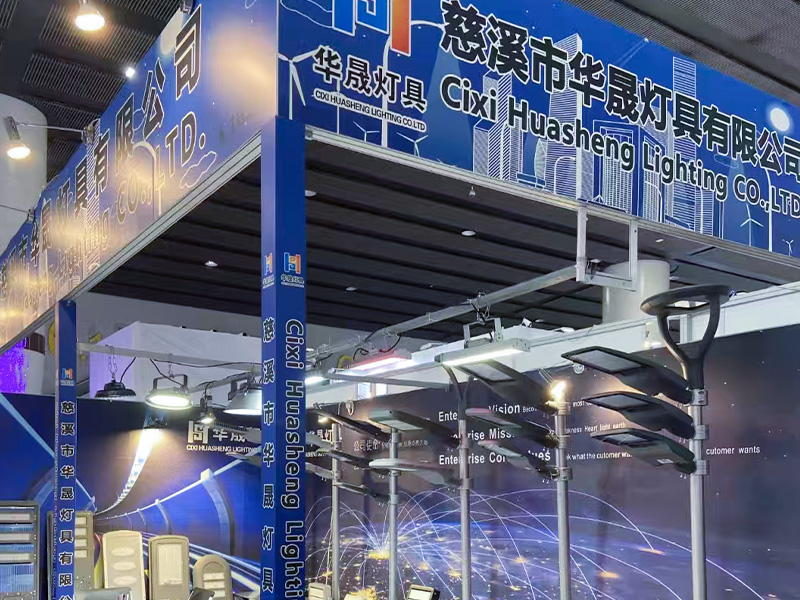
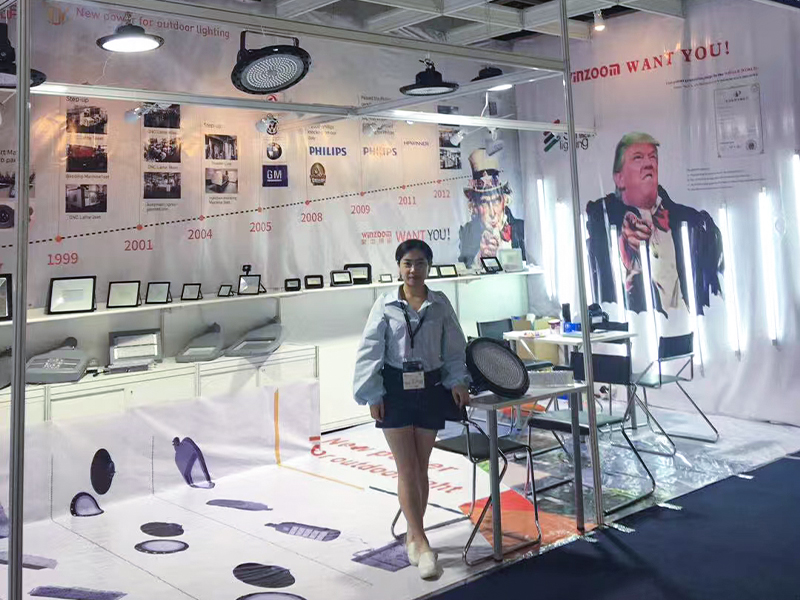
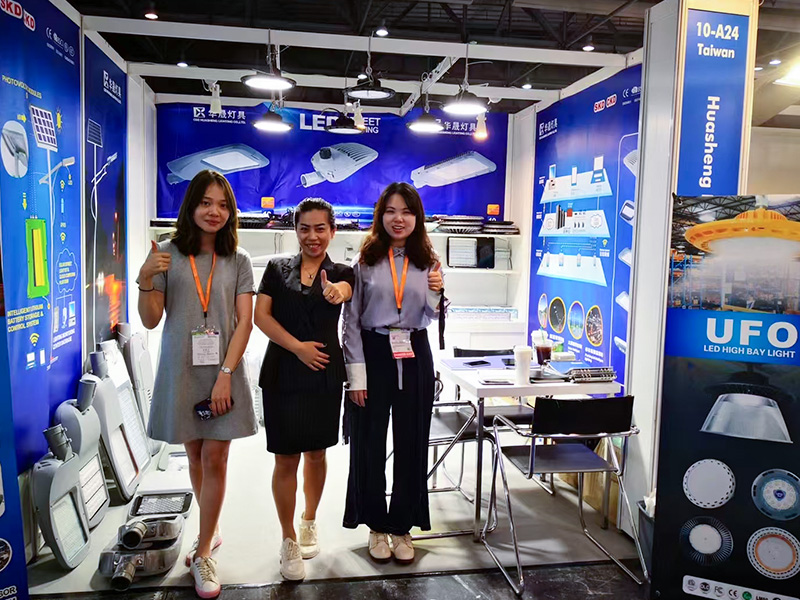
In 2026, YQF is making a strong and active presence on the global lighting exhibition stage. From the already successful appearances in the first half of the year in Vietnam, Uzbekistan, Norway, and Mexico, to the nearly 30 major international exhibitions the company will participate in during the second half and beyond — spanning South Korea, Kenya, Egypt, Nigeria, Brazil, Russia, Hong Kong, Canada, India, Turkey, Saudi Arabia, Dubai, the United States, Germany, and more — YQF footprint now covers Southeast Asia, Central Asia, Europe, Africa, the Americas, and the Middle East. With each step, the company consistently delivers a clear and resolute brand promise to the world:

"The excellent Lighting Solutions for Project Developer&Contractor&Builder——Your Trustworthy YQF."

At every exhibition stop, YQF tailors its product showcases to meet the specific needs of different regional markets — from smart city lighting and solar off-grid systems to high-end commercial dimming solutions and industrial high-ingress-protection luminaires — winning the trust of global clients with the tangible strength of "Intelligent Manufacturing in China."

More importantly, YQF is more than just a manufacturer. The company consistently emphasizes to its global partners:

"YQF is not only a manufacturer or OEM provider, but also a China partner for you, we can take charge of supply chain management!"

Leveraging China's comprehensive lighting industry ecosystem, YQF offers one-stop supply chain management services ranging from R&D and design, production and quality control, to international logistics. This enables project developers, contractors, and builders worldwide to reduce procurement costs, shorten delivery cycles, and mitigate quality control risks — delivering a truly "hassle-free, efficient, and trustworthy" partnership experience.

From Ho Chi Minh City to Las Vegas, from Nairobi to Frankfurt, YQF  global journey is accelerating. We sincerely invite partners from all sectors to visit our exhibition booths or connect with us online. Let us join hands — with light as our medium, and a shared vision for a win-win future.

YQF is a comprehensive enterprise dedicated to providing professional lighting solutions and supply chain management services to project developers, contractors, and builders worldwide. With "Intelligent Manufacturing in China + Global Service" at our core, we help our clients maximize efficiency and value in every project.
For more information or to request sample materials from our exhibitions, please feel free to contact us at any time.

Recent Articles
  • YQF Achieves Three Major System Certifications and Receives Philips Partnership Authorization

    Recently, YQF has made significant strides in strengthening its corporate comprehensive capabilities, successfully passing ISO 9001:2015 Quality Management System Certification, ISO 14001:2015 Environmental Management System Certification, and ISO 45001:2018 Occupational Health and Safety Management System Certification — three internationally recognized management system certifications. This marks the establishment of a standardized management system at YQF that aligns with international standards across product quality control, green and environmentally friendly production, and employee occupational health and safety. At the same time, YQF has officially received Philips Partnership Authorization, based on its solid manufacturing capabilities and rigorous quality control practices. Founded in 1891 in the Netherlands, Philips has over a century of technological heritage and global market influence in the fields of lighting, home appliances, and medical systems. This authorization not only represents a high level of recognition for YQF R&D and manufacturing strengths but also signals deeper collaboration between the two parties in the lighting sector. Accolades and Recognition – A Testament to Strength In recent years, YQF has continuously refined its internal management and achieved repeated breakthroughs in corporate qualifications and industry honors. In addition to the three major management system certifications, the company has also received multiple industry awards in areas such as product innovation, customer service, and social responsibility, further solidifying its brand positioning as a trusted partner in the global lighting supply chain. More Than Certification – Action Speaks Louder YQF has always adhered to the development philosophy of "building a reputation on quality and enhancing efficiency through management." The achievement of these three management system certifications is not only an authoritative endorsement of the company's current management standards but also a continued commitment to every customer of "worry-free quality and reliable delivery." Looking ahead, YQF will continue to deepen its strategic cooperation with international brands such as Philips. Leveraging standardized management and technological innovation, the company aims to provide superior lighting solutions and supply chain management services to project developers, contractors, and builders worldwide, while consistently fulfilling its brand promise: "Your Trustworthy YQF GROUP."

  • LED Facade Light Meets Tougher Weather Standards

    A building facade shifts from deep blue to warm amber in the space of a few seconds. Someone standing across the street just sees color moving smoothly across concrete and glass. They don't see the driver boards, the heat sinks, or the sealed housings doing the actual work. That's the part worth unpacking, and an LED facade light is where most of it happens. How LED Facade Light Achieves Precise Color Changes Getting a gradient to look smooth across a building isn't really about the bulbs themselves. It's about coordinating thousands of individual points of light so they shift together, in sync, without visible seams. An LED facade light usually runs on RGB or RGBW chips, controlled by a driver that reads digital signals — DMX protocols, most commonly. Each fixture, sometimes each individual diode inside it, can be told to change hue and brightness on its own. A few things separate a gradient that looks smooth from one that looks jumpy: Bit depth of the color processor — more bits mean more shades between one color and the next Signal refresh rate, so large surfaces don't stutter mid-transition Consistency across individual diodes, since even minor variation shows up as visible banding once light hits a wide surface Buyers sourcing an LED facade light for larger projects tend to ask about addressable pixel control specifically. That's the feature that lets patterns travel across a building rather than the whole thing switching color all at once, like flipping a single switch. Heat Dissipation Design Becomes a Key Manufacturing Focus Color gets the attention. Heat is the problem manufacturers actually lose sleep over. LEDs lose efficiency as they run hotter, and an outdoor fixture — sealed against weather, sitting in direct sun for hours — has far fewer ways to shed that heat than an open indoor unit would. So thermal design ends up shaping how an LED facade light gets built from the ground up. Aluminum heat sinks, often finned or extruded into specific profiles, pull heat away from the diode array. Thermal paste improves contact between the board and housing. Some manufacturers even route internal airflow channels inside otherwise sealed enclosures — a balancing act between keeping water out and letting heat escape somewhere. Get this wrong and it's not just a lifespan issue. LED chips drift in color output as they heat up, which matters quite a bit for a fixture whose entire job is precise, repeatable color. A facade that reads slightly warmer on one side than the other, purely because of uneven heat dissipation, isn't a hypothetical problem — it's the kind of thing lighting designers notice immediately. Outdoor Lighting Demand Grows, Protection Design Moves Up a Level Facade lighting used to sit mainly on flagship towers and landmark buildings. Retail strips and transit stations have it now too. Office parks are specifying it as a standard line item rather than a special request. That shift in scale has pushed protection design for an LED facade light much higher on the priority list. Outdoor installation means constant exposure to rain, dust, and temperature swings — sometimes salt air, for buildings near the coast. IP ratings describe how well a housing resists that kind of intrusion, and they're usually one of the first specs a buyer asks about. IP Rating Protection Level Typical Facade Use Case IP54 Limited dust and splash protection Sheltered or recessed mounting IP65 Full dust protection, water jets from any direction Standard exterior wall mounting IP66 Full dust protection, powerful water jets High-exposure facades, upper floors IP67/IP68 Temporary or continuous submersion Ground-level, near water features Beyond the rating on paper, a few build details determine whether a fixture actually holds up to that number over time: Gasket material and how it's seated against the housing seam Lens material and its resistance to UV yellowing over years of sun exposure Connector sealing at cable entry points, often the first place moisture finds its way in Buyers sourcing an LED facade light at scale for multi-building projects often request testing documentation alongside the standard electrical specs, since one fixture failure on a large facade can turn into an expensive reinstall.