 English
 中文
中文 Pусский
 French
 Español
 عربى
عربى
Rustic Solar LED Garden Light for Warm, Reliable Outdoor Landscape Illumination
Introduction
Outdoor lighting does more than provide visibility after sunset. It also defines the character of a landscape, guides visitors through a property, highlights architectural details, and creates an atmosphere that can influence how people experience a garden, resort, villa, park, or public space. For projects that combine natural surroundings with traditional or nostalgic design, a lighting fixture must deliver more than basic brightness. It should look appropriate during the day, provide comfortable illumination at night, and operate reliably without creating complicated installation requirements.
The Rustic Solar LED Garden Light ZC-TYD2609 is designed for this exact type of application. It combines a vintage-inspired appearance with solar-powered operation, LED technology, a die-casting aluminum housing, and a large-capacity battery. Its visual style is suited to countryside villas, themed gardens, resorts, cultural parks, landscaped entrances, and other outdoor environments where decorative character is as important as lighting performance.
Unlike a conventional garden fixture that depends on underground cabling and a nearby electrical supply, the ZC-TYD2609 is designed around an integrated solar lighting concept. During the day, the solar panel collects energy. After charging, the stored energy supports nighttime illumination. This approach can reduce wiring requirements, simplify installation planning, and make the product suitable for locations where trenching or grid connection would be inconvenient.
The product is also intended for customization. OEM and ODM services can include retro design details, surface finishing, and lighting effects, enabling project owners, distributors, landscape contractors, and lighting brands to adapt the fixture to different markets and visual themes. Behind this product is Cixi HuaSheng Lighting Co., Ltd., a Ningbo-based outdoor lighting manufacturer with capabilities in die casting, CNC machining, aging processes, photometric testing, mold development, and customized production.
This article examines the design, technical configuration, manufacturing advantages, application value, customization potential, and selection considerations of the Rustic Solar LED Garden Light ZC-TYD2609.
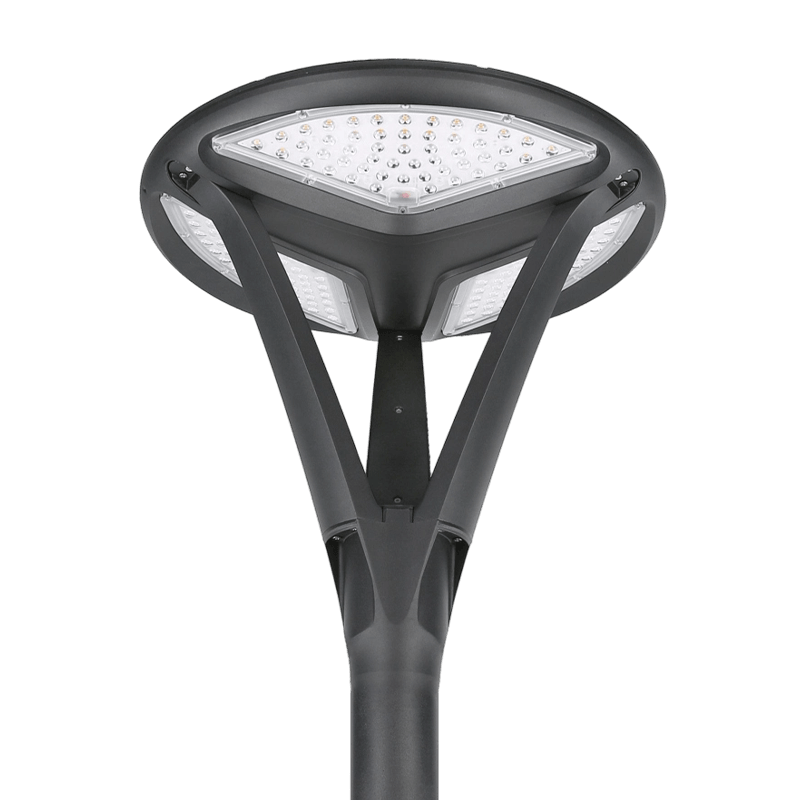
Rustic Solar LED Garden Light ZC-TYD2609
Product Overview
The Rustic Solar LED Garden Light ZC-TYD2609 is a decorative solar garden light made for outdoor landscape environments. Its product category is Solar Garden Light, while its design and application profile place it within the broader field of outdoor decorative lighting. The fixture uses a vintage visual language rather than an aggressively modern or purely utilitarian appearance. This makes it appropriate for projects that seek a warm, classic, countryside, or heritage-inspired atmosphere.
The main housing material is die-casting aluminum. This material is widely used in professional outdoor lighting because it can provide a balance of structural strength, shape flexibility, heat dissipation, and long-term surface protection when properly finished. For a decorative garden light, the housing must also support detailed forms and consistent external styling. Die casting enables manufacturers to create repeatable shapes while maintaining production efficiency for series orders.
The listed solar panel specification is 5V/33W, and the battery specification is 3.2V/45000mAh. The fixture contains 150 LED chips. Its stated charging time is 3 to 5 hours, while the color temperature range is 3000K to 6500K. The listed overall size is Φ585 × H550 mm, giving the light a substantial presence in gardens, pathways, courtyards, and landscape groupings.
The broad color temperature range is significant for projects with different visual objectives. A warmer setting near 3000K can support a cozy and traditional atmosphere, especially around timber structures, stone walls, planting beds, restaurants, and hospitality areas. A cooler setting toward 6500K can provide a crisper visual effect where stronger object definition or a more contemporary appearance is preferred. The exact operating method and available lighting modes should be confirmed for each order and configuration.
| Specification | Product Information |
| Model | ZC-TYD2609 |
| Product category | Solar Garden Light |
| Housing material | Die-casting aluminum |
| Solar panel | 5V/33W |
| Battery | 3.2V/45000mAh |
| LED quantity | 150 LED chips |
| Charging time | 3–5 hours |
| Color temperature | 3000–6500K |
| Dimensions | Φ585 × H550 mm |
Vintage Design for Landscape Identity
One of the strongest advantages of the ZC-TYD2609 is its ability to contribute to a complete landscape concept rather than appearing as an isolated technical device. Many outdoor projects use a combination of masonry, timber, planting, water features, decorative paving, and cultural elements. A highly industrial or minimalist light may conflict with these surroundings. A rustic-style fixture can instead reinforce the identity of the site.
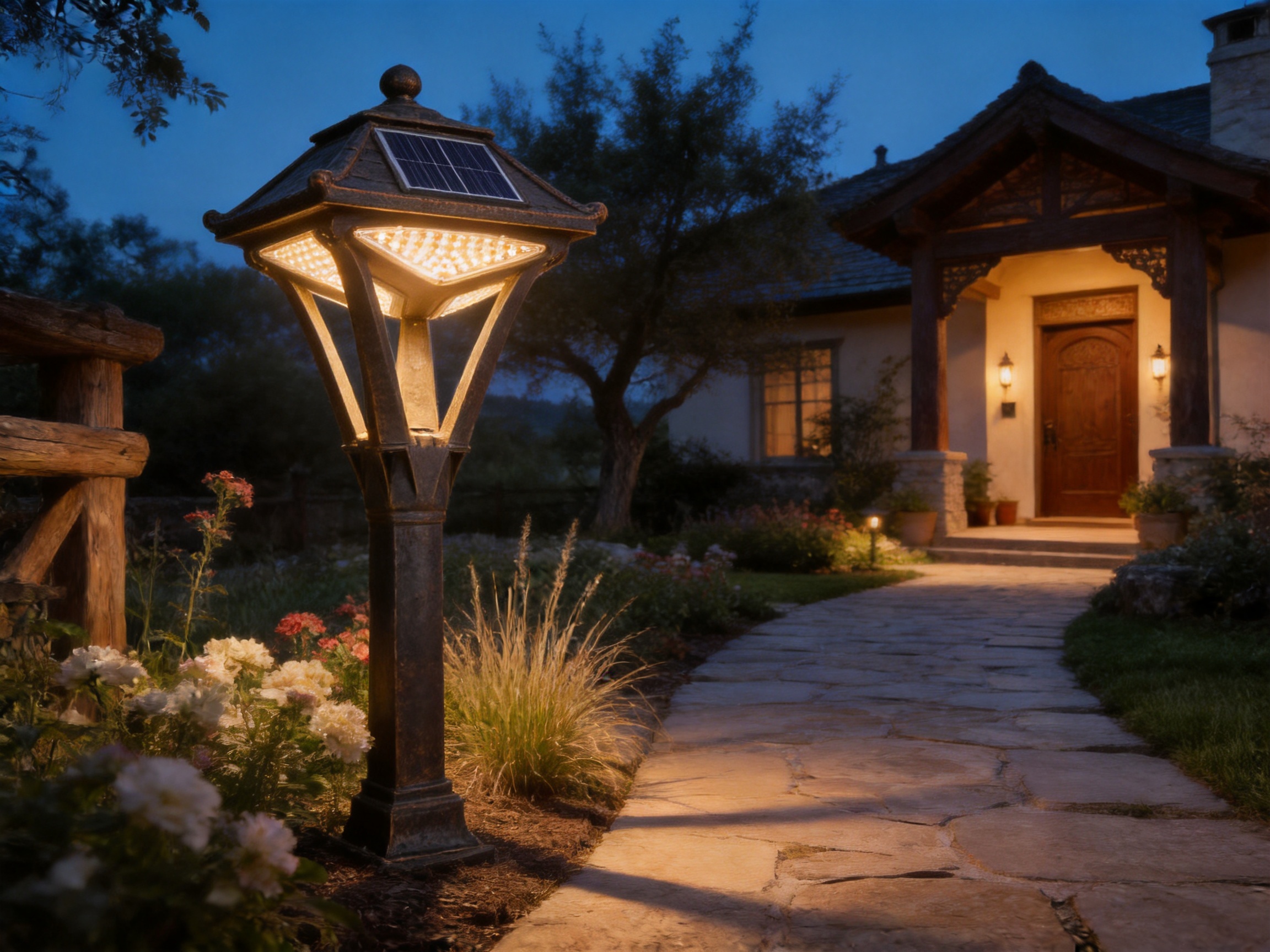
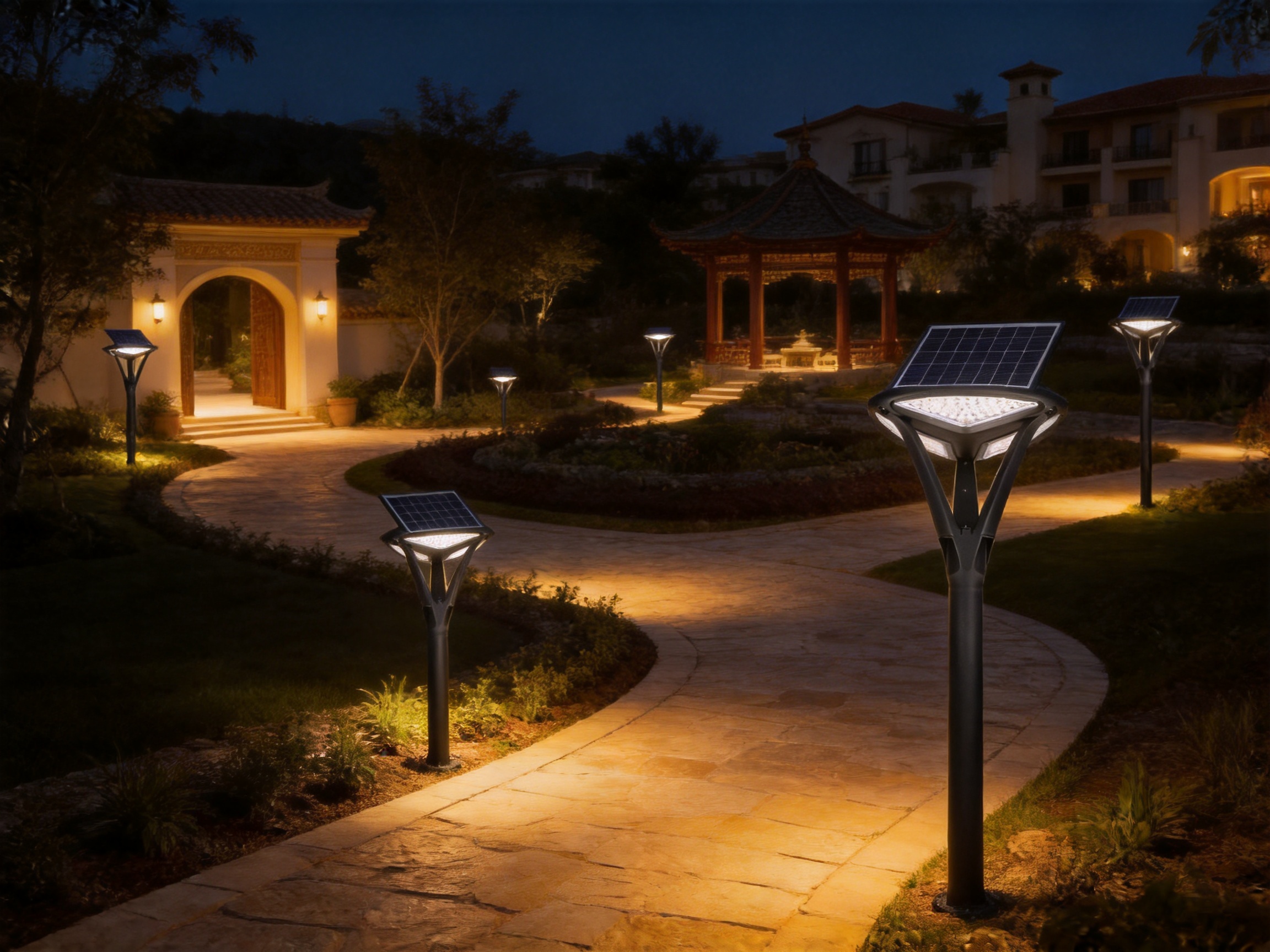
In countryside villas, the light can be placed near entrances, terraces, garden walls, driveways, or outdoor seating areas. Its classic appearance helps connect the lighting system with natural materials and traditional architectural forms. In themed gardens, several fixtures can be arranged along routes, around focal planting, or near ornamental structures to create visual continuity.
Resorts and cultural parks can also use the product to establish a recognizable nighttime atmosphere. Visitors often form their first impression of a property at the entrance or along the approach route. Lighting with a coordinated vintage appearance can make these areas feel more carefully designed. It can guide movement while supporting the story, regional identity, or cultural theme of the destination.
The fixture’s dimensions, approximately 585 millimeters in diameter and 550 millimeters in height, allow it to function as a visible landscape element. It is not merely a small marker light intended to disappear into planting. Instead, it can become part of the visual composition during daylight hours and a luminous feature after dark.
Appearance consistency is particularly important in projects that require multiple fixtures. Variations in color, finish, proportions, or decorative details can make a landscape look uncoordinated. A manufacturer with die-casting, finishing, inspection, and assembly capabilities can help maintain greater consistency between production batches. For large developments, this is an important consideration when comparing a professionally manufactured product with assorted low-cost fixtures from multiple sources.
Solar Operation and Installation Flexibility
Solar power is one of the principal functional advantages of the ZC-TYD2609. Traditional garden lights normally require a connection to the electrical grid. This can involve cable routing, protective conduits, trenching, junction boxes, power distribution planning, and coordination with other site works. Solar operation does not eliminate all installation planning, but it can reduce dependence on fixed electrical infrastructure.
This flexibility is especially useful in landscaped environments where digging may disturb mature plants, paving, irrigation systems, tree roots, or protected ground surfaces. It can also help in remote areas, temporary installations, recreational properties, rural developments, and locations where grid access is limited. Contractors can plan the lighting layout according to the landscape rather than only according to the position of existing electrical points.
The 5V/33W solar panel specification provides the energy collection component for the system. Its effectiveness in a real project will depend on sunlight exposure, seasonal conditions, panel orientation, shading, local weather, and the selected operating schedule. During design planning, the panel should be positioned so that nearby trees, buildings, walls, and decorative structures do not significantly obstruct solar access.
The listed 3.2V/45000mAh battery provides energy storage for operation after sunset. Battery capacity is an important part of solar lighting because the product must maintain useful performance when daylight hours are shorter or when several cloudy days reduce charging opportunities. The actual nighttime duration will depend on the control system, LED power, operating mode, ambient conditions, and charging performance. Project buyers should request a complete operating profile when a specific autonomy requirement applies.
The stated charge time of 3 to 5 hours gives buyers a practical reference for evaluating the solar system. However, charging time should always be understood in relation to available sunlight rather than treated as a universal result for every climate. A well-designed installation should consider the average solar conditions of the target region, particularly in winter, during rainy seasons, or in areas with frequent atmospheric obstruction.
Compared with a wired garden fixture, a solar fixture can offer advantages in project cost planning and deployment speed. The total benefit will depend on the site and installation method. In a new construction project with electrical infrastructure already available, wired lighting may remain competitive. In an established garden or a difficult-to-access landscape, the reduced cable requirement can make solar lighting more attractive.
LED Light Source and Visual Comfort
The ZC-TYD2609 uses 150 LED chips. A multi-chip arrangement allows the light source to be distributed across the fixture rather than concentrated in a single point. This can support a more balanced visual effect and help the luminaire produce a broad decorative glow. The final optical performance will depend on the LED layout, reflector or diffuser design, control system, and fixture structure.
LED technology is well suited to solar products because it can produce useful illumination with comparatively controlled energy consumption. Lower energy demand helps the stored battery support nighttime operation. LEDs also allow manufacturers to provide different color temperatures and lighting effects without changing the basic decorative concept of the fixture.
The stated range of 3000K to 6500K gives the product flexibility across different environments. Warm light around 3000K generally works well with wood, brick, stone, earth-tone finishes, and hospitality settings. It can make planting and architectural surfaces appear softer and more inviting. Neutral or cooler light can help create a brighter, clearer visual impression in entrances, pathways, parking edges, or contemporary landscape areas.
Color temperature should be selected as part of the complete design rather than chosen only from a product catalog. A warm rustic fixture with a very cool light source may produce an unintended contrast. Conversely, a warm light may be preferred in a cultural or residential landscape where visual comfort and atmosphere are priorities. OEM and ODM lighting effects can help align the product with the project’s intended mood.
Outdoor lighting should also be evaluated for glare, viewing angles, shadow formation, and the relationship between illuminated and non-illuminated areas. A decorative light does not need to make every part of a landscape equally bright. In many cases, a carefully controlled level of illumination creates a more attractive result than excessive brightness. Professional photometric evaluation can help determine spacing, mounting positions, and the effect on nearby surfaces.
Die-Casting Aluminum Construction
Material selection influences the service life, appearance, weight, and manufacturing consistency of an outdoor lighting fixture. The ZC-TYD2609 uses die-casting aluminum for its main structure. Aluminum is commonly selected for outdoor luminaires because it offers a strong combination of low weight, corrosion-management potential, thermal performance, and compatibility with complex molded forms.
Die casting is particularly valuable when a product has a distinctive decorative shape. Molten aluminum is formed inside a precision mold, allowing repeated production of components with controlled dimensions. This process can support details that would be difficult or less economical to produce through simple sheet fabrication. It also helps create a consistent base for subsequent machining, finishing, and assembly.
For a rustic garden light, the housing must perform several roles at once. It supports the solar and LED components, contributes to the visual identity, protects internal parts, and withstands outdoor exposure. The manufacturing process therefore needs to balance design appearance with practical engineering. Mold design, casting parameters, trimming, surface preparation, coating, and final inspection all influence the result.
Cixi HuaSheng Lighting Co., Ltd. has die-casting and CNC equipment that can support this type of product development. CNC machining can be used for selected precision surfaces, mounting locations, interfaces, and other areas where dimensional accuracy is important. Combining die casting with CNC processing can help improve assembly fit and reduce inconsistencies in critical components.
Surface finishing is another area where customization can create product differentiation. A rustic product may require a particular color, texture, aging effect, or protective treatment. OEM and ODM services can be used to develop surface finishes for different architectural styles and market preferences. The final coating specification should be selected according to the intended outdoor environment, exposure conditions, and customer requirements.
Manufacturing Capabilities and Quality Control
The product’s competitive value is linked not only to its visible appearance but also to the manufacturing system behind it. Cixi HuaSheng Lighting Co., Ltd. is located in Cixi City, Ningbo, Zhejiang Province, and specializes in outdoor lighting for international customers. Its product range includes LED street lights, tunnel lights, high-bay lights, linear lights, garden lights, solar lights, grow lights, explosion-proof lights, and other lighting products.
This broader product experience can be valuable for buyers seeking a supplier that understands different outdoor lighting conditions. A manufacturer working across municipal, industrial, architectural, garden, and solar applications is exposed to varied requirements relating to thermal management, photometry, housing design, installation, and environmental protection.
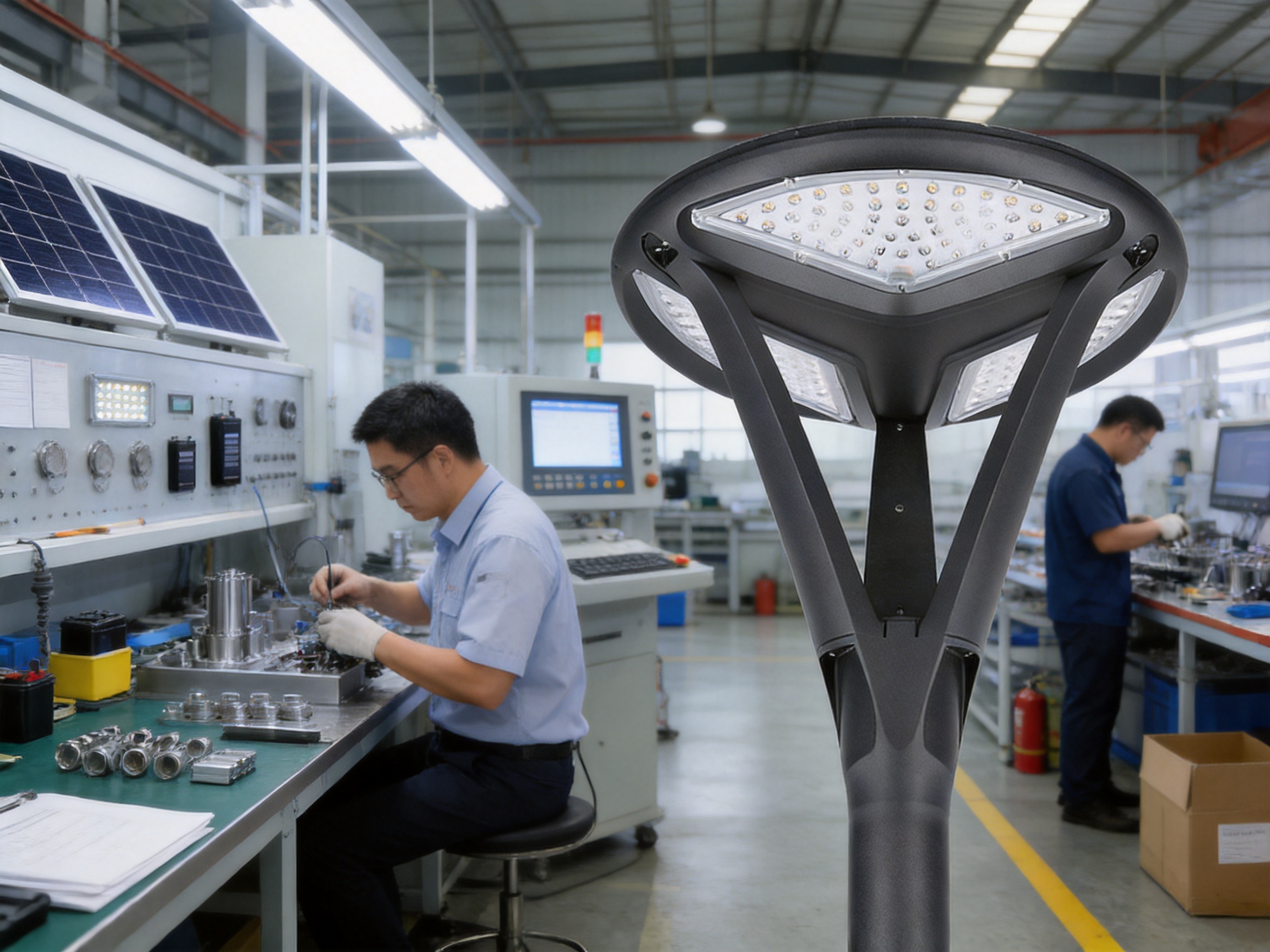
The company operates die-casting and CNC machines, aging lines, and goniophotometers. Each type of equipment supports a different part of the product development and quality process. Die-casting equipment supports the production of aluminum housings. CNC machines can provide precision finishing and controlled interfaces. Aging lines can be used for product operation tests intended to identify certain early failures before shipment. Goniophotometers are used to measure photometric characteristics and help evaluate light distribution.
Photometric equipment is especially relevant for lighting manufacturers because visual appearance alone cannot fully describe a luminaire’s performance. Light distribution, intensity, beam characteristics, and other optical data can influence how many fixtures are required and where they should be positioned. For projects that require professional lighting calculations, measured data can support DIALux designs and other planning processes.
The company states that it is certified to ISO 9001, ISO 14001, and ISO 45001 standards. These standards relate respectively to quality management, environmental management, and occupational health and safety. Certification does not mean that every product is automatically suitable for every project, but it indicates a structured approach to management systems and operational control.
The company also states that relevant products have CB and CE certifications. Buyers should confirm the exact certification scope, applicable model, electrical configuration, and destination-market requirements before placing an order. Certification details are important when products are purchased for commercial, municipal, hospitality, or export projects with formal compliance documentation.
Aging and inspection processes can be particularly useful for solar lighting products. Solar fixtures combine a panel, battery, LED board, driver or controller, housing, and optical components. A defect in any one of these areas can affect the complete system. Systematic inspection and operational testing can help identify assembly or component problems before the product reaches the installation site.
From Concept to Mold Development
OEM and ODM projects often begin with a visual concept, reference image, application requirement, or target market specification. The manufacturer then reviews the concept in relation to material selection, mold structure, component placement, assembly access, production volume, and expected cost. This engineering review is important because an attractive sketch may require modification before it can be produced efficiently and reliably.
Huasheng provides mold design and die-casting support, which can help shorten communication between product design and manufacturing. A unified process can reduce the risk that an external design does not reflect production realities. It can also support repeatable customization for distributors or brands that want a distinctive product family.
Mold development is a significant part of a decorative lighting project. The mold influences the shape, surface detail, parting lines, wall thickness, and production repeatability of the housing. A well-planned mold can support stable production and more consistent appearance across a batch. It can also make future revisions easier when the customer requests a new finish, mounting method, or decorative element.
Assembly, Testing, and Delivery
After the aluminum components are produced and finished, the product must be assembled with its LED chips, solar panel, battery, controller, wiring, and other parts. Assembly quality affects electrical stability, resistance to movement, and the ability of the fixture to perform in outdoor conditions. Clear procedures and inspection checkpoints are important when products are produced for international delivery.
The company offers one-stop services that include lighting solutions, DIALux designs, mold design, OEM and ODM, SKD and CKD customization, and delivery. SKD and CKD arrangements may be relevant for customers with local assembly capabilities, regional manufacturing strategies, or specific import and distribution requirements. The suitability of these arrangements depends on the destination market, technical resources, and order volume.
International buyers can benefit from communicating the complete project context at the beginning of the inquiry. Information about the application, expected quantity, target country, preferred finish, lighting color, installation method, packaging, and required documentation can help the manufacturer provide a more accurate proposal.
Advantages Compared with Standard Competitor Products
The outdoor lighting market includes many low-cost solar garden lights, standard pathway fixtures, wired decorative lamps, and mass-produced modern luminaires. The ZC-TYD2609 differentiates itself through the combination of rustic styling, a substantial decorative form, solar operation, a large listed battery capacity, a 150-chip LED configuration, and manufacturer-supported customization.
First, the design is more specialized than a generic solar pathway light. Basic competitor products often focus on low purchase price and small-scale illumination. They may be suitable for private gardens or temporary decoration but may not provide the visual presence required by a resort, cultural park, or themed development. The ZC-TYD2609 is designed to participate in the landscape’s architectural language.
Second, the die-casting aluminum housing offers a more professional material platform than very small products made from thin plastic or lightly constructed metal. A robust housing can support better mechanical integrity and a more substantial appearance. The actual service life will depend on coating quality, sealing, battery performance, installation, and maintenance, but the selected material is appropriate for a durable outdoor lighting product.
Third, the product supports a broader project design conversation. Buyers are not limited to selecting a fixed catalog appearance. OEM and ODM options can cover retro details, surface finishes, and lighting effects. This is useful for hospitality groups, landscape contractors, lighting distributors, and property developers that want a coordinated appearance across multiple sites.
Fourth, the solar configuration offers installation flexibility. Compared with wired decorative lighting, it can be considered for locations where underground electrical work is expensive, disruptive, or impractical. This does not make solar universally superior, but it gives project planners another solution when site conditions favor independent lighting fixtures.
Fifth, the manufacturer provides more than finished products. Its equipment and services cover design, mold development, production, testing, photometric support, and delivery. This can be an advantage over suppliers that only trade standard products and cannot modify the housing or manage engineering changes.
Finally, the product can bridge decorative and functional needs. A purely decorative object may not provide reliable guidance lighting, while a purely functional fixture may weaken the atmosphere of a carefully designed landscape. The ZC-TYD2609 aims to support both purposes, providing illumination while reinforcing a rustic visual theme.
Applications in Different Outdoor Environments
Countryside Villas and Residential Estates
Private villas, rural residences, and residential estates often use natural materials and informal landscape layouts. The ZC-TYD2609 can be positioned near gates, garden paths, driveways, courtyards, patios, or outdoor gathering areas. Its warm color temperature option can complement brick, stone, timber, planted borders, and traditional architectural details.
Solar operation can be useful in residential gardens where property owners prefer to avoid additional trenching. It can also support a cleaner landscape appearance by reducing visible cable runs. The final placement should allow the solar panel to receive sufficient sunlight and should avoid locations where branches or roof structures create regular shade.
Themed Gardens and Cultural Parks
Themed gardens and cultural parks require lighting that supports a narrative. A rustic fixture can help create a consistent feeling across entrances, scenic routes, rest areas, and feature zones. Multiple units can be arranged at regular intervals or used selectively to emphasize specific viewpoints.
In these environments, the color temperature should be coordinated with the theme. Warm illumination may be appropriate for historical, rural, or heritage-inspired areas. A cooler setting may be suitable for installations that use stronger contrast, contemporary interpretation, or brighter wayfinding. Lighting designers can use the product as part of a layered scheme that combines ambient illumination with accent lighting.
Resorts, Restaurants, and Hospitality Properties
Hospitality properties invest heavily in the guest experience. Outdoor areas such as arrival courts, garden restaurants, pedestrian routes, poolside zones, and event spaces must remain attractive after dark. A visible decorative fixture can become part of the property’s identity, particularly when its finish and lighting effect are coordinated with signage, furniture, and architectural materials.
For resort operators, consistent appearance across multiple fixtures is important. It can influence perceived quality and help the outdoor environment look intentionally designed. Custom finishes and retro details may enable a resort to create a lighting family that differs from standard products found in other properties.
Landscape Entrances and Pathways
Entrances are often viewed from several directions, so the fixture’s appearance during the day matters. A substantial garden light can frame a gate, mark a driveway, or establish a transition between public and private areas. Along pathways, spacing should be determined by the required illumination, site geometry, surrounding obstacles, and the desired rhythm of the landscape.
Solar garden lights are not automatically substitutes for road lighting or high-output security lighting. The ZC-TYD2609 is better evaluated as a landscape and garden fixture. If a project requires traffic-level illumination, emergency lighting, or precise compliance with a roadway standard, additional products and calculations may be necessary.
Customization for OEM and ODM Projects
Customization is a central strength of a manufacturer with in-house or closely managed engineering and production resources. The ZC-TYD2609 can serve as a starting platform for customers that need a rustic solar light adapted to a particular market, project, or brand portfolio.
Retro design details may include changes to decorative proportions, ornamental features, framing elements, top structures, or visual accents. These changes should be reviewed against mold complexity, weight, wind exposure, assembly requirements, and solar panel positioning. The purpose of customization is not only to make the light look different but also to ensure that the revised product remains practical to manufacture and install.
Surface finishing can be adapted to match regional preferences or a project’s material palette. Possible directions may include different dark tones, aged effects, textured surfaces, or coordinated colors. The appropriate finish depends on the customer’s specification and outdoor exposure. Sample approval is recommended before mass production so that color and texture can be evaluated under both daylight and nighttime conditions.
Lighting effects can also be adjusted. The requested effect may involve warm ambient illumination, a particular distribution, multiple color temperature options, or a decorative glow. Any change to the LED arrangement or controller should be assessed together with the solar panel and battery system. A lighting effect that consumes more energy may influence charging requirements and nighttime operating duration.
Customers may also request packaging changes, logos, installation instructions, labels, product documentation, or regional compliance materials. These commercial details can be important for distributors and project contractors. A complete OEM or ODM discussion should identify which elements are standard, which are customized, and which require new tooling or testing.
Project Planning and Installation Considerations
Successful solar lighting installation begins with a site survey. The survey should identify the intended mounting locations, daily sunlight exposure, nearby shade sources, drainage conditions, soil or paving conditions, pedestrian movement, and potential contact with landscaping equipment. The solar panel should have a clear path to the sky for as much of the day as possible.
Designers should consider the visual relationship between fixtures. A rustic light may look best when used in a coordinated rhythm rather than placed randomly. Spacing can be adjusted near entrances, curves, seating areas, or changes in elevation. A professional lighting plan can help prevent excessive brightness in one area and insufficient visibility in another.
The mounting foundation should be stable and appropriate for the ground condition. In soft soil, additional support may be required. On paving, the installation should avoid creating trip hazards or damaging waterproof layers. The selected position should also allow access for cleaning, battery inspection, and future maintenance.
Solar panels should be kept reasonably clean because dust, leaves, pollen, and bird deposits can reduce the energy reaching the photovoltaic surface. In locations with heavy vegetation, routine trimming may be necessary. The fixture should be protected from accidental impact by vehicles, maintenance carts, or sports equipment.
Before a project is finalized, buyers should confirm the complete electrical and environmental specification. Relevant questions may include operating modes, automatic dusk-to-dawn control, battery replacement method, LED power, luminous flux, ingress protection, impact rating, wind-load guidance, temperature range, warranty terms, and available certifications. The supplied product information confirms the main component specifications but does not state all of these additional parameters.
Maintenance and Long-Term Value
The value of a solar garden light is influenced by more than its initial purchase price. A product that is visually suitable, easy to install, and supported by a capable manufacturer may provide better project value over time. Maintenance planning should include periodic cleaning of the solar panel, inspection of the exterior finish, checking for physical damage, and confirmation that the light remains correctly positioned.
Battery performance is an important maintenance consideration. Rechargeable batteries gradually lose capacity through use and environmental exposure. The replacement interval depends on battery chemistry, charging conditions, operating temperature, discharge depth, and product control settings. The stated battery specification is 3.2V/45000mAh, but the expected service interval should be confirmed with the supplier for the selected configuration.
In coastal, industrial, or highly humid locations, surface protection deserves special attention. Salt, pollutants, and moisture can accelerate corrosion if the finish is damaged or if water remains trapped around joints. Buyers should communicate the site conditions so that the appropriate surface treatment and maintenance guidance can be considered.
For hospitality and municipal projects, keeping records of model numbers, installation dates, battery changes, and inspection results can simplify asset management. Standardized products across a site also make replacement and spare-part planning easier. A manufacturer that can provide continuing supply and technical communication may be more valuable than a supplier offering only a one-time shipment.
Why Choose an Experienced Outdoor Lighting Manufacturer?
Solar garden lighting combines several technical disciplines. It involves mechanical housing design, solar energy collection, battery storage, LED selection, optical distribution, environmental protection, surface finishing, assembly, and quality assurance. A supplier that handles only one of these areas may not be able to resolve problems across the complete system.
Cixi HuaSheng Lighting Co., Ltd. presents itself as an outdoor lighting manufacturer rather than only a product reseller. Its stated capabilities include die casting, CNC machining, aging lines, goniophotometers, mold design, DIALux lighting design, OEM and ODM development, SKD and CKD customization, and international delivery. This combination can provide customers with a more direct route from concept to finished fixture.
Its product range also indicates experience with multiple application categories. Street, tunnel, industrial, garden, solar, grow, and explosion-proof lighting each require different design priorities. This diversity can support broader technical understanding, although customers should always verify the exact specifications and certifications of the selected model.
The stated ISO 9001, ISO 14001, and ISO 45001 certifications reflect attention to quality management, environmental management, and workplace safety systems. The stated CB and CE certifications for relevant products can support export projects, subject to confirmation of the applicable model and market. For international buyers, documentation review should be part of the normal procurement process.
Manufacturing location and supply-chain organization also influence project reliability. A company based in Ningbo, one of China’s major manufacturing and export regions, can support international logistics and communication. More importantly, the combination of product engineering, manufacturing equipment, inspection resources, and customization services can reduce dependence on unrelated third-party suppliers.
Procurement Guidance for Buyers
Before ordering the ZC-TYD2609, buyers should define the purpose of the installation. Is the main objective ambient decoration, pathway guidance, entrance marking, resort atmosphere, or a combination of these functions? The answer will influence color temperature, spacing, quantity, mounting position, and expected operating schedule.
Buyers should also identify the target climate and site conditions. A sunny inland site, a humid coastal resort, a shaded woodland garden, and a cold northern development may place different demands on the fixture. Sharing this information with the manufacturer can improve the accuracy of the product recommendation.
For customized projects, the buyer should prepare drawings, reference images, color samples, logo files, and preferred lighting effects where available. It is also useful to specify the expected order quantity, annual demand, delivery schedule, packaging requirements, and destination-market compliance documents.
Samples are recommended before mass production. A sample allows the customer to evaluate the decorative proportions, surface finish, light color, solar panel integration, mounting method, packaging, and general construction. If the product is intended for a large resort or municipal development, a trial installation can show how the fixture interacts with paving, planting, walls, and nearby structures.
Technical documents should be reviewed carefully. In addition to the listed dimensions and component specifications, customers may request a product drawing, installation instructions, electrical diagram, battery information, photometric data, testing records, certification documents, warranty terms, and spare-part recommendations.
Frequently Asked Questions
What type of product is the ZC-TYD2609?
The ZC-TYD2609 is a rustic solar LED garden light designed for outdoor landscape applications. It is intended to provide decorative and ambient illumination in locations such as villas, gardens, resorts, cultural parks, and landscaped entrances.
What material is used for the housing?
The listed housing material is die-casting aluminum. This material supports a durable structural design, repeatable decorative forms, and compatibility with surface finishing processes.
What are the solar panel and battery specifications?
The listed solar panel specification is 5V/33W, and the battery specification is 3.2V/45000mAh. Actual operating performance depends on sunlight, control settings, LED output, climate, and installation conditions.
How many LED chips does the fixture contain?
The product information lists 150 LED chips. The final light distribution depends on the LED arrangement, optical components, housing design, and selected configuration.
What color temperature is available?
The listed color temperature range is 3000K to 6500K. Warm settings are generally suitable for rustic and hospitality environments, while cooler settings may create a brighter or more contemporary visual effect. The precise available setting should be confirmed for the order.
How long does the solar panel take to charge?
The stated charging time is 3 to 5 hours. Actual charging time can vary according to sunlight intensity, season, weather, panel orientation, shading, and battery condition.
What is the size of the light?
The listed size is Φ585 × H550 mm. This gives the fixture a substantial decorative presence, so the product should be evaluated in relation to the scale of the surrounding landscape.
Can the product be customized?
Yes. OEM and ODM services are available for retro design details, surface finishing, and lighting effects. Customers should discuss new tooling, minimum order quantities, samples, testing, and production schedules with the manufacturer.
Where can the fixture be used?
Typical applications include countryside villas, themed gardens, resorts, cultural parks, residential landscapes, garden entrances, courtyards, pedestrian routes, and decorative outdoor areas. It should be evaluated separately from high-output roadway or security lighting when those functions are required.
Does solar operation eliminate all installation work?
No. Solar operation can reduce the need for underground power cables, but the fixture still requires stable mounting, suitable sunlight exposure, correct positioning, and appropriate maintenance access.
What should be confirmed before purchase?
Buyers should confirm operating modes, luminous performance, environmental protection, battery replacement, warranty conditions, certifications, installation requirements, photometric data, packaging, and destination-market compliance. These details are not all included in the basic product information and should be requested according to the project.
Why is manufacturer experience important for this product?
A solar garden light combines mechanical, electrical, optical, and energy-storage components. A manufacturer with die-casting, CNC machining, testing, mold development, and lighting design capabilities can support more complete product development and customization than a supplier focused only on trading standard fixtures.
Conclusion
The Rustic Solar LED Garden Light ZC-TYD2609 is designed for outdoor projects that require both visual character and independent solar operation. Its vintage-inspired form can complement countryside villas, themed gardens, resorts, cultural parks, and other landscapes where lighting contributes to the identity of the site. The die-casting aluminum construction, 150 LED chips, 5V/33W solar panel, 3.2V/45000mAh battery, 3 to 5 hour charging reference, 3000–6500K color temperature range, and substantial Φ585 × H550 mm size provide a practical foundation for decorative outdoor lighting projects.
Its advantages over basic competitor products come from the combination of appearance, material, solar flexibility, customization potential, and manufacturer support. Rather than functioning only as a low-cost pathway marker, the product can become part of a coordinated landscape concept. Its solar design may reduce cabling requirements, while its rustic appearance can support a warm and memorable nighttime environment.
The manufacturing capabilities of Cixi HuaSheng Lighting Co., Ltd. strengthen the product proposition. Die casting, CNC machining, aging lines, goniophotometric equipment, mold design, DIALux support, OEM and ODM services, and SKD or CKD customization provide a broader platform for project development. The company’s stated ISO management certifications and relevant CB and CE product certifications can also assist customers with structured procurement and export requirements, subject to model-specific verification.
For the best result, buyers should treat the ZC-TYD2609 as part of a complete lighting plan. Site sunlight, spacing, color temperature, installation stability, maintenance access, battery expectations, and local compliance requirements should all be reviewed before final selection. When appropriately specified and installed, this rustic solar LED garden light can provide an attractive balance of landscape decoration, energy independence, manufacturing quality, and OEM/ODM flexibility.
References
1. Product specification sheet for Rustic Solar LED Garden Light ZC-TYD2609, including model, material, solar panel, battery, LED quantity, charging time, color temperature, and dimensions.
2. Company profile and manufacturing capability information for Cixi HuaSheng Lighting Co., Ltd., including die casting, CNC machining, aging lines, goniophotometers, mold design, lighting solutions, and customization services.
3. International Organization for Standardization, ISO 9001: Quality Management Systems—Requirements.
4. International Organization for Standardization, ISO 14001: Environmental Management Systems—Requirements with Guidance for Use.
5. International Organization for Standardization, ISO 45001: Occupational Health and Safety Management Systems—Requirements with Guidance for Use.
6. General principles of LED outdoor lighting design, including color temperature selection, glare control, light distribution, site planning, and maintenance considerations.
7. General photovoltaic lighting engineering practices concerning solar exposure, battery charging, seasonal performance, installation orientation, and outdoor maintenance.
Product: Rustic Solar LED Garden Light ZC-TYD2609
Custom & OEM Solutions for Global Lighting Brands
Copyright © Cixi HuaSheng Lighting Co., Ltd. All Rights Reserved.
Die-Casting Mould Supplier
