 English
 中文简体
 русский
 Français
 Español
 عربى
 Indonesia

Compact LED Landscape Fixture BTLED-G1904A: A Flexible, Durable Solution for Modern Outdoor Projects
Introduction
Outdoor lighting is no longer limited to simple illumination. Modern landscape projects require fixtures that combine visual appeal, reliable performance, efficient light output, practical installation, and the flexibility to adapt to different architectural and environmental conditions. Gardens, walkways, residential developments, hotels, public spaces, commercial properties, and landscaped industrial sites all require lighting products that can contribute to both safety and atmosphere.
The Compact LED Landscape Fixture BTLED-G1904A is designed for these applications. Classified as an LED Garden Light, this modern landscape fixture provides a practical lighting solution for projects that require consistent illumination in an outdoor-ready form. Its compact product concept, customizable power configurations, optimized light distribution, and emphasis on long service life make it suitable for a wide range of outdoor lighting plans.
Manufactured by Cixi HuaSheng Lighting Co., Ltd., the BTLED-G1904A benefits from the capabilities of an established outdoor lighting manufacturer based in Ningbo, China. The company provides product development, die-casting, CNC machining, aging tests, photometric evaluation, mold design, OEM and ODM services, SKD and CKD customization, and delivery support. These capabilities allow customers to obtain more than an individual lighting fixture. They can receive a coordinated product and manufacturing service adapted to the technical and commercial requirements of their project.
This article examines the product’s design concept, application advantages, manufacturing foundation, customization potential, quality considerations, installation value, and suitability for professional landscape lighting projects.
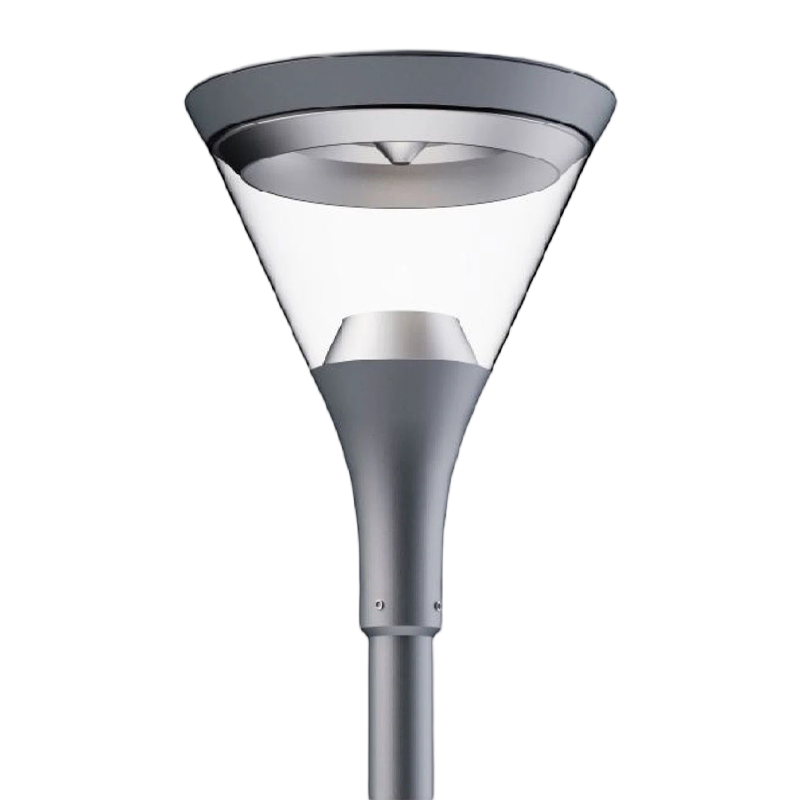
Compact LED Landscape Fixture BTLED-G1904A
Product Overview
The BTLED-G1904A is a compact LED landscape fixture developed for outdoor illumination. Its product category is LED Garden Light, which places it within a broad range of applications including gardens, pathways, courtyards, parks, residential communities, hospitality areas, architectural surroundings, and other landscaped environments.
The fixture has a listed size of Φ482 x 618 mm. This dimensional format indicates a circular or cylindrical design profile with a diameter of 482 millimeters and a height of 618 millimeters. The proportions provide a visible outdoor lighting presence while maintaining a compact form compared with larger decorative or municipal lighting structures.
| Product Name | Compact LED Landscape Fixture BTLED-G1904A |
| Product Category | LED Garden Light |
| Listed Size | Φ482 x 618 mm |
| Primary Application | Outdoor landscape lighting |
| Suitable Project Areas | Gardens, pathways, courtyards, architectural landscapes, residential and commercial outdoor spaces |
| Power Configuration | Available with customized power options |
| Product Focus | Efficient illumination, outdoor-ready construction, optimized light distribution, long service life, and easy installation |
The product description emphasizes flexible solutions rather than a single fixed configuration. This is important because outdoor projects differ considerably in terms of mounting conditions, lighting levels, energy requirements, local regulations, and aesthetic expectations. A fixture that can be adapted to different power requirements can support more project types than a product restricted to one standard output.
The BTLED-G1904A is also positioned as a product for consistent production quality. For distributors, lighting contractors, project developers, and OEM customers, production consistency is often as important as the initial technical specification. Consistent dimensions, repeatable assembly, stable materials, and controlled testing can simplify procurement and reduce variation across large installations.
Design Concept for Contemporary Landscape Lighting
A landscape fixture must work in two environments at the same time. During the day, it becomes part of the visible landscape and should not conflict with the architecture, planting, paving, or site furniture. At night, it must provide useful illumination while supporting the intended visual character of the space. The BTLED-G1904A is designed around this dual role.
Its compact format makes it appropriate for projects where a large lighting structure would appear visually excessive. In gardens and pathways, the fixture can serve as a visible lighting element without dominating the surrounding landscape. In courtyards and architectural settings, it can provide a consistent family appearance when several units are installed throughout the site.
The product can be used to create visual rhythm along walkways, define transitions between outdoor zones, or provide ambient illumination around buildings and planted areas. Depending on the final configuration and lighting design, it may also contribute to wayfinding and improved nighttime visibility.
Modern landscape lighting must also respond to increasingly diverse design preferences. Some projects favor restrained and functional fixtures, while others require lighting products that become part of the decorative environment. The BTLED-G1904A provides a platform that can be incorporated into different design approaches because its value is not dependent on a single decorative theme. It is a practical LED landscape fixture that can support residential, commercial, municipal, and hospitality applications.
The product’s stated focus on optimized light distribution is particularly relevant. A landscape light should not merely produce visible brightness. It should distribute light in a controlled way that supports the application, limits unnecessary glare, and reduces areas of excessive contrast where possible. Proper distribution can help designers achieve a more comfortable and coherent nighttime environment.
Efficient Illumination for Outdoor Applications
LED technology provides an effective foundation for outdoor landscape lighting because it combines energy-efficient operation with compact light-source packaging and controllable optical performance. Compared with traditional outdoor light sources, LED fixtures can offer greater flexibility in power selection, optical design, control integration, and product form.
The BTLED-G1904A is developed as an efficient LED lighting product for landscaped environments. Its customized power options allow project stakeholders to select a configuration that is more closely aligned with the intended illumination level and application conditions. This can be useful when different areas of one project require different levels of light or when a lighting designer is working within an energy budget.
Flexible power configuration can also support staged development. A property owner may initially install lighting in a limited area and later expand the project. Using a fixture platform that can be configured for different requirements can help maintain visual consistency across project phases.
Energy efficiency should always be evaluated as part of a complete system rather than as an isolated product claim. Actual energy consumption depends on the selected power, operating schedule, quantity of fixtures, control strategy, ambient conditions, and maintenance practices. Nevertheless, an LED platform with project-specific power options gives designers a stronger basis for balancing illumination and energy use.
For commercial and municipal projects, this balance can influence long-term operating costs. Efficient lighting can reduce the electrical load of an outdoor installation, while a durable construction and long service life can help reduce replacement frequency. These potential benefits are especially important in areas where lighting operates for many hours each night or where access for maintenance is difficult.
The product’s value is therefore not limited to the light emitted by a single fixture. It also relates to how effectively the fixture can be incorporated into a broader lighting plan. Project-specific power selection, appropriate spacing, suitable mounting, and professional photometric design can help the BTLED-G1904A perform efficiently across different site conditions.
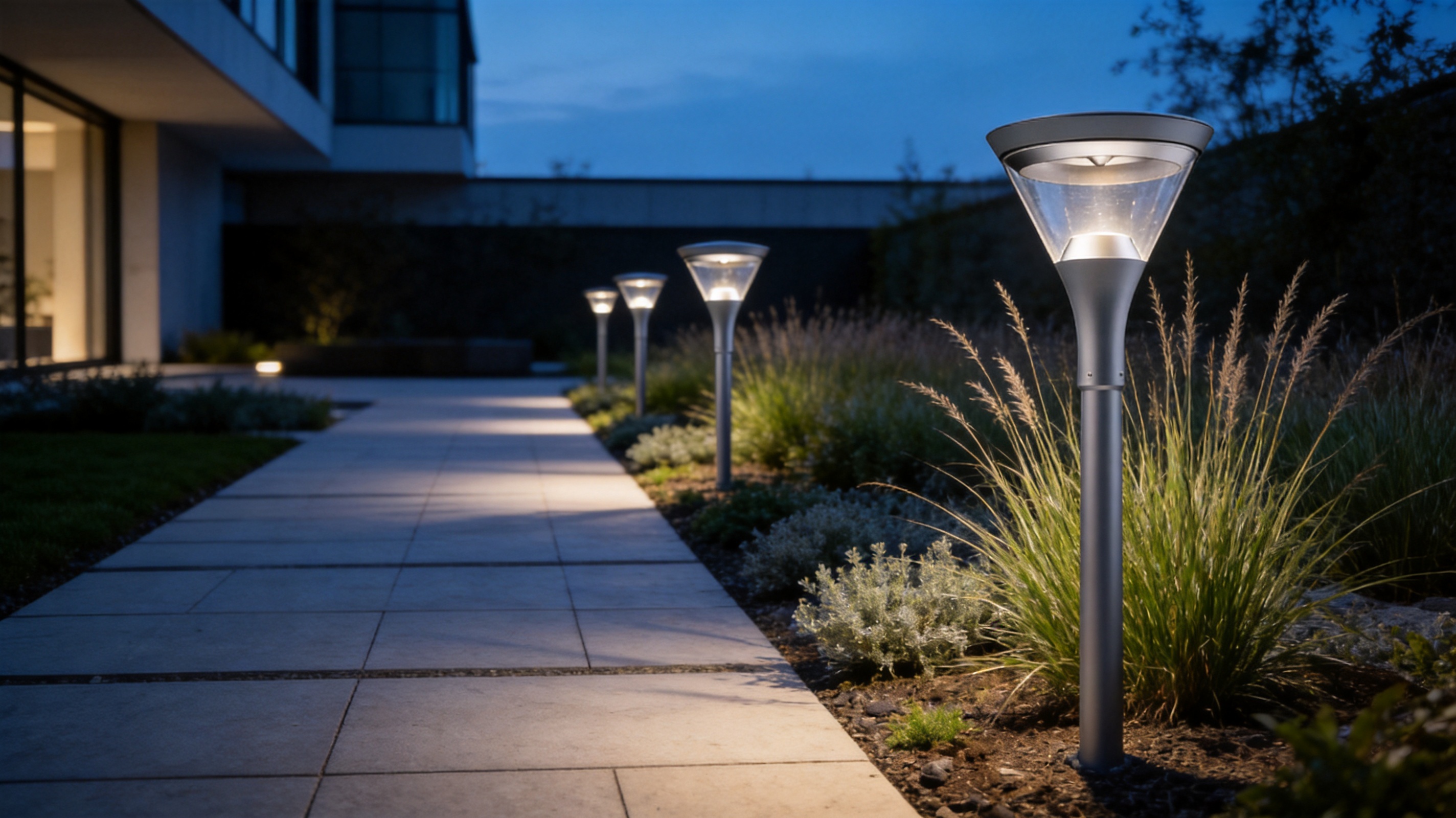
Optimized Light Distribution and Visual Comfort
Light distribution is one of the most important characteristics of any professional outdoor fixture. A product may have adequate light output but still perform poorly if the light is directed toward unwanted areas, creates excessive glare, or leaves important parts of the pathway and landscape unevenly illuminated.
The BTLED-G1904A focuses on optimized light distribution to support more effective use of the available light. In landscape applications, this can help designers illuminate pathways, surrounding planting, entrances, gathering areas, and building edges with greater control. The exact optical result depends on the selected configuration, installation height, spacing, mounting conditions, and project design.
Controlled distribution may also help reduce wasted light. Unnecessary upward or lateral spill can affect neighboring properties, distract pedestrians, and reduce the visual clarity of the overall project. A properly planned LED landscape fixture can direct illumination where it is needed while supporting a more comfortable nighttime environment.
For architectural landscape projects, light distribution can be coordinated with the shape and texture of the surrounding environment. Paving materials, vegetation, walls, steps, and water features all reflect light differently. A well-designed fixture should be evaluated in relation to these surfaces rather than selected only on the basis of nominal wattage.
Professional lighting design tools can support this process. Cixi HuaSheng Lighting Co., Ltd. provides DIALux design services, allowing customers and project teams to evaluate lighting layouts and make more informed decisions. A digital lighting study can help determine fixture spacing, expected illuminance, uniformity, and the relationship between the fixture and the site plan.
Using a product such as the BTLED-G1904A within a DIALux-based design process can be particularly valuable for larger projects. Designers can test different power options and layouts before installation, which may help reduce trial-and-error work on site. It can also help clients understand how the product will perform in relation to walkways, planted areas, entrances, and building facades.
Outdoor-Ready Construction
Outdoor lighting fixtures operate in conditions that are more demanding than indoor environments. Rain, humidity, temperature changes, dust, ultraviolet exposure, wind, pollution, and accidental contact can affect a fixture over time. Product construction must therefore support reliable operation in the intended installation environment.
The BTLED-G1904A is described as having outdoor-ready construction. This means the product is intended for outdoor landscape use and is developed with the practical requirements of exterior installation in mind. Customers should always confirm the final protection rating, operating temperature range, material specification, driver details, and installation requirements for a particular configuration before placing an order.
A reliable outdoor fixture begins with suitable material selection and structural design. Mechanical components must maintain dimensional stability, while joints and interfaces should be manufactured accurately enough to support consistent assembly. The design should also allow the fixture to withstand normal environmental exposure associated with its intended application.
Manufacturing control is important because outdoor performance is influenced not only by the design concept but also by the repeatability of production. Variations in housing dimensions, surface treatment, sealing interfaces, wiring, or driver installation can affect field performance. A manufacturer with internal production and testing resources is better positioned to monitor these variables.
For customers purchasing multiple units, production consistency can simplify installation and maintenance. Installers benefit when products have uniform dimensions and predictable assembly characteristics. Owners benefit when replacement units match the installed product family. Distributors benefit when product quality is stable across repeated orders.
The BTLED-G1904A is therefore suitable for customers who are looking for a product platform rather than a one-time decorative item. Its role is to provide repeatable outdoor lighting performance in projects where appearance, reliability, and production quality must work together.
Long Service Life and Reduced Maintenance Pressure
Long service life is a major consideration in landscape lighting. Outdoor fixtures may be installed across large sites, along long pathways, or in areas where access equipment is required for maintenance. Every service visit can involve labor, transportation, site disruption, and replacement components. A durable lighting solution can help reduce these pressures over the useful life of the installation.
The BTLED-G1904A focuses on long service life through its LED platform, outdoor-ready design concept, and controlled manufacturing process. LED light sources generally support long operating periods when they are matched with suitable drivers, thermal management, electrical protection, and environmental design. The actual service life depends on the final product configuration and operating conditions.
Thermal management is particularly important for LED fixtures. Excessive heat can influence light output, electronic component life, and long-term reliability. A properly engineered housing and suitable internal arrangement can help manage operating temperatures. The company’s use of die-casting and CNC machining resources supports the production of accurately formed components for lighting products.
Long service life also depends on the driver and electrical system. Customized power configurations should be evaluated together with the driver selected for the fixture. Project teams should confirm input voltage, power factor, surge protection, control compatibility, dimming requirements, and other electrical parameters before final approval.
Although no outdoor product is maintenance-free in every environment, a durable fixture can make scheduled inspection and cleaning more manageable. The BTLED-G1904A’s emphasis on easy installation and consistent production can also support future servicing. Standardized installation practices and repeatable product construction help maintenance teams identify and replace units more efficiently.
For a property owner, the combined effect of energy-efficient operation, long service life, and manageable maintenance can contribute to a lower total cost of ownership. This is often more meaningful than comparing purchase prices alone. A low-cost fixture that requires frequent replacement may create higher long-term expenses than a professionally manufactured product designed for stable outdoor service.
Easy Installation and Project Efficiency
Installation conditions vary widely between landscape projects. Some fixtures are installed in soft landscaped areas, while others are placed beside paved walkways, near buildings, within courtyards, or along public access routes. Installation teams may also work under strict project schedules and must coordinate lighting with civil works, landscaping, electrical distribution, and architectural finishing.
The BTLED-G1904A is designed with easy installation as one of its product priorities. An installation-friendly fixture can help reduce labor time and lower the possibility of installation errors. It can also make it easier for contractors to maintain alignment, spacing, and visual consistency across the site.
Before installation, the project team should review the foundation or mounting method, cable routing, electrical protection, fixture orientation, drainage considerations, and access for future service. The exact installation procedure should follow the manufacturer’s technical documentation and the requirements of local electrical codes.
Easy installation does not mean that professional planning is unnecessary. Outdoor lighting systems must be installed by qualified personnel, particularly where underground cabling, mains voltage, grounding, surge protection, or public access is involved. Instead, an easy-to-install design complements professional installation by making the product more practical to handle and position.
For contractors and distributors, installation efficiency can be an important competitive advantage. A product that is straightforward to assemble, position, and connect may help improve project productivity. It may also reduce the need for special tools or extensive on-site adaptation, depending on the final configuration.
The BTLED-G1904A can be especially useful in projects with repeated lighting points. Once the installation team becomes familiar with the product, the same method can be applied across multiple locations. Consistent product dimensions and manufacturing quality further support this repeatable workflow.
Advantages Compared with Less Flexible Competitor Products
Outdoor lighting buyers often compare products according to price, appearance, power, light output, protection, delivery time, customization, and supplier support. The BTLED-G1904A offers several practical advantages when compared with less flexible landscape fixtures.
Flexible Power Selection
Many standard lighting products are available only in one fixed power configuration. This may force a project to use more fixtures than necessary, accept an unsuitable illumination level, or redesign the electrical system around the product. The BTLED-G1904A is available with customized power options, giving project teams greater flexibility when matching the fixture to the application.
This advantage is particularly useful for projects with different zones. A pathway may require a different lighting level from a courtyard, building entrance, or decorative garden area. A configurable product platform can support a more balanced solution than a one-power-fits-all product.
Application Versatility
The BTLED-G1904A can be used in gardens, pathways, architectural landscapes, residential areas, hospitality environments, commercial properties, and other outdoor spaces. Its compact profile and modern design allow it to support multiple project styles without being limited to one narrowly defined application.
Compared with specialized fixtures designed only for one type of installation, a versatile LED garden light can simplify product selection and procurement. Distributors can offer the same product family to more customers, while project developers can maintain a consistent visual language across different outdoor zones.
Manufacturing Support
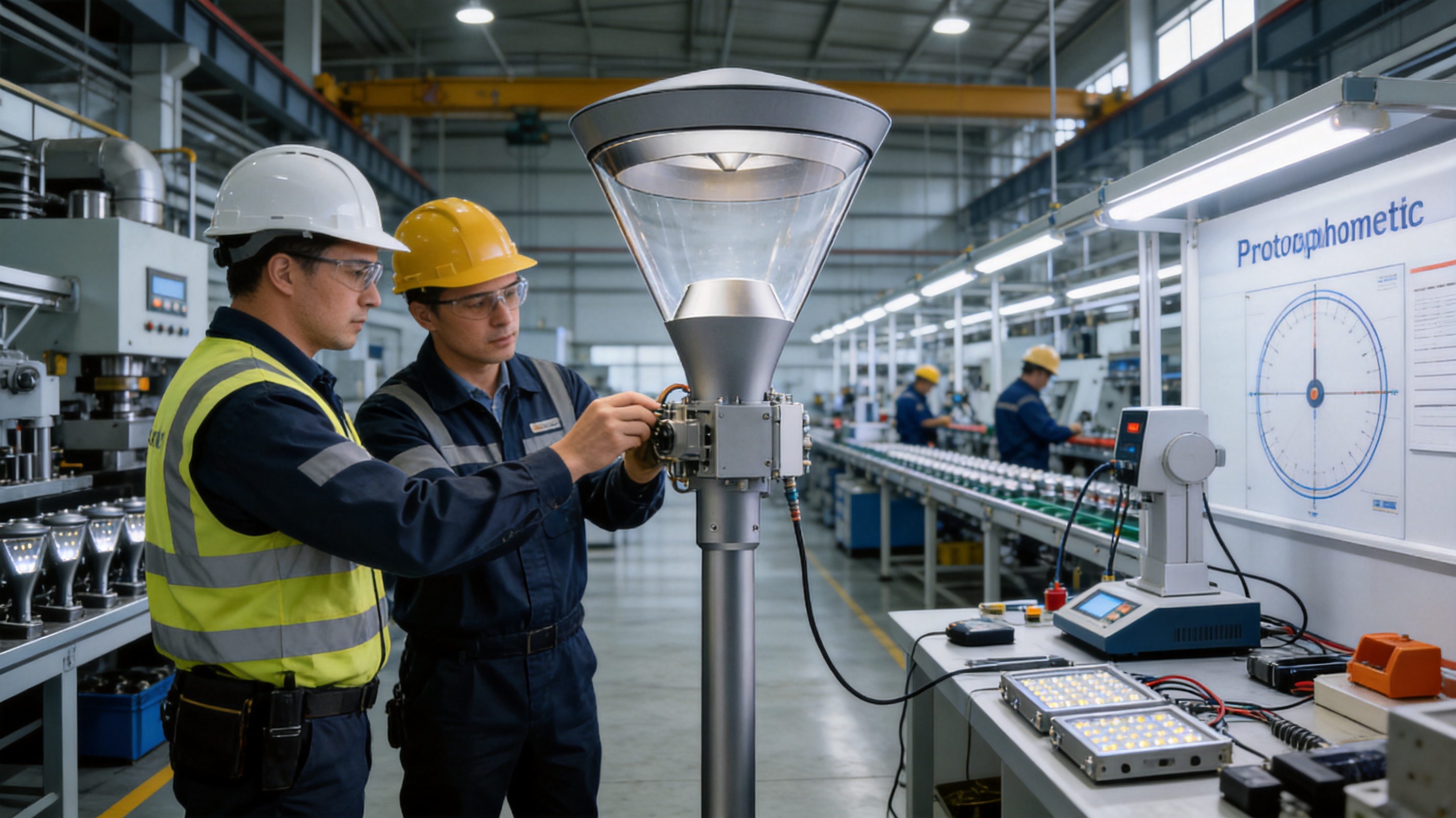
Some lighting suppliers rely heavily on external production and may have limited control over molds, machining, testing, or assembly. Cixi HuaSheng Lighting Co., Ltd. operates with die-casting and CNC machines, aging lines, and goniophotometers. These resources support greater control over product development and quality evaluation.
The presence of internal manufacturing capabilities can also make customization more practical. Customers requiring modified housing components, special configurations, OEM labeling, or project-specific development can communicate with a manufacturer that understands both product design and production execution.
One-Stop Technical Services
The company provides services including DIALux lighting design, mold design, OEM and ODM development, SKD and CKD customization, and delivery coordination. This broader service scope can help customers reduce the number of separate suppliers involved in a project.
For international clients, one-stop support may simplify communication from initial concept through production and delivery. It can also help align the technical specification with the manufacturing process, reducing the risk that a design approved by the customer becomes difficult or costly to produce.
Quality and Certification Orientation
The company is identified as ISO 9001, ISO 14001, and ISO 45001 certified, while relevant products are described as having CB and CE certifications. These systems and certifications indicate an organized approach to quality management, environmental management, occupational health and safety, and product compliance. Customers should verify the specific certificates applicable to the exact product configuration and destination market.
Compared with suppliers that provide limited documentation, a manufacturer with formal management systems can offer greater confidence during supplier evaluation. Documentation, inspection records, product test reports, and compliance information can be especially important for commercial and municipal projects.
Manufacturing Capabilities Behind the Product
The quality of an outdoor lighting product is closely related to the manufacturing process used to create it. A good product concept must be supported by accurate tooling, stable materials, controlled assembly, effective testing, and responsive technical management. The BTLED-G1904A is manufactured within a company that provides several of these capabilities.
Die-Casting and Structural Component Production
Die-casting is widely used in lighting manufacturing because it can produce strong and repeatable metal components with suitable shapes for housings, heat dissipation, and structural support. Accurate die-cast components can help maintain product dimensions and provide a consistent foundation for assembly.
For an outdoor landscape fixture, structural components need to balance appearance, strength, manufacturability, and thermal performance. Die-casting can support the creation of integrated forms that would be more difficult or less consistent to produce using simpler fabrication methods.
Tooling quality is central to die-casting. Mold design affects surface quality, dimensional accuracy, material flow, and production efficiency. The company’s ability to provide mold design services gives customers a direct connection between the product concept and the tooling required for mass production.
CNC Machining
CNC machining supports precise finishing and the production of components requiring controlled dimensions. In lighting products, machined features may be important for mounting interfaces, threaded connections, component alignment, and assembly accuracy.
The combination of die-casting and CNC machining can provide a useful balance. Die-casting supports efficient production of shaped components, while CNC machining can refine critical areas that require tighter control. This combination may improve consistency across repeated production batches.
Aging Lines
Aging is an important part of quality evaluation for LED lighting products. Controlled aging operation can help identify certain early-stage electrical or component problems before products are shipped. While aging cannot reproduce every field condition, it provides an additional production control step.
For customers purchasing large quantities, aging capability is valuable because it supports more systematic inspection. It can help reduce the possibility of shipping products with immediately detectable performance issues and contribute to more stable production quality.
Goniophotometers and Photometric Evaluation
A goniophotometer is used to measure the distribution of light from a luminaire across different angles. This type of equipment supports the development and verification of photometric data, including light distribution characteristics and related performance information.
Because the BTLED-G1904A emphasizes optimized light distribution, photometric evaluation is especially relevant. Lighting designers and project engineers need reliable data to plan fixture spacing, mounting height, illumination levels, and uniformity. Access to professional photometric equipment strengthens the connection between product development and lighting design.
Quality Management and Production Control
The company’s ISO 9001 certification reflects a structured quality management orientation. Quality management is not limited to final inspection. It can include purchasing controls, production procedures, traceability, corrective actions, process documentation, and customer feedback.
For a customized product, this structure becomes more important. When power options, components, labels, packaging, or mechanical details are modified, the manufacturer must maintain clear control over the approved specification. This helps reduce the risk of mixing configurations or producing inconsistent batches.
Customization for OEM, ODM, SKD, and CKD Projects
Many lighting buyers are not simply searching for an off-the-shelf product. They may require private labeling, customized packaging, project-specific power, modified components, local assembly, or a complete product developed for a particular market. The BTLED-G1904A can support these needs through the company’s OEM, ODM, SKD, and CKD services.
OEM projects generally require the manufacturer to produce a product according to the buyer’s specifications and branding requirements. This may include packaging, labels, documentation, electrical configuration, and quality standards. A product such as the BTLED-G1904A can serve as a starting platform for an OEM lighting program.
ODM projects involve a deeper level of cooperation in product development. The manufacturer may help transform a customer’s concept into a practical product by addressing mechanical structure, tooling, component selection, lighting performance, and production feasibility. This is useful for companies that understand their market but do not maintain a complete internal engineering department.
SKD and CKD models can support customers that prefer partial or complete local assembly. These models may be relevant where local content, logistics, labor, or market regulations influence the preferred supply chain. The exact scope of supply, assembly responsibility, testing, and documentation should be clearly defined before production.
Customization should be managed through a formal technical process. The customer and manufacturer should confirm the product dimensions, power, input voltage, driver, light source, color temperature, optical requirements, mounting method, materials, surface finish, protection level, cable details, certifications, packaging, and inspection standards.
The advantage of working with a manufacturer that combines design and production capabilities is that customized requirements can be reviewed for manufacturability at an early stage. This can help prevent design features that are visually attractive but difficult to produce consistently or maintain economically.
Applications in Gardens and Pathways
Gardens are among the most natural applications for the BTLED-G1904A. The fixture can be used around planted areas, lawns, ornamental trees, flower beds, private gardens, public parks, and landscaped courtyards. In these settings, lighting should reveal the character of the landscape without overwhelming it.
Along pathways, the fixture can support visual guidance and improve nighttime orientation. Correct spacing and light distribution are important because the goal is usually to create a continuous sense of safety and direction rather than isolated points of brightness. The final layout should be determined through a professional lighting calculation and an evaluation of the site conditions.
In residential communities, the product can be used near walking routes, shared courtyards, entrances, and recreational areas. Its compact design can support a coordinated appearance across different community zones. In hotels and resorts, it may be incorporated into garden paths, outdoor dining areas, arrival spaces, and architectural landscapes.
For public parks and municipal landscaping, durability, maintenance, and replacement availability become especially important. The manufacturer’s production capabilities and customization support can help project owners establish a repeatable product standard for larger installations.
Applications in Architectural and Commercial Landscapes
Architectural landscapes often require a careful relationship between lighting, building form, public movement, and branding. A landscape fixture should provide useful illumination while fitting into the broader architectural composition. The BTLED-G1904A can be integrated into outdoor areas around commercial buildings, offices, retail properties, cultural facilities, and mixed-use developments.
At building entrances, the fixture can contribute to an inviting and legible approach. Around facades and perimeter walkways, it can help define the transition between private property and public circulation areas. In courtyards, it can provide a consistent visual element that supports both daytime appearance and nighttime use.
Commercial properties may also benefit from customizable power options because different areas often have different lighting requirements. A service road, landscaped entrance, pedestrian route, and decorative garden should not necessarily use identical lighting levels. Product flexibility allows the project team to make more appropriate decisions.
The fixture can also be considered for industrial or institutional campuses where landscape lighting is used to improve visibility around offices, entrances, pedestrian routes, and landscaped buffers. While it is categorized as an LED garden light, its professional manufacturing background allows it to be evaluated for a broad range of outdoor projects.
Project Selection and Specification Guidance
Before selecting the BTLED-G1904A for a project, buyers should define the intended application and technical conditions. Important factors include the required illuminance, mounting position, spacing, operating hours, ambient temperature, exposure to moisture and dust, electrical supply, control requirements, and maintenance access.
Lighting designers should request photometric data for the selected configuration. This information can be used in DIALux or another appropriate design tool to evaluate the planned layout. The design should consider not only average illumination but also uniformity, glare, spill light, visual comfort, and the relationship between the fixture and nearby properties.
Electrical engineers should confirm the input voltage, driver specification, power factor, surge protection, grounding, cable arrangement, and control compatibility. If the project requires dimming, timers, photocells, smart controls, or centralized management, these requirements should be discussed before the final product configuration is approved.
Mechanical and civil teams should review the foundation, mounting method, cable entry, drainage, access, and protection against accidental impact. The fixture should be installed according to the manufacturer’s instructions and applicable local requirements.
For projects involving multiple shipments, customers should confirm production schedules, sample approval procedures, packaging requirements, spare parts, warranty conditions, inspection standards, and after-sales support. These commercial details are important for ensuring that the product performs effectively throughout the entire project process.
Quality, Compliance, and Responsible Procurement
Professional lighting procurement requires more than reviewing product photographs. Buyers should evaluate the manufacturer’s technical documentation, production capabilities, test procedures, certifications, quality system, and ability to provide stable supply.
Cixi HuaSheng Lighting Co., Ltd. is identified as holding ISO 9001, ISO 14001, and ISO 45001 certifications. These certifications relate respectively to quality management, environmental management, and occupational health and safety management. Relevant products are also described as certified by CB and CE. Because certifications may apply to specific products or configurations, customers should request current documentation for the exact BTLED-G1904A version being considered.
Environmental responsibility is also becoming more important in outdoor lighting procurement. A product’s environmental impact relates to energy consumption, service life, material selection, manufacturing processes, packaging, maintenance, and end-of-life handling. The company’s ISO 14001 certification indicates that environmental management is part of its organizational framework.
Responsible procurement should also consider worker safety and production conditions. ISO 45001 provides a framework related to occupational health and safety management. While no certification replaces direct project evaluation, formal management systems can provide useful evidence of structured business practices.
Customers should request clear information about product testing, incoming material control, assembly inspection, aging procedures, photometric data, electrical safety, and final inspection. Transparent documentation helps project teams compare suppliers on a total-value basis rather than relying only on unit price.
Why Manufacturer Capability Matters
A lighting fixture is the result of multiple connected disciplines. Optical performance depends on the light source, lens or reflector, housing, driver, thermal design, and installation. Mechanical reliability depends on materials, machining, assembly, mounting, and environmental protection. Commercial success depends on delivery, customization, documentation, communication, and after-sales support.
A manufacturer with capabilities across these areas can provide more coordinated support. The BTLED-G1904A is supported by an organization that produces a wide range of lighting products, including street lights, tunnel lights, high-bay lights, linear lights, garden lights, solar lights, grow lights, and explosion-proof lights. This broad product experience can contribute to a deeper understanding of different lighting environments and project requirements.
The company also provides die-casting and CNC machining, aging lines, goniophotometers, DIALux designs, mold design, OEM and ODM services, SKD and CKD customization, and delivery. These resources allow customers to work with one supplier for product development, evaluation, manufacturing, and project support.
For international buyers, supplier stability is especially important. Export projects require communication across time zones, documentation accuracy, packaging coordination, shipping preparation, and consistent quality between orders. A manufacturer with established export experience may be better prepared to manage these practical requirements.
The result is a more complete value proposition. The BTLED-G1904A is not simply a compact outdoor lamp. It is a customizable product platform supported by manufacturing resources that can help customers move from a general lighting requirement to a practical, repeatable, and project-ready solution.
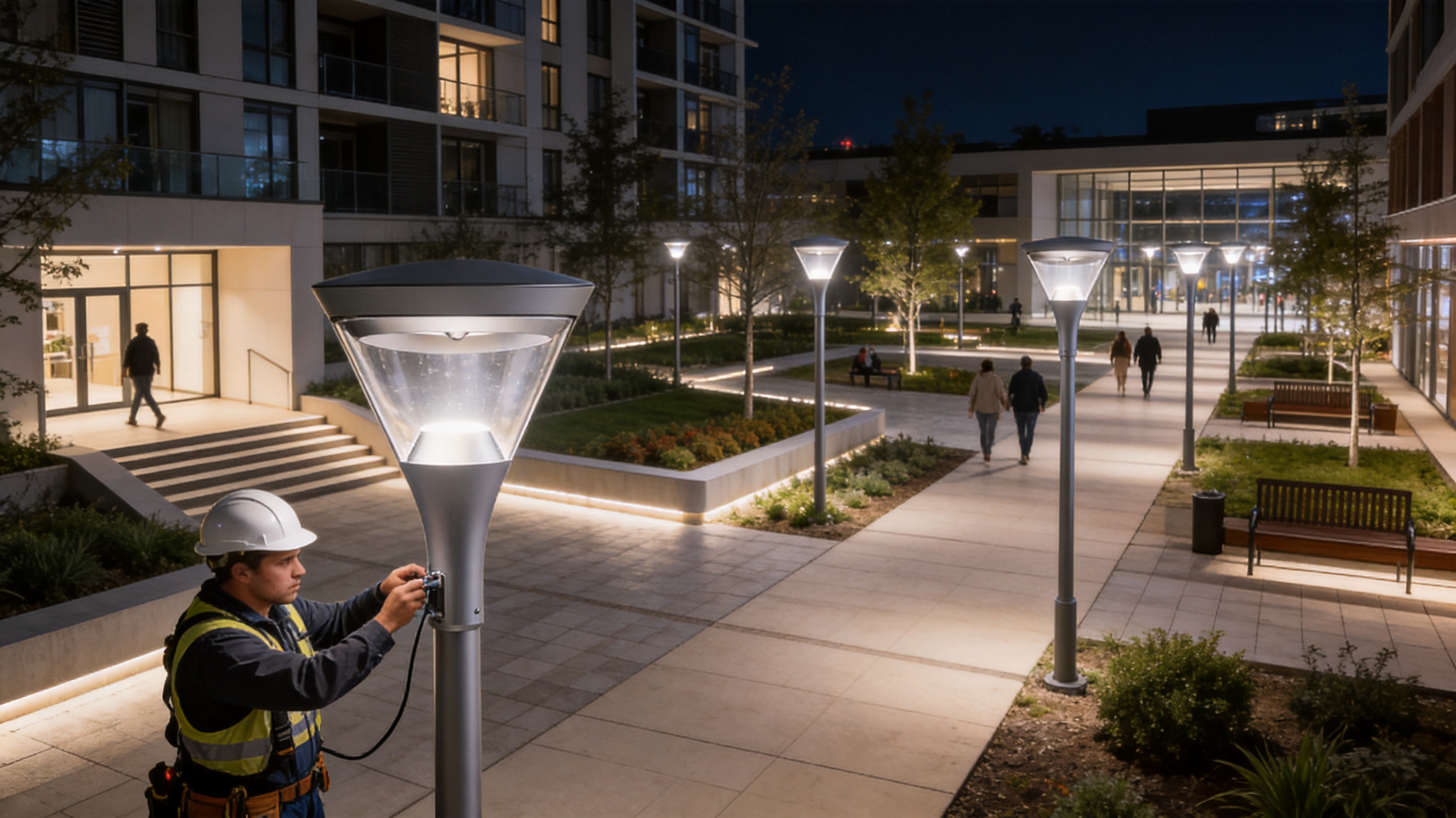
Installation and Maintenance Recommendations
Proper installation is essential to achieving the intended performance of any outdoor lighting fixture. Before installation, all components should be inspected for transport damage, missing parts, and configuration accuracy. The product should be stored in a clean and dry environment if installation is delayed.
The installation location should be checked for stable ground conditions, adequate drainage, cable routing, and safe access. Fixtures should be positioned according to the approved lighting layout rather than adjusted informally on site. Small changes in spacing, orientation, or height can influence uniformity and glare.
Electrical connections should be completed by qualified personnel. The system should include appropriate protection for the local supply conditions, and grounding should be completed according to applicable regulations. Cable connections should be protected from moisture and mechanical damage.
After installation, the system should be tested during both daytime and nighttime conditions. The project team should confirm that fixtures are stable, correctly oriented, properly connected, and operating as expected. Any visible glare, unwanted spill light, dark areas, or inconsistent appearance should be reviewed before final acceptance.
Routine maintenance may include cleaning the optical surface, checking mounting stability, inspecting cables and connections, and confirming continued operation. In areas with dust, pollution, coastal exposure, or heavy vegetation, cleaning frequency may need to be increased. Maintenance personnel should follow safe isolation procedures before opening or servicing any electrical component.
Frequently Asked Questions
What type of product is the BTLED-G1904A?
The BTLED-G1904A is a compact LED landscape fixture categorized as an LED Garden Light. It is designed for outdoor applications such as gardens, pathways, courtyards, architectural landscapes, residential developments, commercial sites, and similar projects.
What is the listed size of the fixture?
The listed size is Φ482 x 618 mm. This indicates a diameter of approximately 482 millimeters and a height of approximately 618 millimeters.
Can the power be customized?
Yes. The product is described as being available with customized power options. Customers should confirm the required power, input voltage, driver, light output, and related electrical specifications with the manufacturer before ordering.
What are the main advantages of this fixture?
The main advantages include a compact modern format, efficient LED illumination, outdoor-ready construction, optimized light distribution, long service life, easy installation, and flexible power configuration. Its suitability for customized projects is an additional advantage.
Where can the fixture be used?
It can be used in gardens, pathways, courtyards, public parks, residential communities, hotels, commercial properties, architectural landscapes, institutional campuses, and other outdoor areas requiring organized landscape illumination.
Does the fixture support OEM and ODM projects?
The manufacturer provides OEM and ODM services. This means customers can discuss private-label production, customized specifications, product adaptations, and new development requirements according to the project scope.
Can the product be supplied through SKD or CKD arrangements?
The company provides SKD and CKD customization services. The exact supply scope, assembly responsibility, component list, testing process, and packaging requirements should be agreed upon during technical and commercial discussions.
How can the light distribution be evaluated?
Light distribution can be evaluated using photometric data and professional lighting design software. The company provides DIALux design support and has goniophotometers for photometric evaluation. Customers should request data for the exact product configuration selected.
Is the product suitable for large projects?
Yes, the product can be considered for large landscape projects where consistent production quality, repeatable dimensions, customization, and supply support are important. Project teams should confirm production capacity, delivery schedules, inspection standards, and spare-part arrangements.
What should buyers confirm before placing an order?
Buyers should confirm power, input voltage, driver, light source, color temperature, optical distribution, protection level, operating temperature, mounting method, materials, surface finish, cable details, certifications, packaging, warranty, delivery schedule, and inspection requirements.
Does the manufacturer provide other lighting products?
Yes. The company manufactures and supplies products including LED street lights, tunnel lights, high-bay lights, linear lights, garden lights, solar lights, grow lights, explosion-proof lights, and other lighting products.
What manufacturing resources support the product?
The company operates with die-casting and CNC machines, aging lines, and goniophotometers. It also provides mold design, DIALux design, OEM, ODM, SKD, CKD, and delivery services.
Are certifications available?
The company is identified as ISO 9001, ISO 14001, and ISO 45001 certified, and relevant products are described as certified by CB and CE. Customers should request current certificates and test documents applicable to the exact product and destination market.
Conclusion
The Compact LED Landscape Fixture BTLED-G1904A is designed for customers seeking a practical and adaptable outdoor lighting solution. Its compact dimensions, efficient LED platform, customized power options, optimized light distribution, outdoor-ready construction, long service life focus, and easy installation make it suitable for a wide variety of modern landscape applications.
Compared with less flexible competitor products, the BTLED-G1904A offers the advantage of customization and broader project adaptability. It can be evaluated for gardens, pathways, courtyards, residential communities, hospitality areas, commercial landscapes, architectural projects, and institutional sites. Its value is strengthened by the manufacturer’s ability to support photometric design, mold development, OEM and ODM programs, SKD and CKD supply, and project-specific production.
The manufacturing foundation behind the product is equally important. Die-casting, CNC machining, aging lines, goniophotometers, formal management systems, and experience across several lighting categories provide a comprehensive base for product development and quality control. These capabilities help connect design requirements with reliable production and delivery.
For best results, the BTLED-G1904A should be selected as part of a complete lighting plan. Professional photometric analysis, correct power selection, appropriate installation, suitable electrical protection, and regular maintenance will all contribute to long-term performance. Customers should also confirm the exact technical configuration, certifications, and environmental suitability before final approval.
With its combination of modern landscape functionality, flexible customization, and manufacturing support, the BTLED-G1904A represents a dependable option for outdoor lighting projects that require consistent quality, practical installation, and adaptable project solutions.
References
1. Cixi HuaSheng Lighting Co., Ltd. Product information for Compact LED Landscape Fixture BTLED-G1904A.
2. Cixi HuaSheng Lighting Co., Ltd. Company information and manufacturing capability overview.
3. International Organization for Standardization. ISO 9001 Quality Management Systems.
4. International Organization for Standardization. ISO 14001 Environmental Management Systems.
5. International Organization for Standardization. ISO 45001 Occupational Health and Safety Management Systems.
6. International Commission on Illumination. General principles of outdoor and landscape lighting design.
7. Professional lighting design guidance for photometric evaluation, glare control, uniformity, and outdoor pathway illumination.
Product: Compact LED Landscape Fixture BTLED-G1904A

YQF Group - World Leading One-Stop Lighting & Solar For the Global Partners
Custom & OEM Solutions for Global Lighting Brands
Copyright © Cixi HuaSheng Lighting Co., Ltd. All Rights Reserved.
Die-Casting Mould Supplier
