 English
 中文简体
 русский
 Français
 Español
 عربى
 Indonesia

Chemical Plant LED Explosion-Proof Light for Safer, More Reliable Industrial Illumination
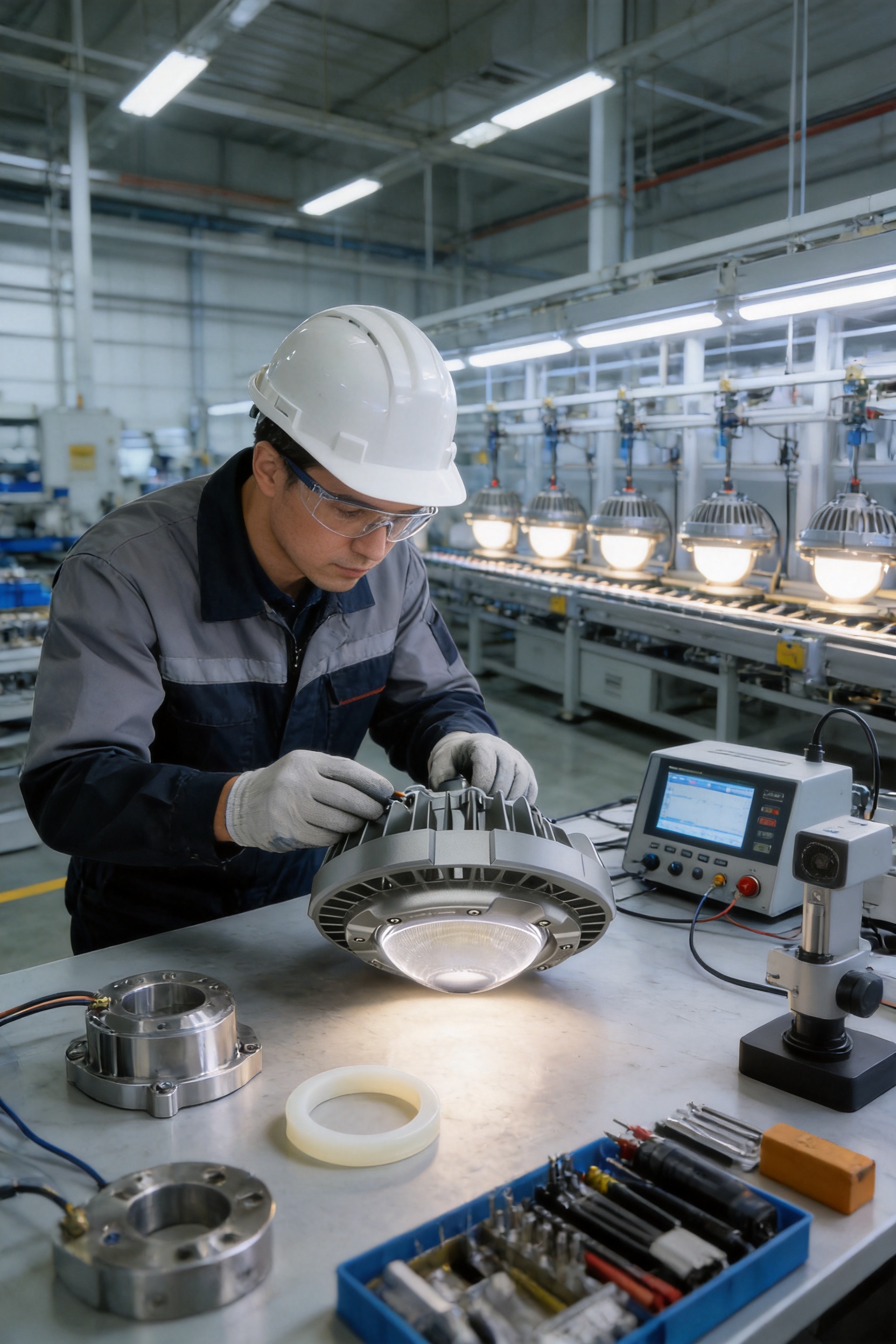
Chemical plants require lighting equipment that can perform reliably where combustible gases, vapors, dust, moisture, corrosive chemicals, vibration, and temperature fluctuations may exist at the same time. Ordinary industrial luminaires are not designed for these conditions. A fixture used in a hazardous chemical area must control ignition risks, protect electrical components, maintain dependable light output, and remain serviceable over a long operating period.
The Chemical Plant LED Explosion-Proof Light is designed specifically for demanding industrial environments. It combines an explosion-protected enclosure, high-efficiency LED technology, a sealed driver system, corrosion-resistant construction, and a precision-machined housing. The result is a dependable lighting solution for chemical production plants, pharmaceutical facilities, laboratories, processing areas, storage zones, and other hazardous industrial locations.
With a rated power range of 100 to 140 watts, a luminous efficacy of 110 to 130 lumens per watt, an IP66 enclosure protection rating, and an explosion-proof marking of Ex db IIC T6 Gb and Ex tb IIIC T80°C Db, this luminaire is engineered for demanding gas and dust environments. Its optical and mechanical design supports consistent illumination while helping facility operators improve safety, energy efficiency, and maintenance control.

Chemical Plant LED Explosion-Proof Light
Why Chemical Plants Need Specialized Explosion-Proof Lighting
Lighting in a chemical plant is not simply a matter of installing a high-output fixture on a ceiling or wall. Many chemical operations involve flammable liquids, volatile solvents, combustible gases, fine dust, or vapors that can form explosive mixtures with air. If an electrical fault produces a spark, excessive heat, or an uncontrolled arc, the consequences can be severe.
Standard LED lights may include efficient chips and a strong housing, but they are not automatically suitable for hazardous locations. A general industrial luminaire may have ventilation openings, exposed cable connections, plastic components with limited temperature resistance, or a driver that is not isolated from the surrounding atmosphere. These design features can create unacceptable risks in a classified area.
An explosion-proof luminaire is designed to prevent internal ignition from becoming an external hazard. Its enclosure, joints, cable entries, electrical components, thermal management system, and sealing structure must work together. If an internal fault occurs, the enclosure is designed to contain the event and prevent the ignition of the surrounding explosive atmosphere under the conditions covered by its certification and classification.
Chemical plants also create additional challenges that go beyond explosion protection. Vapors and splashes may attack metals, coatings, plastics, adhesives, and gaskets. High humidity can encourage corrosion and electrical deterioration. Frequent washdown can force water through weak joints. Production equipment may generate vibration, while outdoor process areas may experience ultraviolet exposure, rain, freezing temperatures, or high summer heat.
The Chemical Plant LED Explosion-Proof Light addresses these requirements through a sealed and robust design. It is intended to provide stable illumination while protecting internal electrical components from moisture, dust, and corrosive industrial conditions.
Product Overview
This product is a high-reliability LED explosion-proof luminaire for hazardous industrial environments. It is suitable for chemical production areas, pharmaceutical facilities, laboratories, processing zones, warehouses, loading areas, utility rooms, and other locations where explosive gas or dust atmospheres may be present.
The fixture is designed for Zone 1 and Zone 2 gas areas, as well as Zone 21 and Zone 22 dust areas, when the installation conditions match the applicable product classification and local regulations. Its marking covers IIA, IIB, and IIC gas groups and T1 to T6 temperature classes within the stated certification framework.
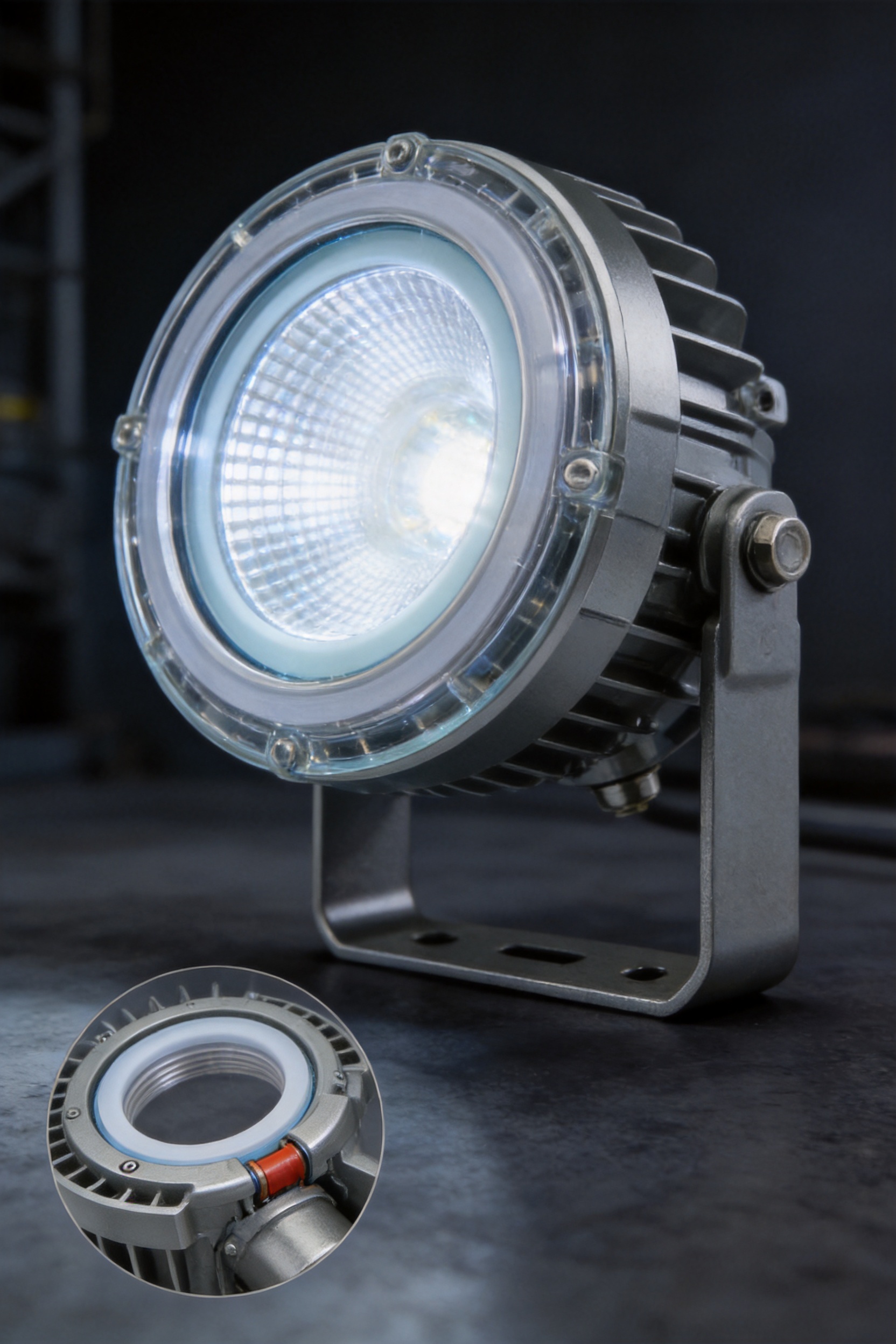
The housing uses precision machining to support dimensional accuracy and dependable sealing. A specially designed silicone waterproof gasket provides a resilient barrier against water and contaminants. The gasket is selected for aging resistance and stability across high and low temperatures, helping the enclosure maintain its protective performance over time.
The lighting system uses high-efficiency LEDs to produce a rated color temperature of 5700K. This cool white output is suitable for industrial work areas where visual clarity, equipment recognition, and inspection visibility are important. The luminaire delivers an efficiency of 110 to 130 lumens per watt, helping facilities obtain strong illumination without the high energy consumption associated with older high-intensity discharge or fluorescent systems.
Key Technical Specifications
| Specification | Product Data |
|---|---|
| Product Type | Chemical plant LED explosion-proof light |
| Rated Power | 100–140 W |
| Rated Voltage | AC 220 V, 50/60 Hz |
| Color Temperature | 5700 K |
| Luminous Efficacy | 110–130 lm/W |
| Enclosure Protection Rating | IP66 |
| Explosion-Proof Marking | Ex db IIC T6 Gb; Ex tb IIIC T80°C Db |
| Dimensions | Diameter 323 mm × 204 mm |
| Weight | 6.1 kg |
| Typical Application Areas | Chemical plants, pharmaceutical facilities, laboratories, processing areas, hazardous storage zones, and industrial utility spaces |
The specifications provide a practical balance between output, compact dimensions, enclosure protection, and installation flexibility. The 100 to 140 watt power range allows the fixture to serve many medium and large industrial lighting layouts. Exact spacing, mounting height, and quantity should be determined through a professional lighting calculation based on the facility’s work-plane requirements and the applicable safety standards.
Explosion Protection for Gas and Dust Hazardous Areas
The stated marking, Ex db IIC T6 Gb, identifies protection for explosive gas atmospheres using flameproof enclosure protection. The IIC gas group represents a demanding classification applicable to gases with high explosion risk. The T6 temperature class indicates a maximum surface temperature limitation of 85 degrees Celsius under the relevant conditions. The Gb equipment protection level is associated with a high level of protection for gas atmospheres.
The second marking, Ex tb IIIC T80°C Db, addresses combustible dust atmospheres. Group IIIC covers conductive dust, which is among the most demanding dust classifications. The stated surface temperature limit is 80 degrees Celsius, and the Db protection level is intended for a high degree of protection in dust environments.
These markings do not mean that every installation is automatically suitable for every hazardous location. Correct selection depends on the site classification, gas or dust group, ambient temperature, equipment protection level, mounting arrangement, cable system, and national or regional regulations. A qualified electrical professional must verify the complete installation before the fixture is placed into service.
The value of the explosion-proof design lies in the coordinated engineering of the enclosure and electrical system. The luminaire is not merely a standard LED lamp placed inside a thick shell. The housing, cover, cable entries, sealing interfaces, thermal design, and internal components must be integrated to meet the intended protection concept.
Flameproof Enclosure Design
A flameproof enclosure is intended to contain an internal ignition event and prevent the transmission of flames or hot gases to the surrounding atmosphere through the enclosure joints. This requires precise control of flame paths, joint dimensions, material strength, and machining quality.
Precision machining is especially important because uneven surfaces, poor tolerances, or damaged joint areas can compromise the intended protection structure. Accurate processing helps maintain consistent contact between housing components and supports repeatable assembly quality.
Protection Against Dust and Moisture
The IP66 rating indicates strong protection against dust ingress and powerful water jets from any direction under the applicable test conditions. This is valuable in chemical plants where dust, condensation, washdown procedures, and airborne contaminants may affect conventional fixtures.
IP66 protection is supported by more than the external shape of the housing. The quality of the gasket, cover compression, cable entry, fasteners, and assembly process also matters. The silicone waterproof gasket used in this product is designed to remain resilient under temperature changes and long-term aging, helping preserve the enclosure seal.
Silicone Gasket Technology for Long-Term Sealing
Gaskets are often overlooked when industrial lighting products are compared, yet they are among the most important components in a sealed luminaire. A gasket that becomes brittle, shrinks, hardens, or loses elasticity can create a path for moisture and contaminants to reach the driver, LED board, or wiring.
The product uses a specially designed silicone waterproof gasket with resistance to aging and high and low temperatures. Silicone materials are widely valued for their ability to retain flexibility across a broad temperature range. This is important for outdoor chemical areas, cold storage zones, process buildings, and facilities that experience substantial daily or seasonal temperature changes.
The gasket also supports protection against water penetration and chemical contamination. While gasket material alone cannot make a fixture suitable for every chemical exposure, a stable sealing element provides a strong foundation for durable enclosure performance. For particularly aggressive environments, the correct material selection and optional chemical-resistant design should be confirmed with the manufacturer before ordering.
During assembly, the gasket must be positioned evenly and compressed according to the housing design. Over-compression can damage the gasket, while under-compression can create leakage paths. Consistent machining and controlled assembly procedures therefore work together to provide reliable sealing.
Corrosion Resistance in Chemical Environments
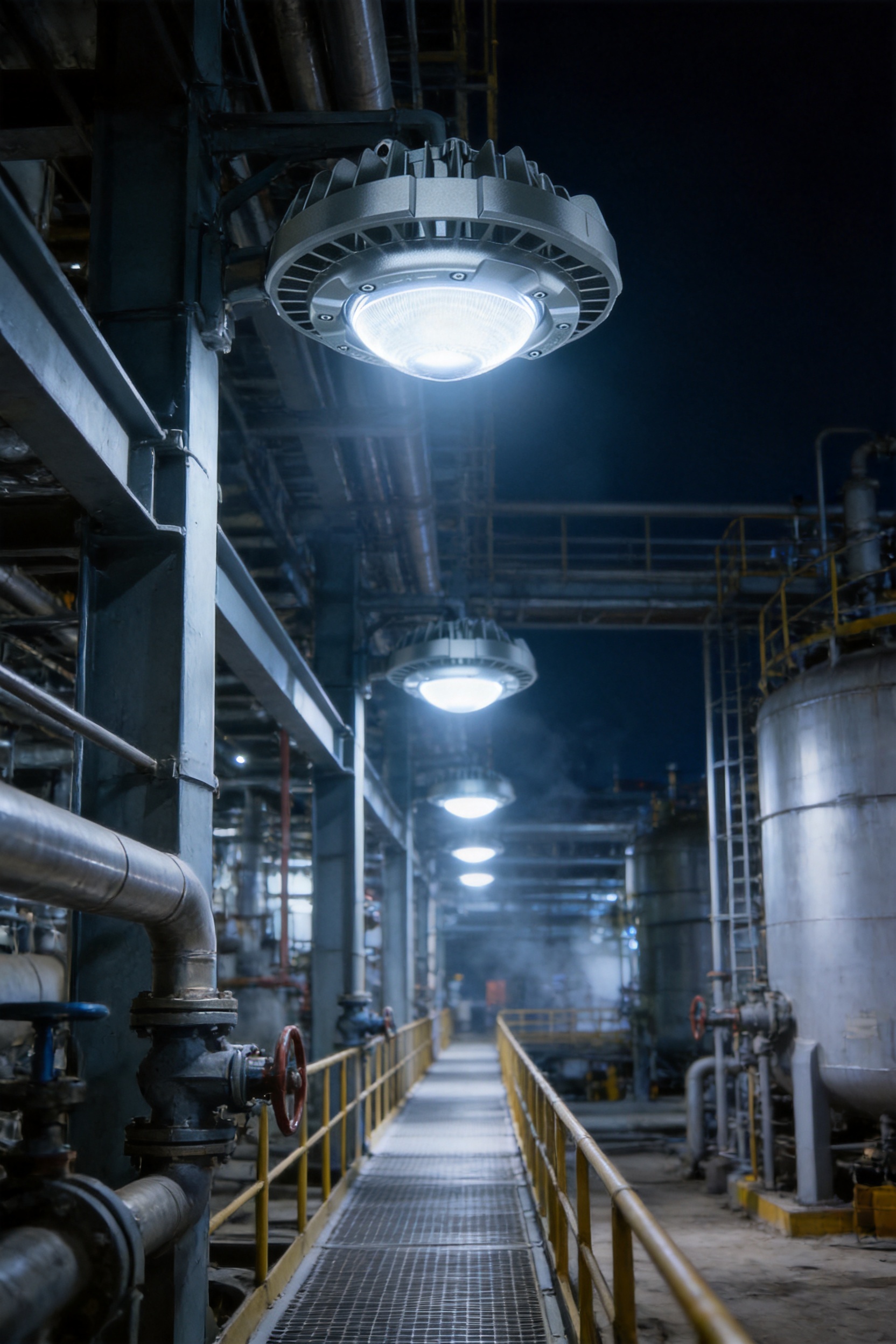
Chemical facilities may expose lighting fixtures to acids, alkalis, solvents, salts, cleaning agents, process vapors, and airborne particles. The actual exposure varies from one production area to another. A fixture installed near a chemical storage tank may face a different environment from one installed in a dry packaging room or a pharmaceutical clean area.
The Chemical Plant LED Explosion-Proof Light can be supplied with anti-corrosion coatings and other material options for demanding environments. These options help protect the enclosure against surface deterioration and extend the service life of the luminaire when the selected coating is matched to the chemical conditions.
Anti-corrosion performance should be evaluated as a complete system. The housing material, coating thickness, surface preparation, fasteners, cable glands, gasket, lens, mounting brackets, and electrical connectors all contribute to durability. A coating that performs well on the main body may not be sufficient if small accessories or mounting components are left unprotected.
For project applications, the facility operator should provide information about the chemical substances present, concentration, temperature, frequency of exposure, cleaning procedures, and expected service life. This allows the manufacturer to recommend an appropriate material and coating strategy instead of applying a generic solution.
LED Performance and Energy Efficiency
LED technology offers significant advantages over older lighting technologies in industrial facilities. LEDs provide immediate startup, high energy efficiency, directional optical control, long operating life, and lower routine maintenance requirements. They also perform well in applications where frequent switching would reduce the practical life of conventional discharge lamps.
With a luminous efficacy of 110 to 130 lumens per watt, this luminaire can provide high light output using a comparatively moderate electrical load. In a large chemical plant with hundreds of fixtures, this efficiency can reduce annual energy consumption and help lower the heat generated by the lighting system.
Reduced heat generation is valuable in hazardous areas. Every electrical device contributes thermal energy to its surroundings. Efficient LEDs can support better thermal management and help the product remain within its specified surface temperature limits when correctly designed and installed.
The 5700K color temperature provides a cool white appearance that can support visual inspection, equipment identification, access-route visibility, and general industrial tasks. The most suitable color temperature may depend on the task, existing site lighting, camera systems, operator preferences, and project requirements.
LED light sources also offer stable illumination without the warm-up period associated with some traditional lamps. This is useful for emergency response, shift changes, intermittent process areas, and locations where lighting must reach full output immediately after energization.
Optical Stability
Industrial lighting must maintain useful light distribution, not merely high initial lumen output. The product is designed to provide durable optical performance through a protected LED system and a sealed housing. This helps reduce the risk of contamination accumulating on internal optical surfaces.
Stable optical performance supports consistent illumination across work areas. It can also make lighting calculations more predictable during the design stage. For safety-critical areas, photometric data and a professional DIALux or equivalent simulation should be used to confirm illuminance, uniformity, glare, and spacing.
Thermal Management and Temperature Classification
Heat management is essential in an explosion-proof LED luminaire. Excessive temperature can shorten LED life, degrade electronic components, accelerate gasket aging, and affect the surface temperature classification of the enclosure.
The product’s housing is designed to help transfer heat away from the LED system and internal electrical components. A robust metal enclosure can act as a heat-dissipating structure while also providing mechanical protection. The design must balance heat transfer with the requirements of flameproof construction and environmental sealing.
The T6 classification is particularly important in hazardous gas areas because it sets a stringent limit on the maximum surface temperature. Facility designers must ensure that the luminaire is used within its specified ambient temperature range and installed with adequate clearance. Covering the housing, placing it next to a high-temperature process pipe, or mounting it where natural heat dissipation is blocked may affect performance.
The dust marking also specifies an 80-degree Celsius surface temperature. In dust environments, lower surface temperatures help reduce the risk that combustible dust accumulated on or around the equipment will ignite. Regular inspection and housekeeping remain necessary, because even a correctly classified luminaire cannot eliminate the risk created by excessive dust accumulation.
Manufacturing Strengths and Quality Control
The reliability of an explosion-proof luminaire depends heavily on manufacturing discipline. Product performance is shaped not only by the selected LED chip or driver but also by die casting, CNC machining, coating, assembly, sealing, aging, inspection, and final testing.
Cixi HuaSheng Lighting Co., Ltd. operates as a professional lighting manufacturer in Ningbo, China, with production capabilities for industrial, outdoor, municipal, and specialized lighting products. Its manufacturing resources include die-casting equipment, CNC machines, aging lines, and goniophotometers. These capabilities support a more integrated approach to product development and quality control.
Die-Casting and Structural Production
Die-casting technology can produce strong and repeatable metal housings with efficient material distribution. Consistent casting quality is important for structural strength, heat dissipation, and dimensional repeatability. The housing must provide sufficient mechanical protection while preserving the geometry required for sealing and flameproof joints.
After casting, selected surfaces may require machining, deburring, coating, and inspection. Each process affects the final performance of the enclosure. A well-controlled manufacturing flow can reduce dimensional variation and improve assembly consistency from one production batch to another.
CNC Precision Machining
CNC machining is used to achieve accurate dimensions on critical interfaces. In an explosion-proof fixture, precision is especially valuable at cover joints, threaded areas, cable entry locations, mounting interfaces, and sealing grooves.
High-precision machining supports reliable product protection because it helps ensure that mating components fit correctly. It also makes it easier to maintain consistent gasket compression. The combined use of die-casting and CNC machining allows the manufacturer to balance efficient production with the detailed tolerances required in critical areas.
Aging and Reliability Testing
LED drivers and electronic components may exhibit early-life failures if manufacturing defects are not identified before shipment. Aging lines allow products to operate for a controlled period so that unstable components, poor connections, or assembly problems can be detected.
Aging is not a replacement for certification testing or long-term field performance, but it is a useful production quality-control step. It can reduce the likelihood of installing a fixture that fails shortly after commissioning and can improve confidence in large project deliveries.
Photometric Testing
Goniophotometers are used to measure light distribution and photometric performance. These measurements can support lighting calculations, beam distribution evaluation, and project documentation.
Accurate photometric information is essential when a chemical plant is being designed for specific illuminance and uniformity targets. It helps engineers determine fixture spacing, mounting height, orientation, and total quantity. The use of measured data is preferable to relying only on nominal lumen values.
Management System and Certifications
The company is certified to ISO 9001, ISO 14001, and ISO 45001 management systems. ISO 9001 relates to quality management, ISO 14001 addresses environmental management, and ISO 45001 focuses on occupational health and safety management.
These management systems indicate a structured approach to production control, environmental responsibility, and workplace safety. Product-specific certifications, such as CB and CE-related compliance, should be reviewed according to the exact model, market, and project requirements. Certification documents should be confirmed before final procurement.
Advantages Compared with Conventional Industrial Fixtures
Lower Energy Consumption
Traditional high-intensity discharge fixtures may require more electrical power to produce comparable usable illumination. LED efficiency can reduce energy consumption, particularly in facilities operating around the clock. Energy savings become more significant when combined with optimized spacing, occupancy control where permitted, and appropriate lighting levels.
Reduced Maintenance Frequency
Replacing lamps in hazardous areas can be time-consuming and may require shutdown procedures, permits, gas testing, specialized tools, or certified maintenance personnel. LED fixtures eliminate routine lamp replacement and can reduce the number of maintenance interventions.
Lower maintenance frequency is not only a cost advantage. It also reduces the time workers spend in hazardous zones and minimizes interruptions to production. The enclosure and optical system are designed to support reliable service under demanding conditions, although scheduled inspection remains necessary.
Better Environmental Protection
Many conventional fixtures have weaker sealing, exposed lamp components, or ventilation paths that allow contaminants to enter. The IP66 sealed structure provides stronger protection against dust and powerful water jets. The aging-resistant silicone gasket further supports long-term enclosure integrity.
Improved Startup and Control
LEDs reach full brightness quickly and can be integrated with suitable control systems where hazardous-area requirements permit. Immediate illumination is useful for emergency situations, access routes, inspection tasks, and intermittent industrial operations.
More Stable Performance in Industrial Conditions
Properly selected LED explosion-proof luminaires can perform more consistently in locations with vibration, temperature fluctuation, humidity, and airborne contaminants than ordinary commercial fixtures. The sealed driver and robust enclosure help protect sensitive electronics from the external environment.
Flexible Customization
Some competing products are offered only in a fixed configuration. This can make it difficult to adapt the fixture to a specific chemical atmosphere, mounting arrangement, power system, or procurement specification. OEM and ODM services provide greater flexibility for industrial projects.
OEM and ODM Customization Services
Industrial lighting projects often require more than a catalog product. A facility may have a non-standard voltage, a special mounting structure, limited installation space, unusually corrosive chemicals, a defined cable entry system, or a required optical distribution.
Customization is available in areas such as material selection, sealing enhancement, chemical-resistant design, driver configuration, mounting accessories, housing treatment, labeling, packaging, and project documentation. These options allow the product to be adapted to the actual conditions instead of forcing the facility to compromise on installation quality.
Material Selection
Material selection can be adjusted according to corrosion conditions, ambient temperature, mechanical requirements, and project life expectations. The manufacturer can evaluate housing materials, coatings, fasteners, gasket compounds, cable glands, and other components as part of an integrated solution.
Enhanced Sealing
For environments with frequent washdown, condensation, or fine chemical dust, sealing may require special attention. Enhanced sealing can involve revised gasket geometry, upgraded gasket materials, improved cable entries, or changes to the enclosure interface.
Chemical-Resistant Design
Chemical resistance should be based on actual exposure data. A customer can provide a list of chemicals, concentration levels, process temperatures, cleaning agents, and expected contact frequency. This information can guide the selection of coatings and non-metallic components.
Project-Based Engineering
For large facilities, the manufacturer can support product selection, lighting calculations, DIALux design, layout recommendations, technical documentation, and delivery planning. These services help customers coordinate lighting with process equipment, structural elements, cable routing, emergency systems, and maintenance access.
Applications in Chemical and Process Industries
Chemical Production Plants
Chemical production areas may contain flammable gases, vapors, solvents, and corrosive substances. Explosion-proof LED lighting can be installed in process buildings, pump areas, valve stations, control access zones, and equipment platforms when the product classification matches the site requirements.
Pharmaceutical Facilities
Pharmaceutical manufacturing can require high visibility, strict cleaning procedures, and controlled environmental conditions. The sealed structure supports protection against dust and washdown, while the cool white light can assist in inspection and process monitoring. The selected product must be evaluated against the facility’s hygiene, cleanability, and hazardous-area requirements.
Laboratories
Laboratories may use solvents, gases, reactive substances, or test materials that create localized hazardous conditions. Compact, sealed, explosion-protected fixtures can provide reliable general illumination in designated areas where ordinary commercial lighting is unsuitable.
Storage and Transfer Areas
Drum storage rooms, tank farms, loading stations, and transfer areas may contain vapors released during filling, draining, or connection operations. Good lighting supports safe movement, equipment inspection, label reading, and spill response, while the explosion-proof construction helps address the risks associated with the surrounding atmosphere.
Industrial Utility Areas
Boiler support areas, compressor rooms, pump rooms, wastewater treatment zones, and chemical dosing rooms may require fixtures with strong environmental protection. The IP66 rating and corrosion-resistant options make this product suitable for evaluation in many such locations.
Installation and Maintenance Considerations
Explosion-proof lighting must be installed by qualified personnel who understand hazardous-area equipment and local electrical regulations. Before installation, the site classification should be compared with the product marking. The gas group, dust group, temperature class, ambient temperature, voltage, cable system, and mounting arrangement must all be verified.
The fixture should be inspected for shipping damage before installation. Particular attention should be paid to the enclosure, gasket, cable entries, threaded areas, cover, mounting brackets, and electrical terminals. Damaged flameproof surfaces or sealing components must not be ignored.
Cable glands and conduit systems must be compatible with the protection method and the required enclosure rating. An incorrectly selected cable entry can compromise the protection of the entire fixture, even if the luminaire itself has been manufactured correctly.
During installation, the housing should not be drilled, modified, or opened in a manner not approved by the manufacturer. Unauthorized alterations may affect certification, sealing, thermal performance, and flameproof integrity.
Routine maintenance should include visual inspection of the housing, gasket condition, cable entries, fasteners, mounting structure, corrosion, dust accumulation, and light output. Maintenance intervals should be determined by the site environment and risk assessment. In corrosive or dusty areas, more frequent inspection may be appropriate.
Power must be isolated according to the approved safety procedure before opening the enclosure or performing electrical work. In a hazardous area, personnel should confirm that the atmosphere is safe and that all permit, isolation, and gas-testing procedures have been completed.
How to Select the Correct Product Quantity
The number of fixtures required depends on mounting height, target illuminance, room dimensions, reflectance, beam distribution, obstructions, operating conditions, and maintenance factors. A simple wattage comparison is not sufficient.
A professional lighting design should identify the required light level for each task. General circulation zones may require different levels from process platforms, inspection stations, control access areas, loading points, or emergency routes. Uniformity is also important because strong variations between bright and dark areas can reduce visual comfort and make hazards harder to identify.
DIALux or equivalent lighting software can use the luminaire’s photometric file to model the proposed installation. The design should consider the effect of structural beams, tanks, pipes, equipment, wall reflectance, and future maintenance conditions.
Lighting calculations should also account for lumen depreciation. Even a high-quality LED fixture may experience gradual reduction in output over time due to LED aging, driver performance, contamination, and environmental stress. A suitable maintenance factor helps ensure that the installation continues to meet its intended lighting requirements throughout its service life.
Total Cost of Ownership
The purchase price is only one part of the economic evaluation. A chemical plant should consider energy consumption, installation labor, maintenance access, replacement frequency, production interruption, spare parts, inspection requirements, and expected operating life.
The efficient LED system can reduce electricity consumption compared with less efficient legacy equipment. The sealed construction can reduce contamination-related failures. The elimination of routine lamp replacement can reduce labor and access costs. A durable gasket and corrosion-resistant options can further support long-term service in demanding environments.
For a fair comparison, competing fixtures should be evaluated using the same illuminance target, operating hours, electricity rate, maintenance assumptions, and hazardous-area requirements. A lower-priced fixture may become more expensive if it requires frequent replacement or cannot maintain its protection in the actual environment.
Reliable lighting can also have indirect value. Better visibility supports safer movement, easier inspection, faster identification of leaks or abnormal equipment conditions, and more efficient maintenance work. While these benefits may be difficult to express as a single financial figure, they are important in industrial risk management.
Why Work with an Integrated Lighting Manufacturer
An integrated manufacturer can provide more than a finished fixture. By combining product engineering, die casting, CNC machining, coating, assembly, aging, photometric testing, and project support, the manufacturer can maintain greater control over the supply chain.
This integrated capability can improve communication between design and production teams. If a customer requests a sealing change, material adjustment, or mounting modification, the request can be evaluated by personnel familiar with the housing, tooling, machining, and assembly processes.
It can also support consistent quality across different product families. Cixi HuaSheng Lighting Co., Ltd. manufactures LED street lights, tunnel lights, high-bay lights, linear lights, garden lights, solar lights, grow lights, explosion-proof lights, and other lighting products. This broad product experience helps the company understand the different optical, mechanical, thermal, and environmental requirements found in industrial projects.
The company provides one-stop services that can include lighting solutions, DIALux designs, mold design, OEM and ODM development, SKD and CKD customization, and delivery coordination. These services are useful for contractors, distributors, engineering companies, industrial equipment suppliers, and facility owners seeking a complete project partner.
Environmental and Operational Benefits
Energy-efficient lighting contributes to lower operational emissions when electricity is generated from fossil fuels. The reduced power demand of LED technology can support corporate energy targets and environmental management programs.
Longer service intervals can reduce the consumption of replacement lamps, packaging, transportation, and maintenance materials. A durable product can also reduce the amount of lighting equipment sent to waste streams over the facility’s operating life.
The company’s ISO 14001 environmental management certification reflects a structured approach to environmental management. Customers with sustainability programs can request relevant product information, material data, packaging details, and compliance documents during the procurement process.
Environmental performance should always be considered together with safety. In hazardous locations, the primary requirement is correct protection against ignition risks. Energy savings and sustainability benefits are valuable only when the product is correctly classified, installed, and maintained.
Procurement Checklist for Industrial Buyers
Before purchasing a chemical plant LED explosion-proof light, buyers should prepare a clear technical specification. The following questions can help identify the correct configuration.
What hazardous-area classification applies to the installation location?
Is the area classified for explosive gas, combustible dust, or both?
What gas group, dust group, temperature class, and equipment protection level are required?
What is the local supply voltage and frequency?
What ambient temperature range will the luminaire experience?
Are acids, alkalis, solvents, salts, cleaning agents, or other corrosive chemicals present?
Is regular washdown or high-pressure cleaning required?
What mounting height, bracket type, cable entry, and aiming direction are needed?
What illuminance and uniformity levels are required for each work area?
Are special coatings, gaskets, fasteners, or cable glands necessary?
What certification and documentation are required for the destination market?
What are the expected delivery schedule, spare parts requirements, and after-sales support arrangements?
Providing this information early allows the manufacturer to confirm compatibility and recommend the most appropriate configuration. It also reduces the risk of selecting a product based only on wattage or appearance.
Frequently Asked Questions
What makes this fixture different from a standard industrial LED light?
This product is designed for hazardous gas and dust environments and includes an explosion-protected enclosure, sealed electrical system, IP66 environmental protection, and a specified explosion-proof marking. A standard industrial LED fixture may provide strong light but may not be certified or constructed for explosive atmospheres.
Which hazardous zones can it cover?
The product is intended for Zone 1 and Zone 2 gas areas and Zone 21 and Zone 22 dust areas when the site requirements match the product classification. A qualified professional must confirm suitability for the exact installation.
What do the explosion-proof markings mean?
Ex db IIC T6 Gb refers to flameproof protection for explosive gas atmospheres, including the demanding IIC gas group and T6 temperature class. Ex tb IIIC T80°C Db refers to protection for combustible dust atmospheres, including conductive dust. The complete marking must be compared with local regulations and the site classification.
Is the luminaire suitable for corrosive chemical areas?
It is designed for chemical and industrial environments and can be supplied with anti-corrosion coatings and chemical-resistant design options. Suitability depends on the specific chemical, concentration, temperature, exposure duration, and cleaning method. Customers should provide detailed environmental information before ordering.
What is the benefit of the silicone gasket?
The silicone gasket is designed to resist aging and high and low temperatures while supporting a tight waterproof seal. Reliable gasket performance helps protect internal electronics from moisture, dust, and contaminants.
What does IP66 protection provide?
IP66 provides dust-tight protection and protection against powerful water jets from any direction under the applicable test conditions. It does not mean that the fixture can be submerged or exposed indefinitely to every chemical substance.
Can the product be customized?
Yes. OEM and ODM services can include material selection, sealing enhancement, anti-corrosion treatment, chemical-resistant design, driver configuration, mounting accessories, labeling, and project-specific documentation.
Can the manufacturer provide a lighting layout?
Project support can include DIALux designs and lighting solutions. Customers should provide room dimensions, mounting heights, equipment locations, target illuminance, reflectance information, and hazardous-area requirements for an accurate design.
What voltage does the standard version use?
The stated standard specification is AC 220 volts at 50/60 hertz. Alternative electrical configurations should be confirmed with the manufacturer before order placement.
What color temperature is provided?
The stated color temperature is 5700K, producing a cool white light suitable for many industrial inspection and process areas. Other color temperatures may be available for customized projects, subject to technical confirmation.
How should the product be maintained?
Maintenance should include inspection of the housing, gasket, cable entries, fasteners, mounting structure, corrosion, dust accumulation, and light output. Electrical work and enclosure opening must be performed by qualified personnel following hazardous-area procedures.
Can it be used outdoors?
The IP66 rating and robust construction support many outdoor industrial applications. The installation must still be evaluated for ambient temperature, ultraviolet exposure, chemical contact, wind loading, mounting strength, and the applicable hazardous-area classification.
What information should be requested before delivery?
Buyers should request the product datasheet, certification documents applicable to the destination market, installation instructions, photometric files, wiring information, recommended mounting details, and any available quality documentation. Exact documents depend on the project and regulatory requirements.
Conclusion
The Chemical Plant LED Explosion-Proof Light is engineered for facilities where safe, dependable, and efficient illumination is essential. Its explosion-protected design, IP66 enclosure, aging-resistant silicone gasket, high-efficiency LED system, 5700K output, and corrosion-resistant options make it a strong solution for chemical plants and related industrial environments.
Its advantages extend beyond the luminaire itself. Precision machining supports reliable enclosure protection, die-casting provides a strong and thermally effective housing, aging lines help identify early failures, and goniophotometric testing supports accurate lighting design. OEM and ODM services allow the product to be adapted to chemical exposure, sealing, material, mounting, and project-specific requirements.
Compared with conventional industrial lighting, the product can help reduce energy use, maintenance frequency, contamination-related failures, and operational interruptions. These benefits are especially valuable in hazardous areas where maintenance access is costly and production continuity is important.
Successful application requires correct classification, professional lighting design, qualified installation, and regular inspection. When these factors are properly managed, the Chemical Plant LED Explosion-Proof Light can provide a durable and practical foundation for safer industrial illumination.
References
International Electrotechnical Commission. IEC 60079 Series: Explosive Atmospheres.
International Electrotechnical Commission. IEC 60529: Degrees of Protection Provided by Enclosures.
International Organization for Standardization. ISO 9001: Quality Management Systems.
International Organization for Standardization. ISO 14001: Environmental Management Systems.
International Organization for Standardization. ISO 45001: Occupational Health and Safety Management Systems.
International Commission on Illumination. Principles of Industrial Lighting and Visual Performance.
International Energy Agency. Energy Efficiency Opportunities in Commercial and Industrial Lighting.
Manufacturer technical specifications for chemical plant LED explosion-proof lighting products.
Manufacturer product quality, photometric testing, customization, and industrial lighting engineering documentation.
Product: Chemical Plant LED Explosion-Proof Light

YQF Group - World Leading One-Stop Lighting & Solar For the Global Partners
Custom & OEM Solutions for Global Lighting Brands
Copyright © Cixi HuaSheng Lighting Co., Ltd. All Rights Reserved.
Die-Casting Mould Supplier
