 English
 中文简体
 русский
 Français
 Español
 عربى
 Indonesia

Decorative Path Lamp GG-AC-ZG: Durable, Efficient, and Customizable Outdoor Walkway Lighting
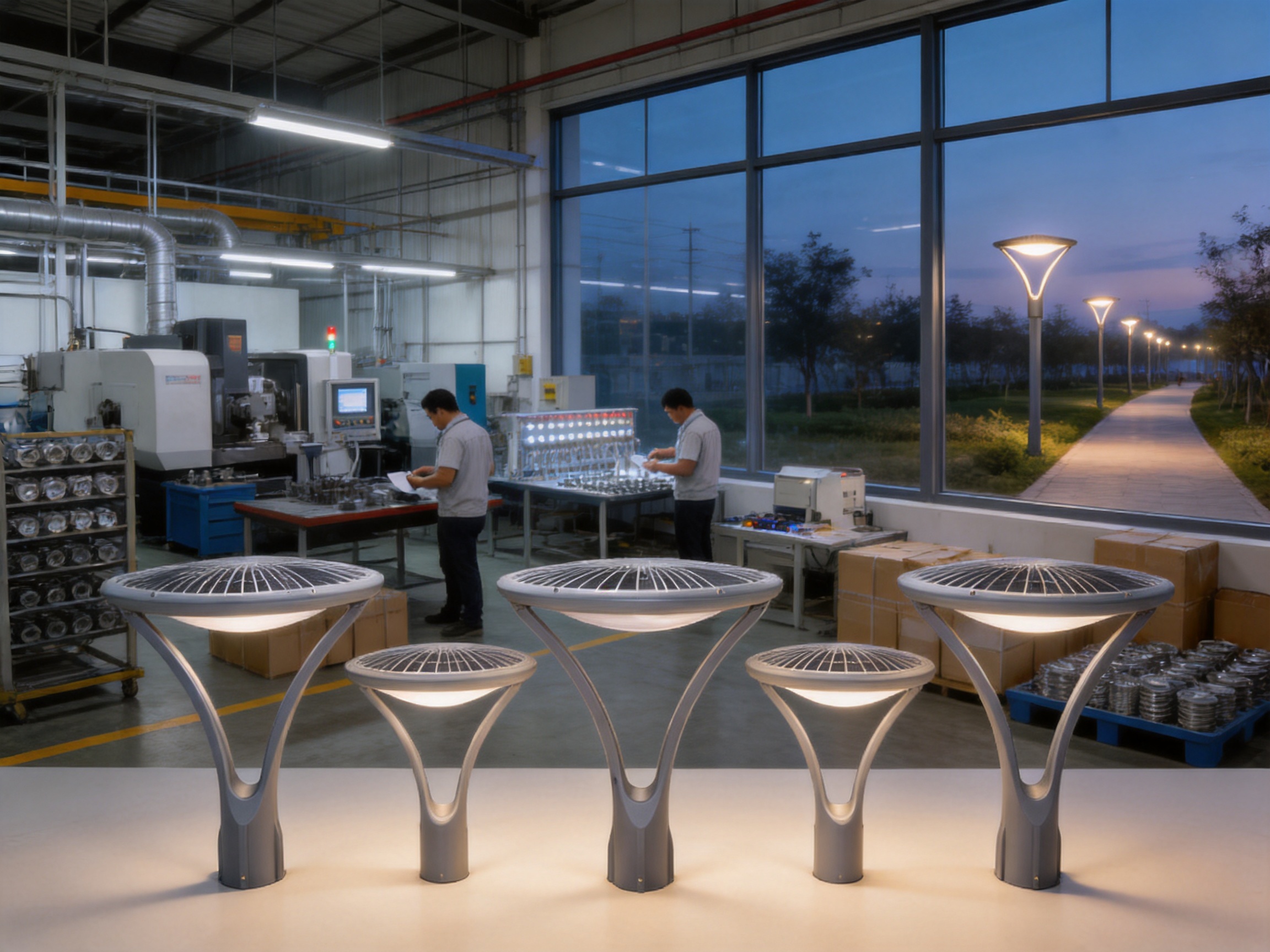
Outdoor pathways require lighting that performs more than one function. A suitable pathway lamp must provide dependable visibility, support pedestrian safety, withstand changing weather conditions, and contribute to the visual identity of the surrounding landscape. In parks, residential communities, hotels, gardens, resorts, campuses, and municipal corridors, lighting is also an important part of the user experience. Fixtures must therefore combine optical performance, mechanical durability, efficient operation, attractive appearance, and practical installation.
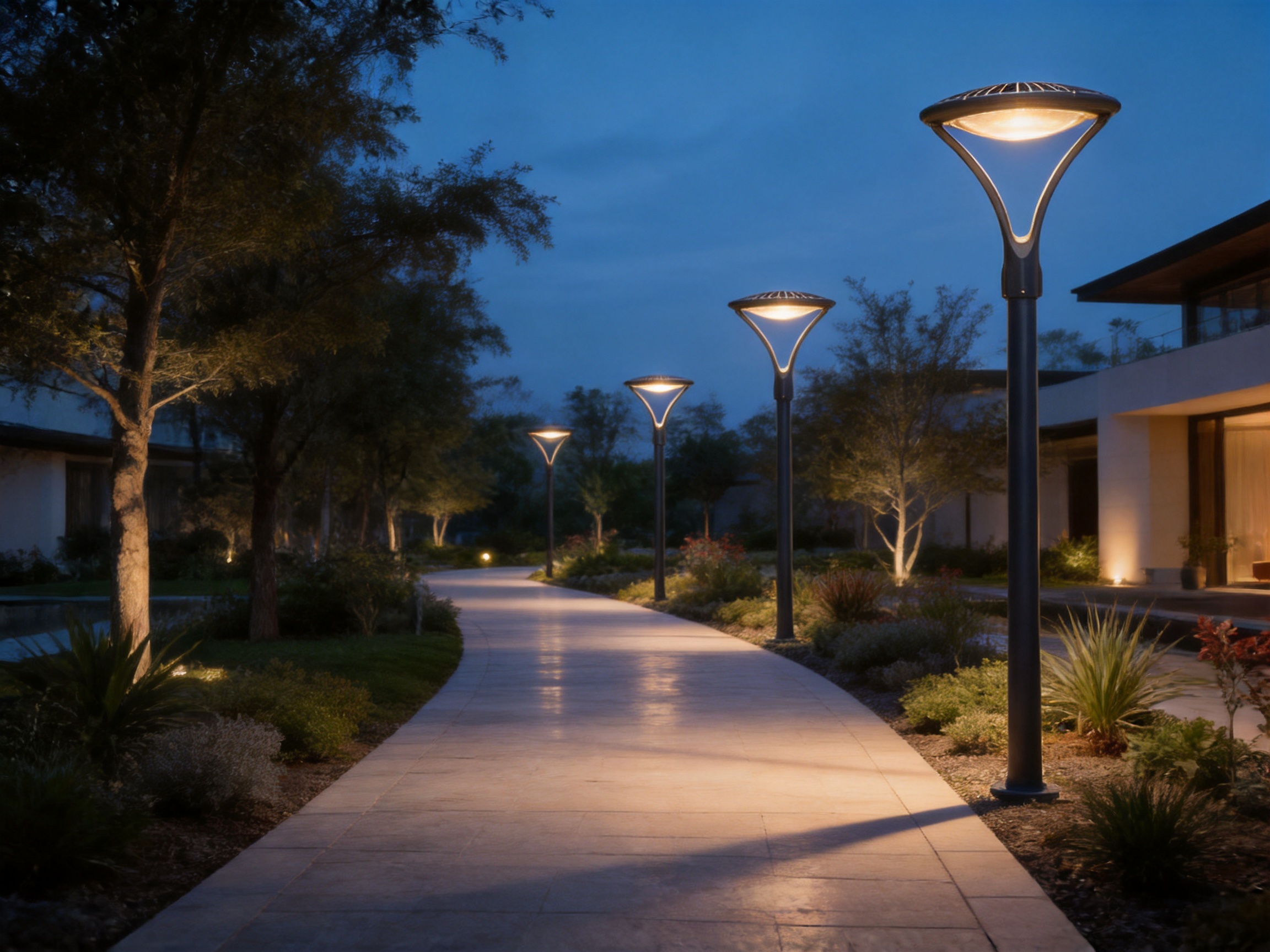
The Decorative Path Lamp GG-AC-ZG is designed for this combination of functional and decorative requirements. It is an outdoor LED pathway lighting product intended for walkways, landscape corridors, garden routes, and other pedestrian-oriented spaces. Its principal role is to guide movement along paths while creating a comfortable and visually attractive nighttime environment. With a rated power range of 30W to 100W, an input voltage range of AC 100–305V, an IP65 waterproof rating, and a rated LED lifespan of more than 50,000 hours, the lamp is suitable for a wide range of outdoor projects.
The product combines aluminum poles, anti-corrosion powder coating, die-cast aluminum lamp heads, optical diffusers, corrosion-resistant screws, and high-efficiency LED components. These elements work together to provide a balanced solution for customers seeking reliable landscape illumination without sacrificing decorative value. The product can also be adapted through OEM and ODM services, including decorative styling, beam angle adjustment, and installation customization.

Decorative Path Lamp GG-AC-ZG
1. The Role of Pathway Lighting in Modern Outdoor Spaces
Pathway lighting is often treated as a small part of a larger outdoor project, but its influence on safety, appearance, and usability is significant. A dark or unevenly illuminated walkway can make pedestrians feel uncomfortable and may increase the possibility of trips, collisions, or route confusion. By contrast, a well-designed path lighting system creates visual guidance and helps users understand the direction and boundaries of a walkway.
Decorative pathway fixtures are particularly valuable because they perform this guidance function while contributing to the landscape design. A lamp should not look like an unrelated technical object placed beside a garden or building. Its proportions, materials, optical distribution, and finish should support the architectural and landscape concept. The GG-AC-ZG is designed with this dual purpose in mind: it provides useful illumination while helping outdoor spaces achieve a more refined nighttime appearance.
In residential paths, the lamp can illuminate walkways between buildings, entrances, parking areas, gardens, and shared amenities. In hotels and resorts, it can help guests move comfortably between lobbies, accommodation areas, restaurants, pools, and landscaped facilities. In parks and municipal projects, it can support route recognition and improve the overall atmosphere of pedestrian zones. In commercial and institutional developments, it can define movement areas and reinforce the character of the property.
Because outdoor paths are exposed to rain, humidity, dust, temperature changes, and accidental physical contact, pathway fixtures must be designed for long-term environmental use. Material selection and enclosure protection are therefore just as important as LED output. The GG-AC-ZG addresses these requirements through corrosion-resistant construction, sealed outdoor protection, and a broad operating temperature range.
2. Product Overview and Main Design Concept
The Decorative Path Lamp GG-AC-ZG is a garden and pathway luminaire with a decorative lamp head mounted on an aluminum pole. Its stated installation height is 3 to 5 meters, allowing it to serve as a substantial landscape lighting element rather than a low-level bollard. The larger mounting height can help illuminate broader pathway areas and create a consistent visual rhythm along long corridors.
The lamp head has a stated dimension of Φ520 × 600mm. This substantial decorative form gives the fixture a visible presence during the daytime as well as at night. In landscape projects, daytime appearance matters because fixtures remain in view for many hours when they are not operating. A well-proportioned lamp can become part of the architectural language of a project, while a poorly selected fixture may appear visually disruptive.
The product is available with a rated power range of 30W to 100W. This range provides flexibility for different pathway widths, mounting arrangements, light level requirements, and project scales. Lower power configurations may be appropriate for narrower or more intimate routes, while higher power versions can support broader corridors or locations requiring stronger illumination. Final photometric selection should be based on the actual site layout, spacing, mounting height, pavement reflectance, surrounding obstructions, and applicable lighting standards.
The GG-AC-ZG uses LUMILEDS or CREE light source options. These recognized LED platforms are suitable for applications where consistent performance, efficiency, and long service life are important. The product information specifies LED chip luminous efficacy of up to 180lm/W. This figure refers to the LED chip specification and should be distinguished from the complete luminaire efficacy, which depends on the driver, optical diffuser, thermal design, operating current, and other fixture components.
3. Key Technical Specifications
The following table summarizes the principal specifications supplied for the Decorative Path Lamp GG-AC-ZG.
| Specification | Product Data |
|---|---|
| Model | GG-AC-ZG |
| Product Category | LED Garden Light |
| Rated Power | 30W–100W |
| Input Voltage | AC 100–305V |
| Light Source Type | LUMILEDS or CREE |
| Frequency Range | 50/60Hz |
| Color Temperature | 3000K–6500K |
| Power Factor | >0.95 |
| Color Rendering Index | ≥Ra70 |
| Operating Temperature | -35°C to 70°C |
| Operating Humidity | 10%–90% |
| LED Chip Luminous Efficacy | Up to 180lm/W |
| LED Lifespan | More than 50,000 hours |
| Waterproof Rating | IP65 |
| Installation Pipe Diameter | Φ45mm |
| Recommended Installation Height | 3–5m |
| Luminaire Dimensions | Φ520 × 600mm |
These specifications show that the fixture has been developed for demanding outdoor conditions rather than temporary decorative use. The broad voltage range can help accommodate electrical systems with different supply conditions, while the high power factor supports more efficient use of the electrical network. The wide color temperature range also allows project designers to select a warmer or cooler visual atmosphere according to the application.
4. Optical Performance and Visual Comfort
Optical control is one of the most important factors in pathway lighting. A lamp that produces high output but distributes light poorly may create bright spots, dark gaps, glare, or unnecessary light spill. These problems can reduce comfort and make a pathway appear visually uneven. The GG-AC-ZG uses PC, PMMA, or PS optical diffusers to help produce a more uniform distribution of light.
Diffusers serve several purposes. They spread light across the target area, soften the appearance of individual LED points, and reduce harsh visual contrast. In decorative applications, this is especially important because pedestrians may view the lamp directly from many angles. A well-designed diffuser can make the fixture appear more comfortable and refined while still allowing effective illumination of the path.
Polycarbonate, polymethyl methacrylate, and polystyrene each offer different combinations of optical clarity, impact resistance, processing characteristics, and cost. The appropriate material can be selected according to the customer’s project requirements and the intended decorative design. OEM and ODM development may also include adjustments to the optical structure and beam angle. Such adjustments help the manufacturer adapt the light distribution to narrow footpaths, open garden routes, entrance plazas, or landscape corridors.
The available color temperature range of 3000K to 6500K provides further flexibility. A 3000K setting generally produces a warmer and more welcoming appearance, which can be appropriate for hotels, residential gardens, restaurants, and leisure environments. Mid-range temperatures may offer a neutral appearance for parks, campuses, and mixed-use developments. Higher color temperatures can create a cooler and more contemporary visual effect, although the final choice should consider surrounding architecture, vegetation, local regulations, and user comfort.
The stated color rendering index is at least Ra70. This level supports general outdoor visibility and allows common landscape colors, pavement materials, signs, and building surfaces to appear with reasonable color recognition. Where a project requires stronger color fidelity for artwork, premium retail areas, or specialized architectural applications, customers should confirm the available LED and optical configuration during the technical selection process.
5. Energy Efficiency and Electrical Performance
Energy efficiency is a major consideration for outdoor lighting owners because pathway fixtures may operate every evening for many years. A product that reduces power consumption while maintaining adequate illumination can lower operating costs and contribute to the environmental goals of a project. The GG-AC-ZG combines LED technology with a power range that can be selected according to actual site requirements.
The listed LED chip luminous efficacy is up to 180lm/W. High chip efficacy can provide a strong foundation for efficient fixture design, especially when combined with an appropriate operating current, thermal structure, driver, and optical system. The final energy performance of an installed lamp should be evaluated using complete luminaire data and project-specific photometric calculations rather than chip efficacy alone.
The power factor is specified as greater than 0.95. A high power factor means that the fixture makes more effective use of the supplied electrical power and can help reduce reactive power effects within an installation. This characteristic is valuable in projects with many luminaires, long operating hours, or limited electrical capacity. It also reflects the importance of using a properly matched LED driver rather than treating the driver as an interchangeable secondary component.
The product is designed for AC 100–305V input and supports both 50Hz and 60Hz frequency systems. This broad input range can simplify application across different markets and electrical environments. It may also provide greater tolerance for normal variations in supply voltage. Electrical installation should still be performed by qualified professionals, and the project system should include appropriate circuit protection, grounding, and surge protection based on local requirements.
LED operation also offers advantages over many conventional outdoor light sources. LEDs generally provide immediate startup, directional light control, reduced maintenance requirements, and lower energy consumption than older technologies with comparable functional output. When a durable housing and suitable driver are added, the resulting system can offer an attractive balance between operating economy and long-term reliability.
6. Mechanical Construction and Material Selection
The mechanical construction of an outdoor lamp directly affects its service life. A pathway fixture is exposed to rain, condensation, ultraviolet radiation, airborne pollutants, dust, wind, and seasonal temperature changes. It may also be subject to accidental impact from maintenance equipment or contact with vegetation and other landscape elements. The GG-AC-ZG uses materials selected for outdoor durability.
The aluminum pole provides a practical combination of low weight, structural strength, corrosion resistance, and manufacturability. Aluminum is widely used in outdoor luminaires because it can be shaped into attractive profiles while helping reduce transportation and installation burdens. Its relatively low mass can be beneficial when fixtures are handled on site, particularly in projects with many installation points.
The aluminum components receive anti-corrosion powder coating. Powder coating creates a protective finish that helps shield the metal surface from the outdoor environment while also providing a broad range of decorative color options. The finish can be matched to a project’s architecture, landscape palette, or corporate design language. Proper surface preparation, coating thickness, curing, and quality inspection are important to achieving consistent protection.
The lamp head is manufactured from die-cast aluminum. Die casting allows the production of complex shapes with repeatable dimensions and clean exterior surfaces. It is especially suitable for decorative lamp heads that require curved profiles, integrated mounting features, internal cavities, or controlled wall thickness. The resulting part can combine visual appeal with mechanical stability and provide an effective foundation for thermal management.
Thermal management is essential for LED lighting because excessive heat can accelerate component aging and reduce performance. A die-cast aluminum lamp head can help transfer heat away from the LED module and driver area when designed with suitable contact surfaces and heat-dissipating geometry. The exact thermal result depends on the internal arrangement, ambient conditions, LED current, and installation environment, but the use of die-cast aluminum is a strong basis for durable outdoor LED construction.
The product also uses 304 stainless steel screws. Fasteners are often overlooked during product selection, yet ordinary steel screws can become a source of rust, staining, and mechanical failure in outdoor environments. Stainless steel 304 offers improved corrosion resistance for common atmospheric and humid conditions. It helps preserve the appearance of the lamp and supports future maintenance by reducing the likelihood of seized or severely corroded fasteners.
7. IP65 Protection for Outdoor Applications
The GG-AC-ZG has an IP65 waterproof rating. In the international ingress protection classification, the first digit indicates protection against dust ingress, while the second digit indicates protection against water projected by jets. An IP65 enclosure is therefore designed to resist dust entry and water jets from multiple directions when properly assembled.
This level of protection is appropriate for many outdoor pathway, garden, and landscape environments. It helps protect the LED module, driver, wiring interfaces, and internal electrical components from common exposure to rain, dust, and cleaning spray. The rating supports use in open-air settings such as parks, residential paths, hotels, and landscape corridors.
IP protection is dependent on the complete assembled product. Cable glands, seals, covers, fasteners, joints, and installation procedures must all be correctly handled to preserve the intended enclosure performance. Customers should also avoid modifying the housing or drilling additional openings without an approved sealing method. Regular inspection can help identify damaged seals, loose covers, or cable issues before they affect the internal components.
Although IP65 provides significant environmental protection, it does not mean that the fixture should be submerged or installed in a location where water remains permanently around the enclosure. Site drainage, mounting orientation, cable routing, and foundation design remain important parts of a reliable outdoor lighting system.
8. Temperature and Humidity Capability
Outdoor lighting can operate across a wide range of environmental conditions. In winter, a fixture may experience freezing temperatures, while summer surfaces may become much hotter than the surrounding air. The GG-AC-ZG is specified for an operating temperature range of -35°C to 70°C. This broad range supports use in many climates, from cold winter regions to hot summer environments.
The stated operating humidity range is 10% to 90%. Such a range is relevant to outdoor locations where the air may be dry, humid, or subject to frequent weather changes. Humidity resistance depends not only on enclosure design but also on material quality, sealing, electrical insulation, condensation control, and assembly consistency.
Temperature performance is particularly important for LED lamps because heat influences LED output, driver life, seal aging, and material stability. The combination of die-cast aluminum construction, appropriate internal layout, and tested electrical components can help the fixture operate more reliably across seasonal conditions. For especially severe environments, customers should discuss local conditions with the manufacturer, including coastal salt exposure, industrial pollutants, heavy snow, strong wind, and unusual installation temperatures.
9. Installation Flexibility and Project Planning
The GG-AC-ZG is designed for installation on a pipe diameter of Φ45mm and is recommended for installation heights of 3 to 5 meters. These parameters should be incorporated into the foundation, pole interface, cable routing, and structural calculations during the design stage. Correct compatibility between the fixture, mounting pipe, anchor system, and foundation is essential for safe operation.
A 3- to 5-meter installation height can support a range of pathway layouts. A lower installation height may create a more intimate pedestrian environment and can be suitable for gardens, courtyards, and residential routes. A higher installation position may help cover wider paths or improve spacing efficiency in larger landscape corridors. The correct spacing should be verified through photometric calculations rather than selected only by visual estimation.
Installation design should consider pedestrian traffic, maintenance access, underground utilities, drainage, vegetation growth, and possible interference from vehicles or landscaping equipment. The lamp should be positioned so that it guides users without narrowing the effective walkway or creating an obstruction. In public or commercial spaces, maintenance teams should also have a practical way to access the fixture without damaging nearby planting or hardscape materials.
The installation pipe diameter provides a defined mechanical interface, while OEM and ODM services can support project-specific mounting requirements. Customers with non-standard pole diameters, special base arrangements, alternative decorative forms, or unusual cable-entry requirements can discuss customization before production. Early coordination reduces the risk of on-site adapters, delays, or unnecessary structural modifications.
10. Decorative Value and Architectural Integration
Outdoor lighting is visible during both operating and non-operating hours. For this reason, a decorative lamp should be evaluated as a landscape object as well as a lighting device. The GG-AC-ZG has a large decorative lamp head and an aluminum pole structure that can be integrated into formal gardens, public walkways, hotel grounds, residential developments, and architectural landscapes.
Decorative customization can support several design directions. A project may require a classic appearance to complement traditional architecture, a simple geometric form for a contemporary development, or a distinctive customized pattern for a branded hospitality environment. OEM and ODM capabilities allow customers to explore changes to the decorative style instead of selecting only from a fixed standard appearance.
Color and finish selection also influence the perceived quality of a landscape. A dark powder-coated finish may visually recede into a garden or emphasize a modern architectural concept. A lighter finish may coordinate with paving, façades, or other outdoor furniture. Consistent finishing across the pole and lamp head can create a unified appearance, while carefully selected contrast can highlight the decorative structure.
The product’s range of color temperatures adds another layer of design flexibility. Warm light may emphasize wood, brick, vegetation, and hospitality environments. Neutral or cool light may highlight clean architectural lines and support a more contemporary public space. Lighting designers should consider glare, surrounding windows, nearby residences, wildlife, and the nighttime character intended for the site.
11. Advantages Over Basic or Poorly Matched Competitor Products
Not every outdoor pathway light offers the same balance of performance, construction quality, and customization. Some low-cost fixtures may use thin materials, limited voltage compatibility, weak coatings, ordinary fasteners, or insufficient optical control. Such products may appear attractive at the initial purchase stage but can create higher maintenance requirements, inconsistent illumination, or premature replacement costs.
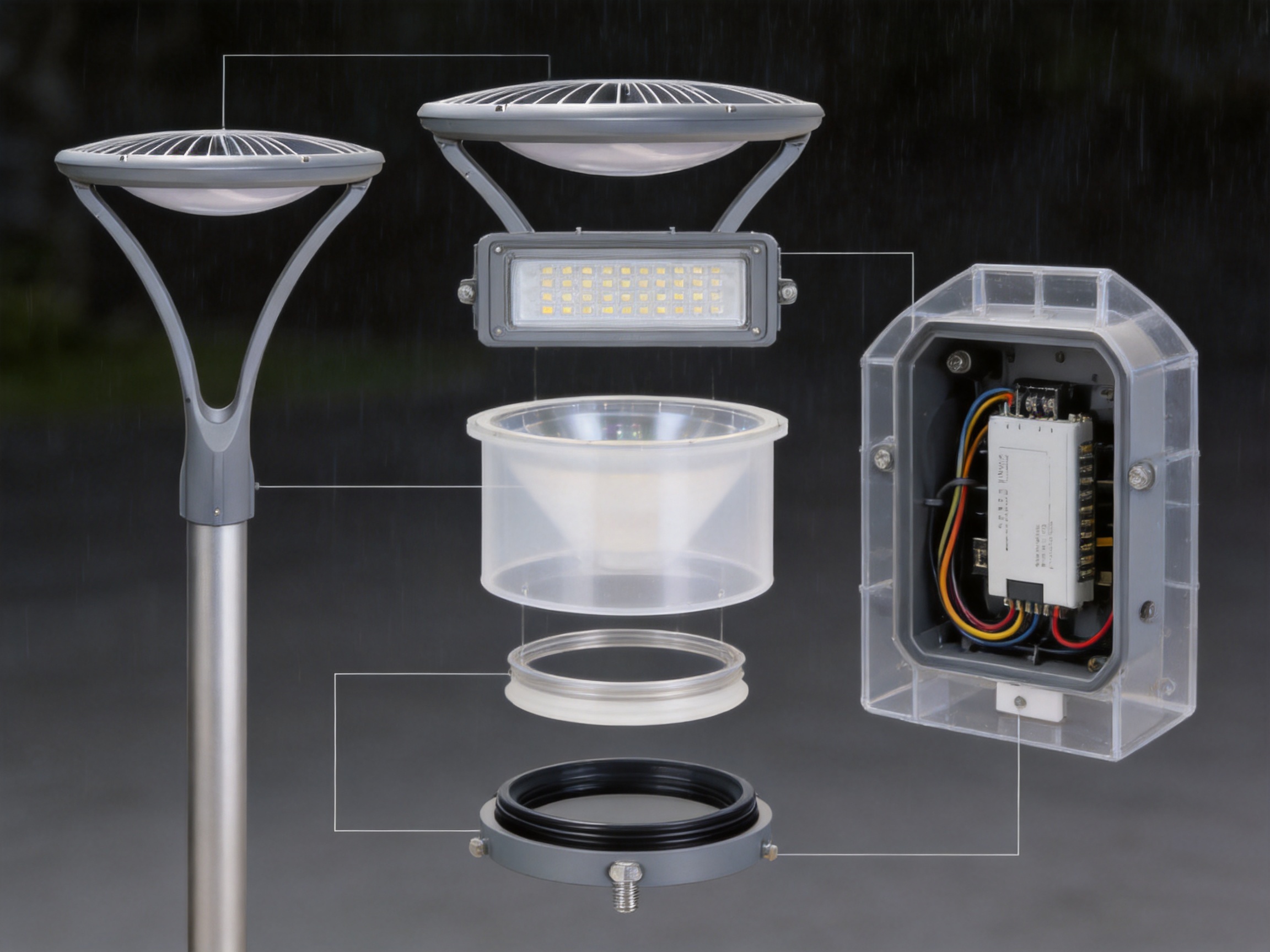
The GG-AC-ZG offers several differentiating characteristics. First, its aluminum pole and die-cast aluminum lamp head provide a more substantial construction platform than products made from low-strength sheet materials or unprotected steel. Second, anti-corrosion powder coating and 304 stainless steel screws help address common outdoor durability concerns. Third, the IP65 rating, wide operating temperature range, and high power factor are aligned with the practical demands of permanent outdoor installations.
The product also provides a wider input voltage range than many narrowly specified fixtures. AC 100–305V operation can be useful for projects distributed across different electrical markets or locations with variable supply conditions. Support for 50Hz and 60Hz systems further improves application flexibility.
Optical flexibility is another advantage. The use of PC, PMMA, or PS diffusers and the possibility of beam angle adjustment allow the product to be adapted to the actual lighting objective. A fixture should not simply emit light; it should direct and soften that light in a way that supports safety and visual comfort. Custom optical development can be especially valuable for projects with unusual path widths, irregular planting, or specific architectural sightlines.
The product’s rated LED lifespan of more than 50,000 hours can also reduce the frequency of lamp replacement when compared with shorter-life alternatives. Actual service life depends on operating conditions, driver quality, thermal performance, installation, and maintenance, but a long-life LED platform is an important consideration for projects where access equipment and labor are expensive.
Finally, the GG-AC-ZG is supported by manufacturer-level customization rather than only product distribution. Decorative styles, beam angles, mounting arrangements, and other installation details can be discussed with the factory. This gives project owners, lighting designers, distributors, and contractors greater control over the final solution.
12. Advanced Manufacturing Capabilities
Cixi HuaSheng Lighting Co., Ltd. is an outdoor lighting manufacturer located in Ningbo, China. The company’s manufacturing capabilities include die-casting and CNC machining equipment, aging lines, and goniophotometers. These resources are relevant to the production of a decorative pathway lamp because they support the complete product process, from metal component formation and precision finishing to optical verification and reliability testing.
Die-casting equipment can be used to manufacture lamp heads with repeatable geometry and integrated structural features. Consistency is important for decorative products because small variations in shape, joint alignment, or surface quality may be visible across a large installation. Repeatable die-casting also helps maintain fit between the lamp head, diffuser, mounting components, and internal assemblies.
CNC machining supports precision processing of selected metal components, interfaces, holes, mounting surfaces, and finishing details. In customized projects, CNC capability can be especially valuable because it allows the manufacturer to refine prototypes, create special adapters, and produce parts with controlled dimensional accuracy. It can also help improve compatibility between the lamp and a customer’s specified mounting system.
Aging lines are used to support reliability evaluation of electrical and LED lighting products. Controlled aging can help identify early component problems before products are shipped. While aging is not a substitute for complete quality management, it is an important part of production discipline for fixtures expected to operate outdoors for many years.
Goniophotometers allow the manufacturer to evaluate the photometric performance of lighting products. Measurements may include luminous intensity distribution, beam characteristics, and related optical data. This capability is valuable when the product includes different diffusers, beam angles, LED configurations, or decorative lamp head designs. It helps connect the physical product with the lighting calculations required by designers and project engineers.
The company also provides mold design and manufacturing support. This is particularly relevant to OEM and ODM projects in which customers require a new decorative housing, customized pole element, special diffuser, or modified installation interface. Mold development can help transform a concept into a repeatable production component while maintaining control over appearance, dimensions, and assembly.
13. Quality Management and Certification Strengths
The manufacturer is identified as holding ISO 9001, ISO 14001, and ISO 45001 certifications. These management systems represent quality management, environmental management, and occupational health and safety management respectively. Together, they indicate an approach that addresses not only product output but also process control, environmental responsibility, and workplace safety.
Relevant products are also described as having CB and CE certifications. Certification requirements vary according to the specific product configuration, market, and applicable standards, so customers should request current documentation for the exact GG-AC-ZG version, driver, LED configuration, and intended destination market. Proper document verification is an important part of responsible project procurement.
A structured quality system can support traceability, inspection procedures, supplier management, corrective actions, and continuous improvement. For outdoor lighting projects, these processes are important because a small component issue can become difficult and expensive to correct after hundreds of fixtures have been installed. Factory-level control helps reduce variation between production batches and supports more predictable project delivery.
Environmental management is also increasingly important to international customers. Efficient LED products can reduce operational energy consumption, while durable construction can reduce replacement waste. Responsible manufacturing practices, material control, and suitable production processes can further support the environmental objectives of municipal, commercial, and residential developments.
14. One-Stop Services for International Projects
Lighting projects often require more than a product catalogue. Customers may need help with product selection, photometric layouts, DIALux designs, mold development, electrical configuration, packaging, documentation, and delivery coordination. The manufacturer provides one-stop services intended to support these stages for global clients.
DIALux design support can assist customers in evaluating fixture spacing, average illumination, uniformity, light distribution, and possible glare concerns. The accuracy of the result depends on the quality of the photometric file, project dimensions, surface reflectance, mounting data, and design assumptions. Even so, early lighting simulation is a useful way to reduce trial and error during installation planning.
OEM and ODM support allows customers to order a product under their own design requirements or brand strategy. The available customization areas for the GG-AC-ZG include decorative styles, beam angle adjustment, and installation customization. Additional details such as color, labeling, packaging, connector type, and control requirements should be reviewed during technical discussions.
SKD and CKD customization is also identified as part of the company’s service capabilities. Semi-knocked-down and completely knocked-down arrangements may be suitable for customers with local assembly operations, regional distribution requirements, or specific import and manufacturing strategies. These models require careful agreement on component lists, assembly instructions, quality responsibilities, packaging, and testing procedures.
International delivery requires close coordination between production, inspection, packaging, and logistics. Decorative lamp heads must be protected from impact and surface damage, while poles and optical components require packaging suited to their size and shape. A clear production schedule and documented acceptance criteria can help customers manage installation deadlines and project milestones.
15. Recommended Application Scenarios
15.1 Parks and Public Gardens
Parks require lighting that can guide pedestrians while preserving the natural atmosphere of planted areas. The GG-AC-ZG can be placed along main walking routes, garden entrances, scenic corridors, and gathering areas. The choice of color temperature and decorative finish can be coordinated with benches, paving, planting design, signs, and other street furniture.
15.2 Residential Communities
In residential developments, pathway lighting contributes to residents’ sense of security and comfort. The lamp can be used along internal roads, pedestrian paths, courtyards, entrances, and connections between buildings. Warm or neutral light is often considered for residential settings, but the final choice should respect local regulations and the surrounding building design.
15.3 Hotels and Resorts
Hotels and resorts use outdoor lighting to create a welcoming first impression and support nighttime navigation. Decorative path lamps can connect guest rooms with reception areas, dining facilities, swimming pools, gardens, and recreational zones. Customized styling can help reinforce the identity of a hospitality property and create a consistent visual experience throughout the site.
15.4 Landscape Corridors
Landscape corridors may extend across campuses, commercial properties, tourism facilities, or municipal spaces. Such routes often require fixtures that remain visually consistent over a long distance. The GG-AC-ZG’s available power options, installation height, and optical customization can help designers adapt the lighting system to different sections of a corridor.
15.5 Institutional and Commercial Sites
Universities, office parks, healthcare campuses, shopping developments, and cultural facilities need outdoor lighting that combines practical visibility with professional appearance. The product’s durable materials, outdoor protection, and customizable decorative structure can support these applications when the photometric design and installation details are properly evaluated.
16. Maintenance and Long-Term Ownership
Long-term ownership costs include more than the initial purchase price. They may include electricity, replacement parts, labor, access equipment, cleaning, inspections, and disposal. A durable LED pathway lamp can help control these costs by reducing energy use and minimizing the frequency of component replacement.
Routine maintenance should include visual inspection of the lamp head, diffuser, pole finish, fasteners, cable entry, and foundation interface. Dust, leaves, pollution, and biological growth should be removed when they begin to affect light output or appearance. Cleaning methods should be compatible with the optical diffuser and powder-coated surface.
Maintenance teams should check for signs of water entry, corrosion, impact damage, loose hardware, flickering, abnormal color, or changes in brightness. Any electrical work should be performed by qualified personnel with the power supply isolated. Replacement drivers, LED modules, diffusers, and fasteners should match the approved product configuration to preserve performance and protection.
The more accessible a fixture is for inspection and repair, the lower the potential maintenance burden. Installation planning should therefore consider equipment access, safe working clearance, and the ability to remove or service components without damaging nearby landscape features. For large projects, the owner should retain product records, installation dates, circuit information, and approved replacement specifications.
17. Selection Guidance for Buyers and Designers
Before ordering the GG-AC-ZG, customers should define the project’s location, pathway width, mounting height, spacing, expected traffic, environmental conditions, desired color temperature, and required decorative appearance. They should also identify the supply voltage and frequency, control strategy, cable arrangement, and local certification requirements.
Photometric information should be requested for the selected power, LED, diffuser, and beam angle configuration. A design that looks suitable in a product photograph may not produce the desired uniformity when installed at a particular height or spacing. Simulation and sample testing can help verify the final result before mass installation.
Customers in coastal areas should discuss salt exposure and additional surface protection. Projects in industrial zones should consider airborne chemicals and cleaning requirements. Locations with extreme cold, extreme heat, high wind, snow, or frequent storms should be reviewed against the fixture’s stated operating and structural conditions.
For customized projects, the design approval process should include drawings, material samples, color samples, optical requirements, interface dimensions, labels, packaging details, and inspection criteria. A clear approval process reduces misunderstandings and helps ensure that the delivered product matches the project intent.
18. Why Factory Partnership Matters
Working directly with an experienced lighting manufacturer can provide advantages over purchasing an unverified standard product through a fragmented supply chain. A factory with in-house or closely controlled die-casting, CNC machining, aging, optical testing, mold development, and assembly capabilities can respond more efficiently to technical changes.
For the GG-AC-ZG, this factory partnership is relevant because the product combines structural metalwork, decorative appearance, optics, electrical components, environmental protection, and installation requirements. When these elements are coordinated by one manufacturing partner, customers can reduce communication gaps between separate suppliers.
Direct communication can also support faster resolution of technical questions. Customers can discuss the intended site, required beam angle, pole interface, decorative style, operating environment, and target market with a team familiar with the product’s manufacturing process. This can be more effective than adapting a generic fixture after purchase.
Cixi HuaSheng Lighting Co., Ltd. manufactures a broad portfolio that includes LED street lights, tunnel lights, high-bay lights, linear lights, garden lights, solar lights, grow lights, explosion-proof lights, and other lighting products. This wider product experience can be useful for projects requiring several types of outdoor or industrial fixtures from one supplier.
19. Project Value and Competitive Position
The competitive value of the Decorative Path Lamp GG-AC-ZG comes from the way its features work together. A decorative appearance alone is not enough for an outdoor project. High LED efficacy alone is also not enough if the housing corrodes, the optical distribution is uncomfortable, or the fixture cannot fit the site. The product is positioned as a more complete solution by combining efficiency, environmental resistance, mechanical quality, optical flexibility, and customization.
Its rated power range supports different project scales. Its input voltage range supports international application. Its high power factor supports electrical efficiency. Its aluminum construction and powder coating support durability and design flexibility. Its die-cast lamp head supports structural and thermal performance. Its diffuser options support uniform light distribution. Its 304 stainless steel screws support corrosion resistance. Its IP65 rating supports outdoor exposure. Its LED lifespan specification supports long-term operation.
When these characteristics are considered together, the product can offer a stronger value proposition than basic pathway fixtures that focus only on low initial cost. The appropriate comparison should include the total project cost, expected operating hours, maintenance access, replacement frequency, appearance retention, and the consequences of inconsistent lighting. A reliable and customizable fixture may provide better value over the life of the installation even when its purchase price is not the lowest available.
20. Frequently Asked Questions
Q1: What is the main use of the Decorative Path Lamp GG-AC-ZG?
The main use is decorative and functional illumination for outdoor pathways, garden routes, landscape corridors, residential paths, parks, hotels, and similar pedestrian areas. It helps guide movement while improving the nighttime appearance of the surrounding environment.
Q2: What power options are available?
The rated power range is 30W to 100W. The appropriate power should be selected according to pathway width, mounting height, fixture spacing, desired illumination, and the results of a photometric design.
Q3: Can the lamp operate on different electrical systems?
Yes. The product is specified for AC 100–305V input and supports 50Hz and 60Hz frequency systems. Final electrical compatibility should be confirmed for the specific project and product configuration.
Q4: What LED sources can be used?
The listed light source options are LUMILEDS and CREE. Customers should confirm the exact LED model, color temperature, power configuration, and availability when placing an order.
Q5: Is the product suitable for rainy outdoor conditions?
The lamp has an IP65 waterproof rating, which is suitable for many exposed outdoor environments and provides protection against dust and water jets. It should not be submerged, and proper installation, sealing, cable routing, and drainage remain necessary.
Q6: What materials are used in the construction?
The product uses aluminum poles with anti-corrosion powder coating, a die-cast aluminum lamp head, PC, PMMA, or PS optical diffusers, and 304 stainless steel screws.
Q7: What is the expected LED lifespan?
The stated LED lifespan is more than 50,000 hours. Actual service life depends on operating temperature, electrical conditions, driver performance, installation quality, maintenance, and other environmental factors.
Q8: Can the decorative appearance be customized?
Yes. OEM and ODM services include decorative style customization. Customers can discuss the desired shape, finish, proportions, and relationship between the lamp and the surrounding architecture or landscape.
Q9: Can the beam angle be changed?
Beam angle adjustment is included among the available OEM and ODM services. The specific optical solution should be reviewed using project requirements and photometric data.
Q10: What installation height is recommended?
The stated installation height is 3 to 5 meters. The final height and spacing should be determined according to the site layout, pathway dimensions, lighting objectives, local standards, and photometric calculations.
Q11: What is the installation pipe diameter?
The listed installation pipe diameter is Φ45mm. Customers with different mounting interfaces should discuss customization or approved adapters with the manufacturer before production.
Q12: Does the company provide lighting design support?
Yes. The company provides lighting solutions and DIALux design support, along with OEM, ODM, mold design, SKD, CKD, and delivery services. Customers should provide accurate site drawings and project requirements for design evaluation.
Q13: What manufacturing capabilities support this product?
The manufacturer has die-casting and CNC machines, aging lines, goniophotometers, and mold design capabilities. These resources support metal component production, precision processing, reliability evaluation, optical testing, and customized development.
Q14: What certifications and management systems are associated with the manufacturer?
The company is identified as ISO 9001, ISO 14001, and ISO 45001 certified. Relevant products are described as certified by CB and CE. Customers should request current certificates and declarations for the exact product version and destination market.
Q15: How should buyers compare this lamp with lower-priced alternatives?
Buyers should compare not only purchase price but also material quality, coating, fasteners, IP protection, voltage range, power factor, optical distribution, lifespan, customization, testing, warranty conditions, maintenance access, and total ownership cost. These factors can strongly influence the long-term value of an outdoor lighting installation.
21. Conclusion
The Decorative Path Lamp GG-AC-ZG is a comprehensive outdoor pathway lighting solution for projects that require both practical illumination and decorative character. Its 30W–100W power range, AC 100–305V input, high power factor, broad color temperature selection, long LED lifespan, and IP65 protection make it suitable for a wide range of outdoor applications.
Its construction is designed for durability. Aluminum poles, anti-corrosion powder coating, die-cast aluminum lamp heads, optical diffusers, and 304 stainless steel screws address the mechanical, environmental, and visual demands of outdoor use. The product’s 3–5 meter installation range and Φ45mm installation interface provide a clear foundation for project planning, while OEM and ODM options allow the fixture to be adapted to different decorative concepts and technical requirements.
The manufacturing strength behind the product is equally important. Die-casting, CNC machining, aging lines, goniophotometric testing, mold development, quality systems, and international project services provide customers with more than a standard catalogue item. They create a platform for customized development, controlled production, and long-term cooperation.
For parks, residential paths, hotels, landscape corridors, campuses, commercial properties, and municipal projects, the GG-AC-ZG can help create safer, more comfortable, and more attractive nighttime environments. When selected through proper photometric planning and installed according to the manufacturer’s requirements, it offers a balanced combination of energy efficiency, appearance, durability, and customization.
References
1. Product technical information for Decorative Path Lamp GG-AC-ZG, including electrical, optical, mechanical, and environmental specifications.
2. International Electrotechnical Commission, standards and guidance related to ingress protection classifications for electrical enclosures.
3. International Organization for Standardization, ISO 9001 quality management system principles.
4. International Organization for Standardization, ISO 14001 environmental management system principles.
5. International Organization for Standardization, ISO 45001 occupational health and safety management system principles.
6. General principles of LED luminaire thermal management, optical distribution, and outdoor lighting maintenance.
7. General guidance for pathway lighting design, pedestrian safety, photometric evaluation, and landscape integration.
Product: Decorative Path Lamp GG-AC-ZG

-
YQF Global Exhibition Journey: Connecting World Markets with Excellence in Lighting and Supply Chain Strength
-
LED Outdoor Lighting Manufacturer Crafts Weatherproof Fixtures
-
Can an LED Indoor Lighting Factory Handle Custom Sizes?
-
YQF Achieves Three Major System Certifications and Receives Philips Partnership Authorization
YQF Group - World Leading One-Stop Lighting & Solar For the Global Partners
Custom & OEM Solutions for Global Lighting Brands
Copyright © Cixi HuaSheng Lighting Co., Ltd. All Rights Reserved.
Die-Casting Mould Supplier
