Company News
Home / News / Company News / 2026 October Uzbekistan Lighting & Electric Power Expo (Central Asia's Only Key-Supported Exhibition)

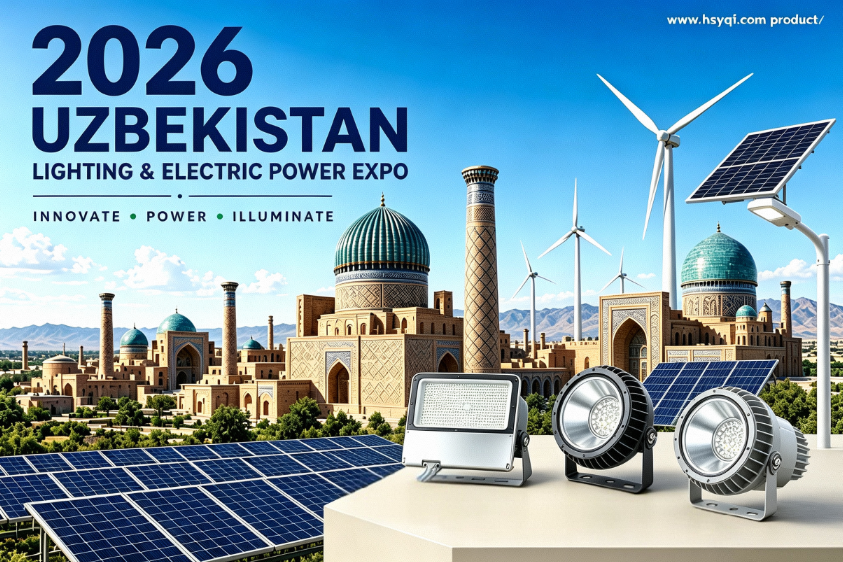
2026 October Uzbekistan Lighting & Electric Power Expo (Central Asia's Only Key-Supported Exhibition)

Exhibition Dates: October 20–22, 2026

Venue: Tashkent International Exhibition Center, Uzbekistan

Frequency: Annual

China Organizer: Zhongshan Tengda Sega Exhibition Co., Ltd.

Exhibition Overview:

As the most influential and forward-looking exhibition in the local power and energy industry, the event will be attended by heavyweight government officials, state-owned enterprises, industry experts, and manufacturers alike. The show is one of the most important gateways for clients entering the energy industry in Uzbekistan and Central Asia. Each year, the Uzbekistan Power, Energy, Renewable Energy, and Electrical Engineering Exhibition (UzEnergyExpo) brings together industry experts, oil, engineering, construction, and installation companies, as well as utility providers, allowing attendees to review all available market quotes, compare, select, and purchase the equipment they need. Leading companies from around the world showcase their latest solutions in energy efficiency and cost-effectiveness, as well as design and technology in electrical engineering, energy and power systems, energy conservation, cable and wire products, lighting, and industrial automation.

Market Analysis:

In recent years, with support from the World Bank, the Asian Development Bank, and the European Bank for Reconstruction and Development, the Uzbekistan government has successfully carried out multiple rounds of public bidding for new energy investment, attracting participation from hundreds of enterprises worldwide. The country has become a hotspot for new energy investment in Central Asia and is currently in a golden window of opportunity, with significant potential ahead. Located at the heart of Central Asia, Uzbekistan is a key hub along the ancient Silk Road, covering a land area of approximately 450,000 km² with a population of about 34 million. Its capital, Tashkent, is the largest city in Central Asia. The country enjoys political stability, social order, strong government governance capacity, and abundant natural resources, and its economy has maintained rapid growth in recent years, making it the fastest-growing economy in the Central Asian region. China and Uzbekistan established diplomatic relations in 1992, and the two sides have maintained close political trust and mutually beneficial cooperation, upgrading their relationship to a comprehensive strategic partnership in 2016.

According to assessments of the Chinese government's "Belt and Road" initiative, China has become Uzbekistan's largest trading partner and largest source of investment. As of August 2021, Uzbekistan's total installed power generation capacity stood at 17,088.5 MW, including 13 thermal power plants with a combined capacity of 15,081 MW (about 88.3%), 42 hydropower stations with a combined capacity of 1,907.5 MW (about 11.2%), and 1 solar power station with a capacity of 100 MW (about 0.6%); there are currently no wind power stations. In recent years, although Uzbekistan's total power generation has maintained positive growth (averaging 2.6% annually), it still cannot fully meet domestic electricity demand due to rapid economic growth and accelerating urbanization, with an average power shortage rate of about 9.4% nationwide. Regions such as the Fergana Valley, Kashkadarya, Surkhandarya, and Samarkand are notably affected by power outages.

Exhibition Scope:

Energy Conservation: Gas turbine cogeneration equipment; resource-saving fuel-efficient equipment; heat and power supply/heat and water systems; lighting equipment; lighting fixtures; starting and control equipment. Alternative and renewable energy: biomass power generation, wind power generation, solar power generation, small hydropower projects.

Lighting: Lighting equipment for various industrial facilities; street lighting; road and highway lighting; light sources/LED; lighting control systems and measuring instruments.

Cables, Wires & Accessories: Low, medium, and high-voltage cable fixed laying equipment; control, communication, and fiber-optic dedicated cables; overhead line conductors, high-voltage, AC, special-purpose windings, low-voltage cables; cable terminal transformers and switching equipment, connector accessories; fiber-optic connector components; cable installation and laying components and equipment, installation equipment, tools and equipment for cable and wire; cable and wire inspection tools and instruments and installation; cable and wire laying and installation technology.

Exhibition Review:
lAeiV

Recent Articles
  • October 2026 Russia International Lighting & Lighting Technology Exhibition

    Exhibition Name: 2026 Moscow International Lighting and Building Technology Exhibition Exhibition Dates: October 27–30, 2026 (Four-Day Exhibition Period) Exhibition Venue: Crocus International Exhibition Center, Moscow Organizer: Zhongshan Tengda Sega Exhibition Co., Ltd. Exhibition Overview INTERLIGHT SMART CITY & HOME, the 2026 Moscow International Lighting Fair – International Lighting Fixtures and Technology Exhibition, is supported by Light+Building, the world's leading brand lighting exhibition. It is the largest professional lighting exhibition in Russia and the CIS region. With its comprehensive planning and unique concept, the show offers an all-around, one-stop platform for showcasing products related to the lighting and construction industries. Since its founding, the exhibition has been successfully held 27 times and has maintained a consistent upward trend. In 2025, the exhibition drew over 433 exhibiting companies from more than 24 countries, with exhibitor satisfaction seeing significant improvement. Statistics show that visitor numbers reached 23,975. Market Background Russia is the largest country in the world by land area, with 98% of its LED products relying on imports, making the market rich in potential and business opportunities. In recent years, the introduction of government policies related to energy conservation and sustainable development has paved the way for the promotion of energy-saving lighting technology across various industries. In addition, the continuous increase in new and renovated construction projects, along with the hosting of major events (such as the 2018 World Cup), has driven growing demand for building automation, bringing enormous business opportunities for enterprises. According to reports, the number of lighting fixture manufacturers currently based in Russia is relatively small, with comparatively low production capacity. The technological development and style trends of domestic products fall far short of meeting current market demand in Russia, which has also prompted the rapid removal of import quotas for this category of products. In the Russian lighting fixture market, the vast majority of high-quality and innovative lighting solutions are imported products, and as the government's energy-saving initiatives continue to advance, market acceptance of energy-efficient lighting products is also steadily increasing. Scope of Exhibits Lighting Sector: Lighting Trade Association of Russia (LTA); Ministry of Industry and Trade of the Russian Federation; European Business Association (AEB) Building Sector: Central Association of the German Electrical and Electronic Industry; KNX RUSSIA; LONMARK INTERNATIONAL; Moscow Union of Architects Chandeliers and crystal lamps; emergency lights and safety signal lights; floodlights and lighting systems; special-function lamps; spotlights; underwater floodlights; residential lighting; office lighting systems; installation technology and systems; embedded lamps; stage and film lighting; various types of spotlights and focusing lamps; street lamps and traffic lights; other outdoor lighting Chandelier and crystal lamp accessories; copper fittings and die-cast parts; other lighting fixture accessories Fluorescent lamps; energy-saving lamps; halogen incandescent lamps; discharge lamps; optical cable lighting; other light source products Electronic components; dimmers; halogen lamp transformers; halogen lamp ballasts; fluorescent lamp ballasts; discharge lamp ballasts; starters; switches and sockets; wires and terminal blocks Intelligent lighting systems; electroplating materials; optical measuring instruments; lighting design software; professional trade magazines

  • YQF Global Exhibition Journey: Connecting World Markets with Excellence in Lighting and Supply Chain Strength

    In 2026, YQF is making a strong and active presence on the global lighting exhibition stage. From the already successful appearances in the first half of the year in Vietnam, Uzbekistan, Norway, and Mexico, to the nearly 30 major international exhibitions the company will participate in during the second half and beyond — spanning South Korea, Kenya, Egypt, Nigeria, Brazil, Russia, Hong Kong, Canada, India, Turkey, Saudi Arabia, Dubai, the United States, Germany, and more — YQF footprint now covers Southeast Asia, Central Asia, Europe, Africa, the Americas, and the Middle East. With each step, the company consistently delivers a clear and resolute brand promise to the world: "The excellent Lighting Solutions for Project Developer&Contractor&Builder——Your Trustworthy YQF." At every exhibition stop, YQF tailors its product showcases to meet the specific needs of different regional markets — from smart city lighting and solar off-grid systems to high-end commercial dimming solutions and industrial high-ingress-protection luminaires — winning the trust of global clients with the tangible strength of "Intelligent Manufacturing in China." More importantly, YQF is more than just a manufacturer. The company consistently emphasizes to its global partners: "YQF is not only a manufacturer or OEM provider, but also a China partner for you, we can take charge of supply chain management!" Leveraging China's comprehensive lighting industry ecosystem, YQF offers one-stop supply chain management services ranging from R&D and design, production and quality control, to international logistics. This enables project developers, contractors, and builders worldwide to reduce procurement costs, shorten delivery cycles, and mitigate quality control risks — delivering a truly "hassle-free, efficient, and trustworthy" partnership experience. From Ho Chi Minh City to Las Vegas, from Nairobi to Frankfurt, YQF  global journey is accelerating. We sincerely invite partners from all sectors to visit our exhibition booths or connect with us online. Let us join hands — with light as our medium, and a shared vision for a win-win future. YQF is a comprehensive enterprise dedicated to providing professional lighting solutions and supply chain management services to project developers, contractors, and builders worldwide. With "Intelligent Manufacturing in China + Global Service" at our core, we help our clients maximize efficiency and value in every project. For more information or to request sample materials from our exhibitions, please feel free to contact us at any time.

  • LED Outdoor Lighting Manufacturer Crafts Weatherproof Fixtures

    Outdoor spaces need steady, clear light after dark. Parks, walkways, parking areas, and building exteriors all benefit from fixtures that stay bright and consistent through rain, wind, and temperature shifts. An LED Outdoor Lighting Manufacturer designs and produces these fixtures, turning electronic components and housings into practical lighting solutions for public and private settings. Core Design Elements The process starts with understanding the intended location. A pathway light needs soft, downward illumination that guides footsteps without glare. A flood light requires a wider beam that covers larger open areas. Street fixtures demand even distribution along roads so drivers and pedestrians can see clearly. Designers map the light pattern first, choosing lenses and reflectors that shape the output to match each use. LED chips form the heart of every unit. These small sources convert electricity into light with low heat output. The manufacturer selects chips that deliver stable brightness across a range of outdoor temperatures. Drivers and power supplies sit inside sealed compartments so moisture cannot reach the sensitive parts. Heat sinks draw warmth away from the chips, helping the light maintain steady performance over long hours of operation. Materials That Stand Up to Weather Housings are usually cast aluminum or tough polymer. Aluminum offers strength and helps with heat dissipation. Polymer options reduce weight and resist corrosion in coastal or industrial zones. Gaskets and seals keep water and dust outside the optical chamber. Glass or polycarbonate covers protect the lenses while allowing light to pass through cleanly. Surface finishes receive attention as well. Powder coatings or anodized layers guard against fading and surface wear. Color choices range from dark bronze and black for discreet placement to lighter tones that blend with modern architecture. Mounting hardware is sized to match common poles, walls, or ground stakes so installation stays straightforward. Range of Fixture Types An LED Outdoor Lighting Manufacturer typically offers several families of products. Pathway and garden lights sit low and cast gentle pools of light along borders or steps. Bollard lights stand a bit taller and mark edges of plazas or driveways. Wall-mounted units wash building faces or illuminate entrances. Flood and area lights cover wider zones such as parking lots or sports courts. Street and roadway fixtures mount on poles and deliver uniform coverage for traffic routes. Each type shares the same basic construction principles: sealed electronics, controlled optics, and durable outer shells. Beam angles, lumen levels, and mounting styles vary so project planners can match the fixture to the exact space. Optical Control and Light Distribution Optics play a central role in outdoor performance. Lenses and reflectors direct light where it is needed and limit spill into unwanted areas. Cut-off designs reduce upward light that can interfere with night skies. Asymmetric patterns push more light onto a roadway or path while keeping the opposite side darker. These optical choices improve visibility for users and keep the overall scene comfortable. Color temperature options give further flexibility. Warmer tones create a welcoming feel near homes and restaurants. Cooler tones suit security-focused zones or industrial yards. Consistent color across a batch of fixtures helps large installations look uniform once installed. An LED Outdoor Lighting Manufacturer focuses on turning solid engineering into outdoor fixtures that perform steadily under real weather conditions. From the choice of chips and optics to the final sealed housing, each step aims at clear, consistent light for pathways, streets, gardens, and open areas. The finished products give designers and facility managers practical tools for illuminating outdoor spaces after dark.

  • Why LED Smart Lighting Offers Flexible Control?

    Core Functions That Shape Daily Use LED smart lighting typically includes several adjustable settings. Brightness control allows gradual changes from soft glow to full output. Color temperature adjustment moves the light between warmer yellow tones and cooler white tones. Some models also offer a range of colors for decorative moments. Scheduling features let the lights turn on or off at chosen times, while grouping options allow several fixtures to respond together. These functions operate through an app or compatible voice device. After the initial connection, the system stays ready for quick changes. The lights themselves remain energy-efficient LED units, so the digital layer simply adds control on top of the familiar solid-state technology. Here are two groups of features that commonly appear: Brightness and color temperature controls that adapt light to different tasks Scheduling and grouping tools that manage several lights at once Together they create a responsive lighting setup that fits ordinary routines. How Control Works in Practice Most systems begin with a straightforward pairing process. The bulb or fixture joins the home Wi-Fi network or a dedicated hub. Once recognized, it appears in the companion app. From there, users can rename rooms, set favorite scenes, and create simple automations. A “movie evening” scene might lower brightness and warm the tone across several lights. A “morning” scene could raise brightness gradually as the day begins. Voice commands offer another route. Speaking a short phrase can turn lights on, change their level, or switch a whole group. Physical switches still work in many setups, giving a familiar backup when a phone is not nearby. The combination of app, voice, and manual control keeps the system accessible. Room layout influences how the lights are used. Ceiling fixtures provide general illumination, while lamps add focused pools of light. With LED smart lighting, both types can be adjusted independently or linked so they change together. This flexibility helps match the light to the activity without moving furniture or changing bulbs. Everyday Moments Supported by Adjustable Light Different times of day call for different light qualities. In the morning a cooler, brighter setting can support focus. Later in the day a warmer, softer output creates a calmer atmosphere. LED smart lighting makes these shifts easy to apply. The same fixture that lights a desk at midday can settle into a gentle glow for evening conversation. Grouping lights by room or by function simplifies control. All the lights in a living area can respond to one command. Kitchen fixtures can stay brighter while adjacent spaces dim. These small adjustments happen without walking from switch to switch. Here are two practical habits that support smooth use: Create a few named scenes for recurring activities such as reading or dining Use schedules so lights adjust automatically at regular times of day These approaches reduce the need for constant manual changes while keeping the lighting responsive. A Flexible Part of Home Routines LED smart lighting settles into daily life as a quiet helper. It does not demand attention, yet it remains available whenever a change in brightness or tone is useful. The digital controls sit on top of reliable LED technology, so the light itself stays consistent while the way it is managed becomes more adaptable. Over time people often develop a small set of preferred settings. One level for concentrated work, another for relaxed evenings, and a third for moving through the house after dark. Because the system remembers these preferences, returning to them takes only a moment. The practical appeal of LED smart lighting lies in this combination of steady illumination and easy adjustment. Brightness, color temperature, timing, and grouping all become tools that respond to ordinary needs. When the lights can shift to match the moment, rooms feel more comfortable and the act of changing the light becomes simple rather than disruptive.